Understand why projects slip, how to avoid drift from the pre-project phase, and choose the right approach.
Understand what a project really is… and its limits
Understand projectsFuzzy deadlines, misaligned teams, client stress
Project driftCompare approaches and avoid the wrong choices
Choose the right solutionHow Orchesia structures the pre-project to make deadlines reliable
Discover the Orchesia approachProject management is not short of methods. It is short of projects where those methods are applied. The four figures below come from named studies, not estimates.
of organisations do not produce project scoping documents, or not consistently
Wellingtone, State of Project Management 2021of projects finish with a variance against the original schedule
PMI, Pulse of the Profession 2018 — 4,455 practitionersof failed projects cite inadequate requirements gathering among the main causes — ahead of poor communication (29%) and cost estimation (28%)
PMI, Pulse of the Profession 2018of organisations mature in project management meet their original schedule, against immature ones
PMI, Pulse of the Profession 2020 — 3,060 practitionersThese causes share one trait: they all sit before execution. A project does not slip because it was tracked badly. It slips because it was built badly.
The articles on this site follow four steps. Each answers a question asked by someone who was never trained in project management — which, more often than not, is the person handed the project.
A project has a start, an end, a single objective and defined resources. Vocabulary matters: WBS, PERT, critical path and Gantt chart name precise things, and confusing them is enough to make a schedule unusable.
Scope does not expand all at once: it expands a little with each request, without any decision being made. Dependencies surface at the moment they block. Both mechanisms are known and can be caught early.
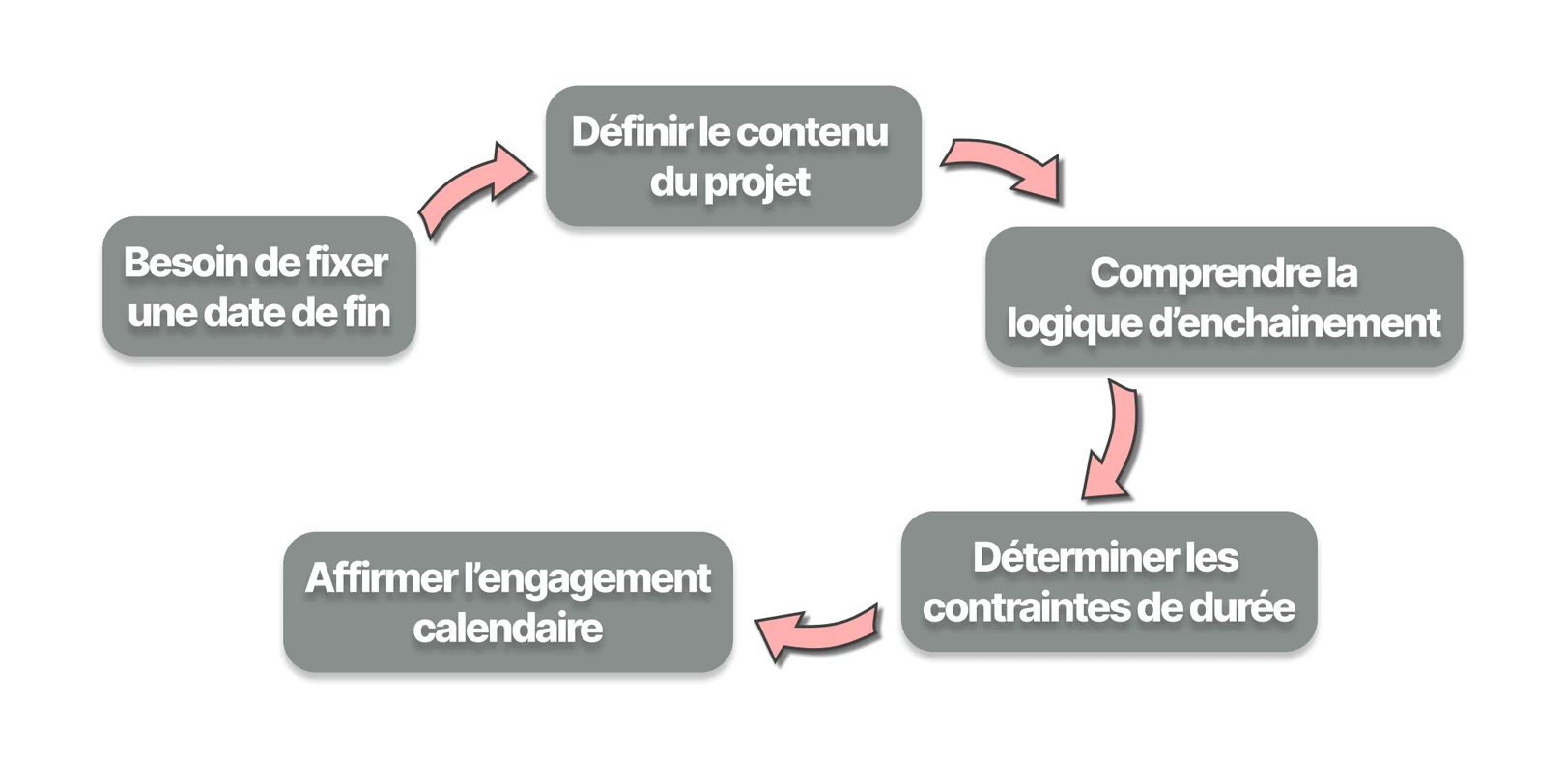
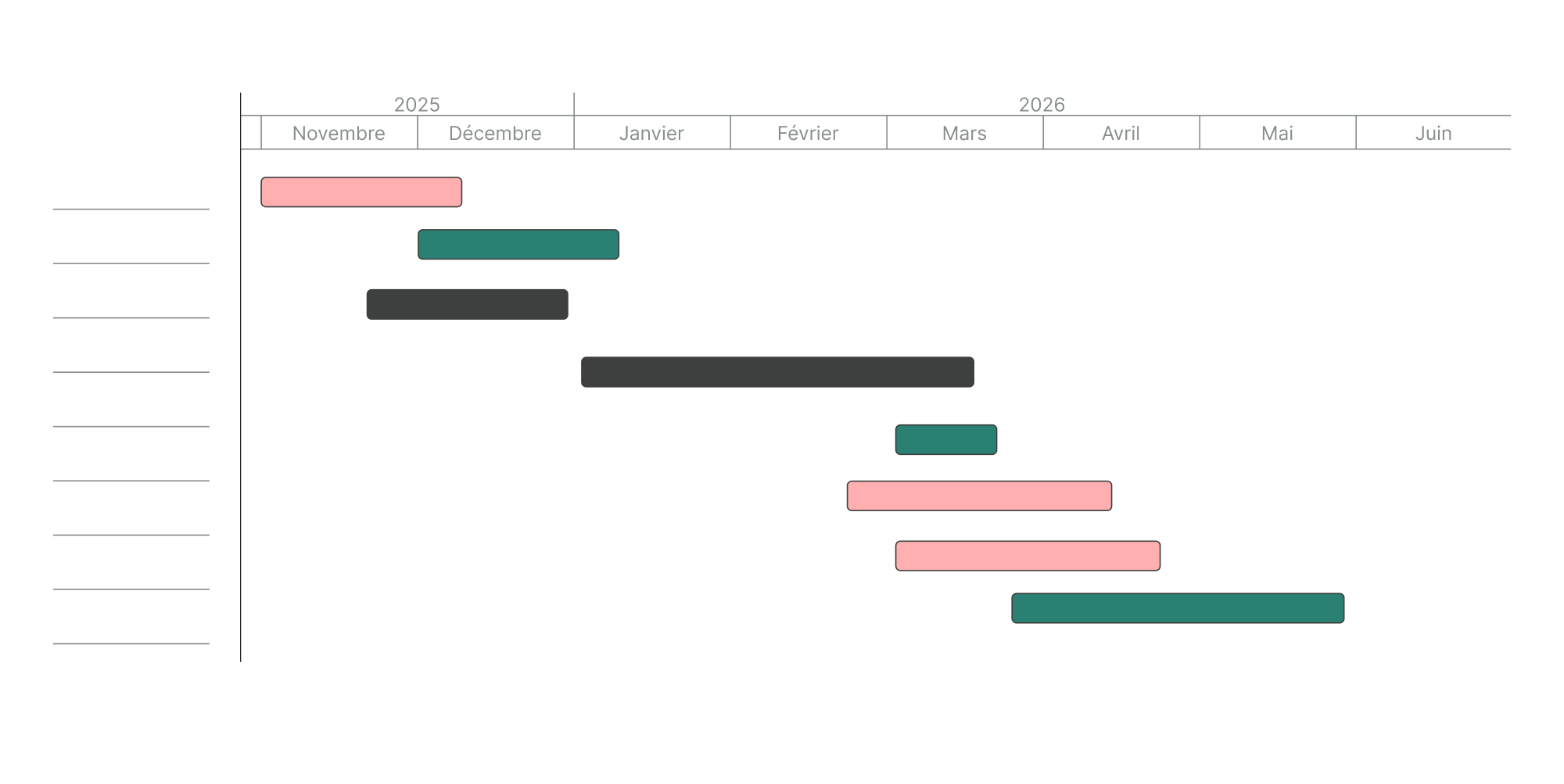
Break the work down into deliverables, declare the sequencing, then compute float and the critical path. The schedule is no longer drawn by hand: it follows from the structure. This is the part the market serves least.
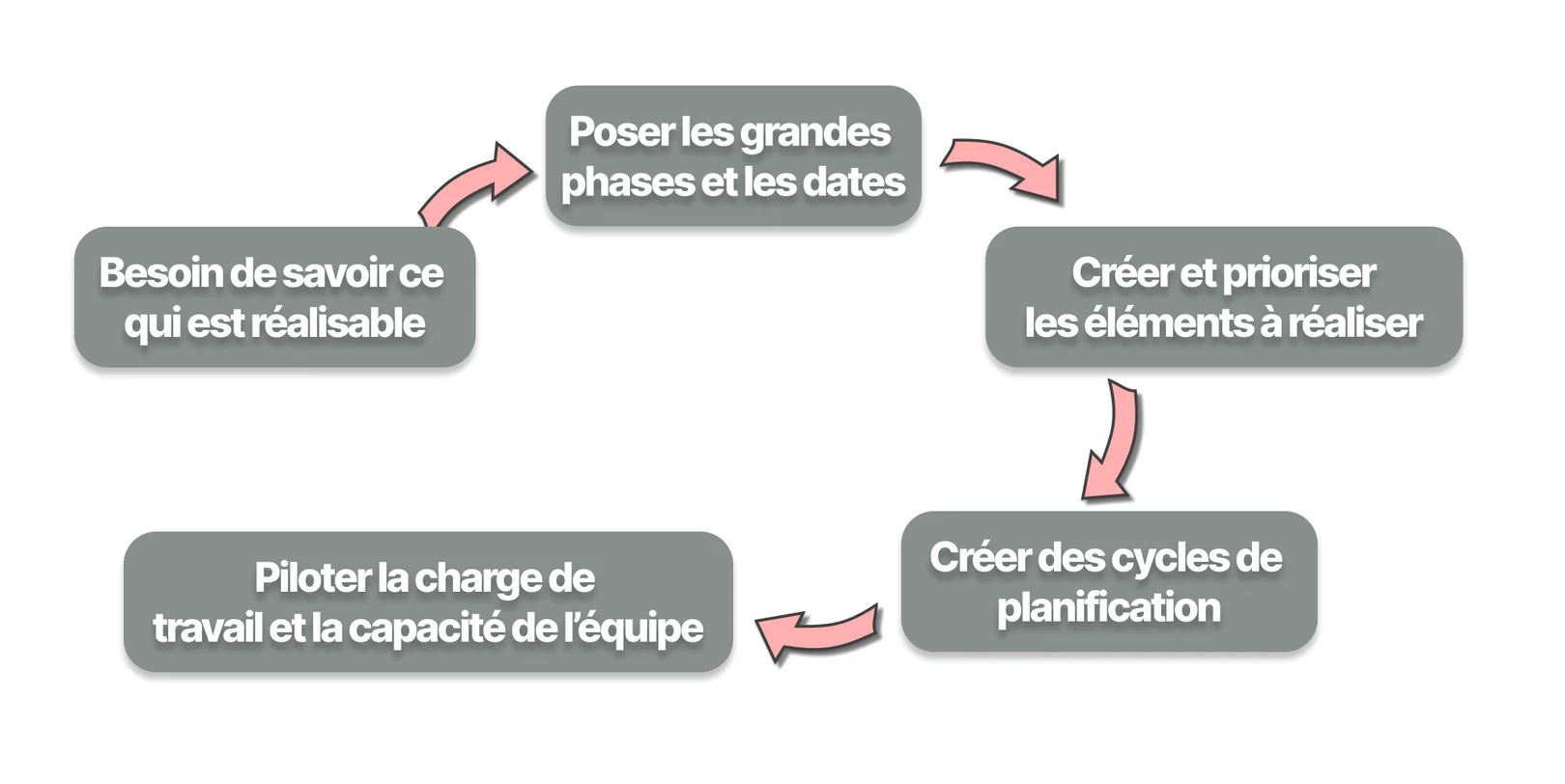
A method that lives in a spreadsheet maintained by one person is a fragile method. These two articles show the same approach applied in Orchesia, from breakdown to schedule.

Who estimates, under what conditions, and why the buffer must not hide inside the figure. The six rules that make an estimate usable.
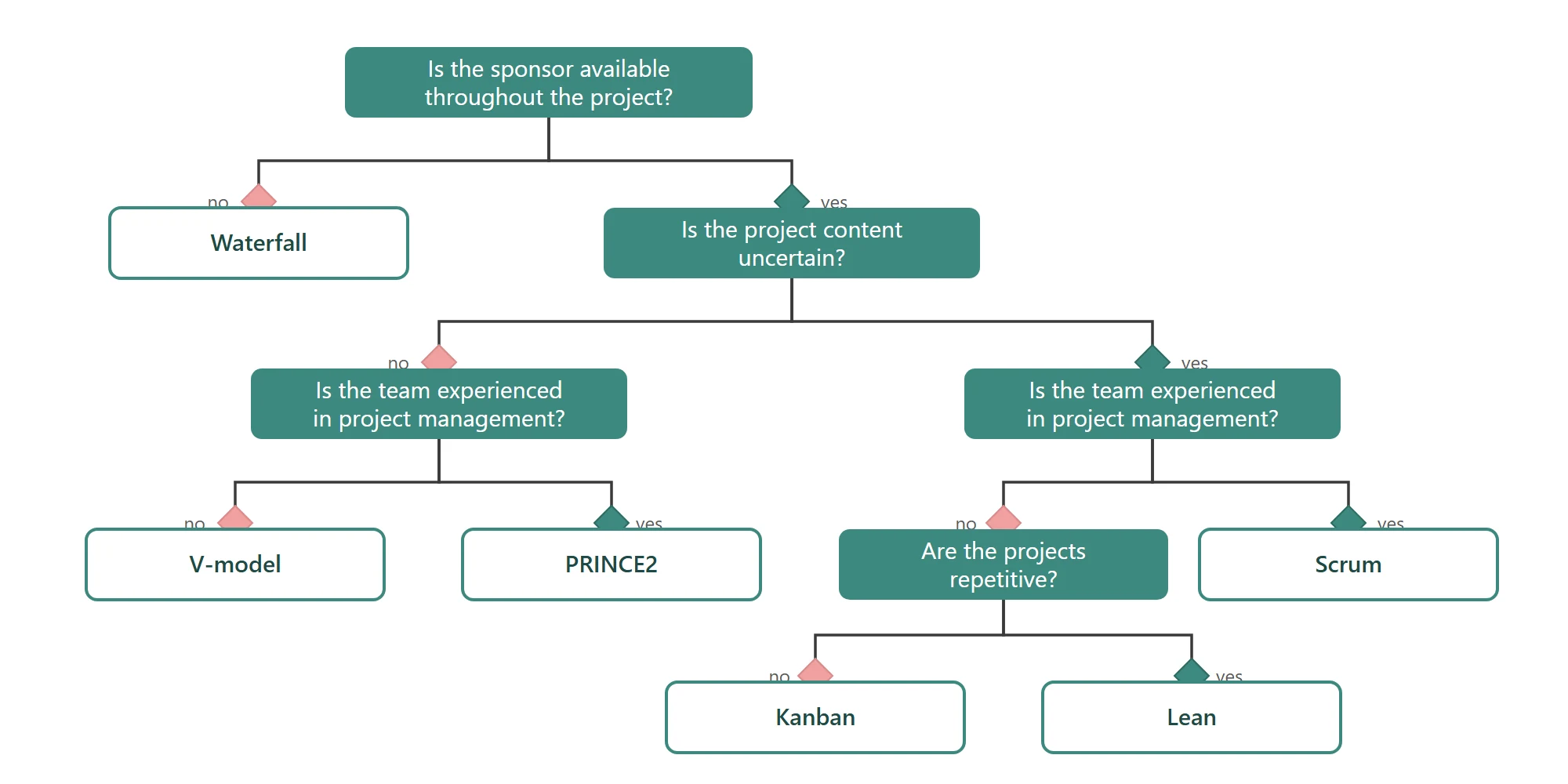
Waterfall, V-model, PRINCE2, Scrum, Kanban, Lean: what each method fixes at the start, what it leaves open, and the situations where it holds.
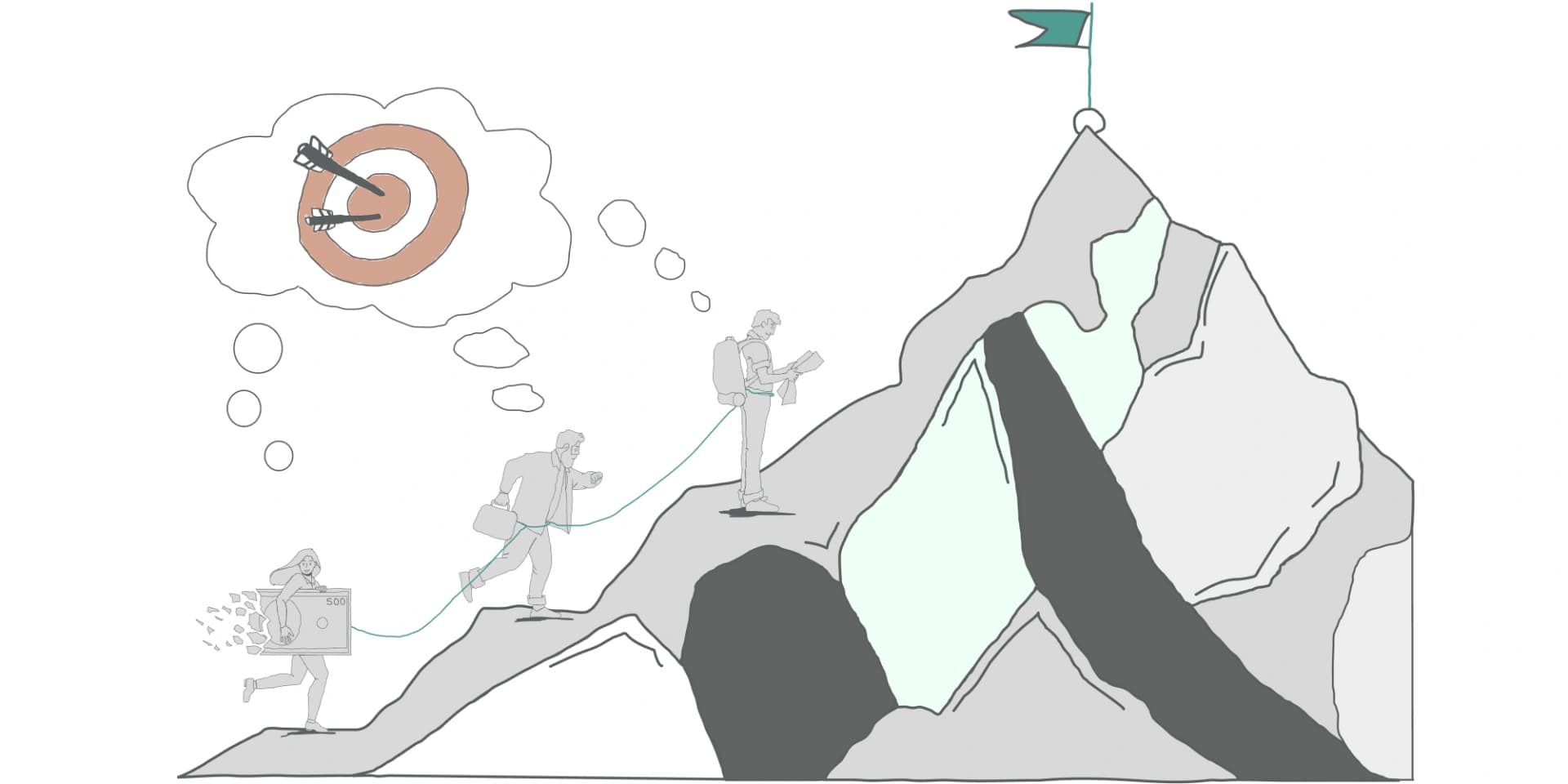
A project is a temporary effort aimed at a unique outcome, delivered under constraints and uncertainty. Here is what that means in practice, and why the framing decides the outcome.

A WBS breaks a project into deliverables and work packages. Definition, the 100% rule, decomposition levels and how it differs from a task list.

A PERT chart models the dependencies between tasks and reveals the sequence that actually drives the end date. Definition, notation and how it differs from a Gantt chart.

The critical path is the longest chain of dependent tasks in a project. It sets the minimum duration — and any delay on it moves the end date.
The real question now: what is your next step?