
Turn an idea into a project: scoping comes before launch
An idea doesn't become a project by intuition — it becomes one when it's structured. Orchesia helps project owners clarify scope, identify dependencies and build a credible trajectory.
Three situations that block project owners at kickoff

Vague scope, impossible to explain clearly
The project exists in your head but not on paper. The project owner struggles to simply explain what they're doing today and what still needs to be built. Every conversation starts from scratch.

Dependencies and constraints discovered too late
The project is thought through in pieces. Implications surface along the way and give the impression of an incomplete or poorly controlled project — especially with advisors or funders.

A trajectory too vague to convince
Steps and project logic lack clarity. Incubators, funders, and potential partners hesitate to commit without a readable, structured vision.
Make your day-to-day simpler
Tools built around your role

Clear scope you can explain in two minutes
The idea is structured into a bounded project. You know what you're doing today, what still needs to be built, and why it's in that order. No more vagueness, no more confusion.

The project's real implications made visible
Constraints, dependencies, and sensitive areas are identified from the start. The project is thought through as a whole, without blind spots surfacing at the wrong moment.

A readable trajectory that builds confidence
The project gains credibility. Advisors, incubators, and funders understand where you're headed and how you plan to get there. Conversations flow more easily, decisions come faster.
AI-assisted
AI does the legwork: project structure (WBS), task predictions, dependencies and critical path suggested automatically. You stay in control — AI just gets you there faster.
Turning an idea into a project means clarifying scope, identifying dependencies, and building a trajectory you can defend.
Orchesia guides the project owner step by step: from a vague idea to a structured project, ready to present and launch.
Your idea structured into a clear project in minutes
Describe your project in a few words. Orchesia's AI generates a WBS structure with phases, work packages, and tasks. Your idea becomes an understandable project you can explain and share immediately.
Dependencies and implications identified before launch
Orchesia makes visible what your project truly involves: constraints, prerequisites, sensitive points. Blind spots are reduced before you commit, not after.
AI working on your project
Describe your project in one sentence: AI generates the WBS, predicts the tasks and proposes the dependencies. You review and adjust in one click. You keep control — AI just speeds it up.
A structured, credible, shareable trajectory
With clear scope and identified dependencies, Orchesia builds a logical, defensible trajectory. You move forward with confidence in conversations with incubators, funders, and partners.
Show the project without handing over the keys
Investor, accelerator, prospective partner: Visitor seats give a read-only view of the structured project. You present a plan, not a spreadsheet sent as an attachment.
Build together without stepping on each other
Co-founders work on the same structure at once and see each other's changes live. There is one version, and it is the one everyone is looking at.
Without structuring
The idea goes in circles, the project doesn't move forward.
- Interesting idea but impossible to explain clearly
- Vague scope, priorities constantly shifting
- Constraints and dependencies discovered too late
- Unreadable trajectory for advisors and funders
- Project moves slowly, with lots of doubt
With Orchesia
The idea becomes a structured, defensible project.
- Idea structured into a clear, understandable project
- Defined scope, priorities set and owned
- Constraints and dependencies identified from the start
- Readable trajectory that convinces incubators and funders
- Project moves forward with clarity and confidence
The people running projects were never trained to run them
In December 2025 we analysed 328 project manager job ads posted in France on Welcome to the Jungle.
- 40%
of the ads ask for an engineering degree
Orchesia study, 328 ads, December 2025 - 7%
ask for a business school degree
Orchesia study, December 2025 - 0
requires a project management certification
Orchesia study, December 2025
Engineers and salespeople run the projects. A tool that assumes the method is already mastered addresses a population that does not exist.
Simple pricing, no surprises
All the tools to structure and run your projects. 30-day free trial.
per user, billed monthly
View pricing30-day free trial · No commitment · Cancel anytime
What's included
- Access to all features
- Free updates
- Document storage
- Real-time collaboration
- PDF export
 AI credits
Frequently asked questions
Yes — that's precisely the right moment. Orchesia works before the business plan and before execution, to structure the idea, set scope, and turn intuition into an understandable project. The earlier the framework is set, the more smoothly the project moves forward.
No. Orchesia does not replace human support. It provides a structuring framework that facilitates conversations with incubators, advisors, and mentors. You arrive with an already structured project, not a vague idea.
No. Orchesia does not require a finalized business model. The goal is first to structure the idea, clarify scope, and make key elements visible before entering financial aspects.
Yes. Orchesia serves entrepreneurial, nonprofit, innovative, or internal projects. Whenever you need to go from an idea to a structured project, whatever the sector, Orchesia adds value.
A few hours is enough. The tool builds on accessible concepts: idea, objectives, scope, constraints, steps. AI further accelerates onboarding by generating an initial structure from your project description.
Further reading
The methods behind the tool, explained in detail.
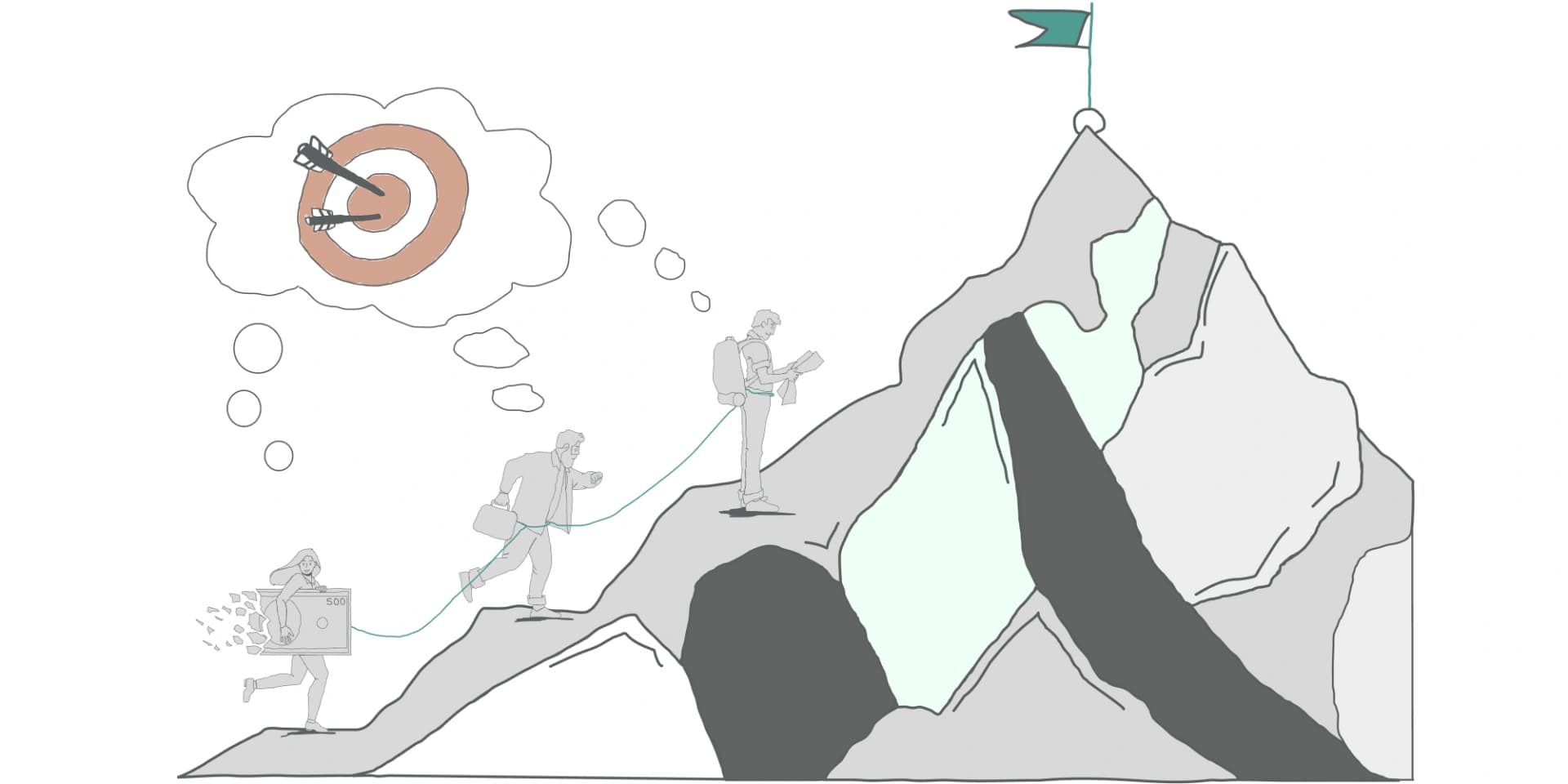 What is a project? Definition and life cycleA project is a temporary effort aimed at a unique outcome, delivered under constraints and uncertainty. Here is what that means in practice, and why the framing decides the outcome.
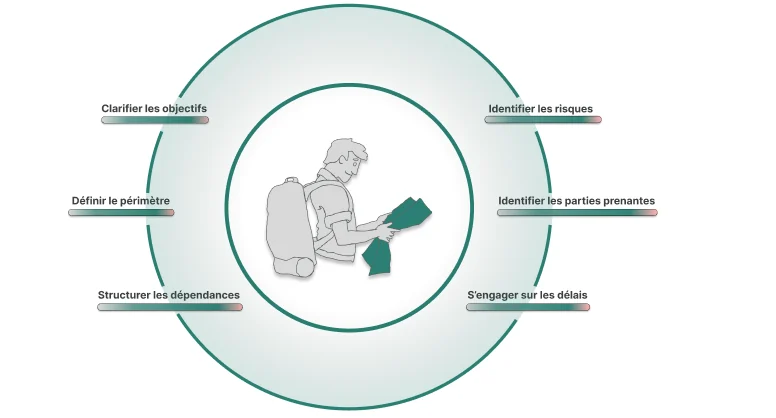 How to scope a project before you commit to a dateFraming is not paperwork. It is the last moment where a decision is cheap. Here is what a scoping stage has to produce before anyone opens a schedule.
Your idea deserves better than a vague slide and a task list.
Orchesia helps you structure your project, clarify scope, and build a credible trajectory before you launch or seek support.
30-day free trial • No commitment • No credit card