


Free
€0
After trial · 1 project · no time limit
- Backward planning for 1 event
- Phases, milestones, items
- Kanban per phase

The event date doesn't move — everything else has to organize around it. Orchesia works backward from it to set the major phases, prioritize what truly needs to happen and distribute workload across teams and vendors.
The backward planning is built "on instinct" rather than by working methodically back from the event day. Some phases start too late, others mobilize the team when nothing upstream is ready yet.
Without clear prioritization, every task is treated with the same urgency. In the final weeks, the team discovers that secondary items have crowded out tasks that are critical for the event day.
Tasks are distributed with no visibility on real team and vendor availability. As the event approaches, some are overwhelmed while others wait, and decisions are made under pressure.
Solutions built for the way your teams actually work
Start from the event day and work back in time with Orchesia's backward planning view: flexible, collaborative, and evolving throughout the organization. Each phase is positioned based on what it must deliver before the next — not placed at random.
List what needs to be delivered in each phase and prioritize it with Orchesia's prioritization Kanban. The team sees at a glance what is essential for the event day, and what can be cut first if time runs short.
With Orchesia's cycle planning, assign people, hours, and vendors by drag and drop. Check in real time that workload stays compatible with each person's actual availability, including across other active projects.
Orchesia guides event teams from the fixed date through to the fine distribution of work across teams and vendors.
Start from the event day and work back in time to set milestones: logistics, vendors, communications, approvals. The backward planning view evolves with you if a constraint or an intermediate date changes.
In each phase, list what needs to be delivered, then prioritize with the dedicated Kanban. What is critical for the event day stays visible; what can wait or be dropped is identified from the start — not discovered mid-crisis.
Assign people and vendors to work cycles, track workload in real time, and adjust before the pressure builds. You always know who is available and who is stretched.
Cycle planning splits the weeks before the event and shows a capacity gauge. What does not fit shows up when you assign it, not the night before delivery.
Vendors join the project as Visitors. They read the milestones that concern them and the dependencies with other trades, with no editing rights.
Recorded time off feeds the workload view. Build-up weeks where someone is missing show up while there is still time to hire.
Organization starts with no real anchor point from the event day.
Organization starts from the event day and works methodically backward.
Before discussing delay, it is worth checking whether a schedule was ever produced.
do not consistently build a project schedule
Wellingtone, State of Project Management 2021do not have project tracking they consider successful
Wellingtone, State of Project Management 2021have no access to real-time indicators
Wellingtone, State of Project Management 2021When the delivery date is imposed, a missing schedule only becomes visible once it is too late to arbitrate.
30-day free trial · No commitment · No credit card
At the end of the trial, continue free on a simplified project, or choose a paid plan for multiple projects and structured mode.
After trial · 1 project · no time limit
For complex events and multi-project teams
No. Orchesia works upstream to build backward planning, prioritize tasks, and distribute workload. The goal is for execution on the event day to run without improvisation — because everything was organized working back from the target date.
Yes. Orchesia is used both by agencies managing multiple vendors and by in-house teams organizing complex events. In both cases, it lets you start from the fixed date and organize work without being at the mercy of the calendar.
No. Orchesia is primarily a management tool for the team running the organization. Certain milestones or priorities can be shared with vendors without them needing access to the tool.
The backward planning view evolves throughout the organization. If a milestone moves, subsequent phases and priorities readjust — without having to rebuild the entire schedule in a static file.
A few hours is all it takes. The tool is built on concepts familiar to event teams: phases, priorities, workload, vendors.
The methods behind the tool, explained in detail.
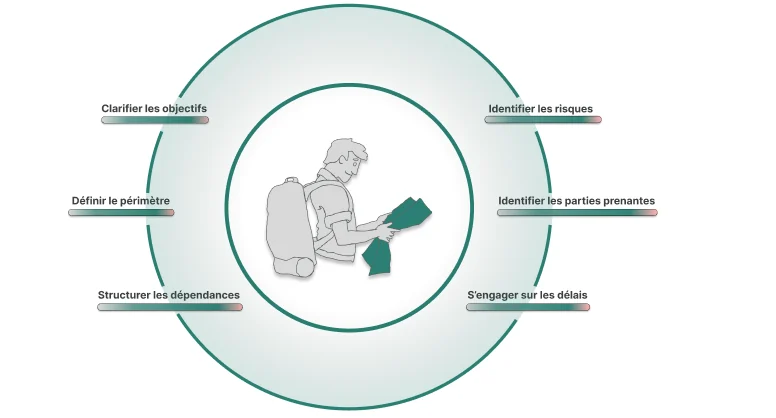 How to scope a project before you commit to a dateFraming is not paperwork. It is the last moment where a decision is cheap. Here is what a scoping stage has to produce before anyone opens a schedule.
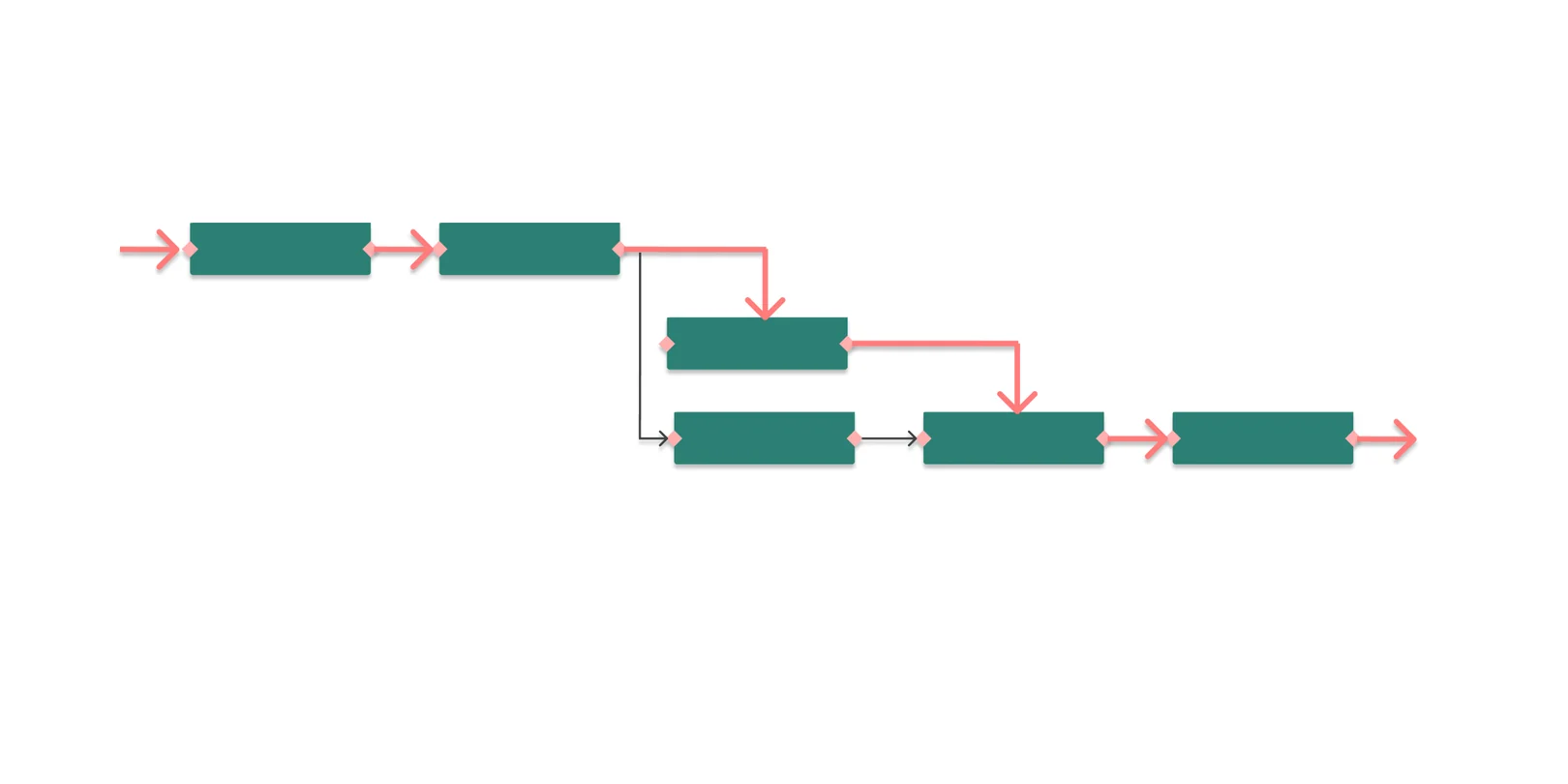 What is the critical path in project management?The critical path is the longest chain of dependent tasks in a project. It sets the minimum duration — and any delay on it moves the end date.
Orchesia helps event teams start from the event day to build phases, prioritize tasks, and distribute workload before the pressure builds.
30-day free trial • No commitment • No credit card