
Software for engineering firms: scope the work before you commit
Engineering projects don't fail during execution — they fail before. Orchesia structures upfront work: clear scope, identified constraints, visible dependencies and reliable timelines before any commitment.
Three situations that derail engineering projects

A study scope that drifts once work begins
Technical assumptions aren't clearly set before the project starts. Constraints surface during the study and call into question deadlines and commitments already communicated to the client.

Cross-discipline dependencies discovered too late
The links between disciplines aren't identified upfront. Cross-discipline trade-offs arrive too late and block progress — often at a point where going back is costly.

Deadlines committed without full visibility on uncertainties
The schedule is set before constraints and areas of uncertainty have been assessed. The study drifts with constant readjustments, mounting pressure, and increasingly defensive client conversations.
What Orchesia gives you
Solutions built for the way your teams actually work

Technical constraints identified before the first commitment
Surface and qualify constraints in the early phase. Explicit assumptions, visible uncertainties, and informed decisions before committing to workload and timelines.

Cross-discipline dependencies visible from the scoping phase
Visualize the links between disciplines and critical coordination points. Trade-offs are made earlier, blockers are anticipated before kick-off rather than absorbed mid-study.

Realistic timelines you can defend to the client
Commit to dates grounded in the project's real constraints. Timelines are justified, owned, and understood by the client from the start. No more constant readjustments and defensive back-and-forths.
AI-assisted
AI does the legwork: project structure (WBS), task predictions, dependencies and critical path suggested automatically. You stay in control — AI just gets you there faster.
A well-scoped engineering project means a clear scope, visible constraints, and commitments that are owned before the study begins.
Orchesia builds that structure in the upfront phase so teams commit on solid ground — not on implicit assumptions.
Study scope and assumptions formalized in a single shared view
Centralize scope, expected deliverables, technical assumptions, and trade-offs in one view shared between teams and client. Every element is clarified and validated before any commitment on workload or timelines.
Technical and cross-discipline dependencies calculated automatically
Orchesia visualizes dependencies between disciplines, required approvals, and critical coordination points from the scoping phase. Key interactions and the critical path are identified before kick-off — not once blockers have already set in.
AI working on your project
Describe your project in one sentence: AI generates the WBS, predicts the tasks and proposes the dependencies. You review and adjust in one click. You keep control — AI just speeds it up.
A schedule generated from the study structure, not entered manually
With a clear scope and stabilized dependencies, the schedule is generated from the real project structure. Announced timelines rest on real constraints, not back-of-the-envelope estimates.
A frozen reference to compare promised and actual schedules
Save a baseline at sign-off, then compare the live schedule with the one you committed to at any time. Variances are dated and attributable, which changes the nature of end-of-study discussions.
Each engineer's load, time off included
See who is committed to what and when, factoring in recorded absences. Overloads appear before you commit, not once the study is already late.
Commercial tracking in the same table as the projects
Add your own columns to the portfolio — contract value, contractual phase, client, job reference — and filter on them. Commercial and technical tracking stop living in two separate files.
Your jobs analysed against your own criteria
A chart can break down on a column you created: job type, client, contractual phase, discipline. The dashboard follows your nomenclature instead of imposing its own.
Without upfront project scoping
The project starts on shaky ground.
- Vague or incomplete study scope
- Implicit technical assumptions, not shared with anyone
- Cross-discipline dependencies discovered too late
- Deadlines committed without full visibility on constraints
- Defensive client conversations focused on gaps and justifications
With Orchesia
The project starts on solid ground.
- Scope and deliverables clarified from the scoping phase
- Technical assumptions and constraints made explicit and shared
- Cross-discipline dependencies visible before any planning
- Realistic timelines that are justified and owned from commitment
- Calm client conversations based on clear, shared decisions
We tested 50 project management tools
In late 2025 we opened the highest-rated tools one by one, against two criteria: do dates shift with their predecessors, and does a parent task duration follow from its children?
- 22 / 50
handle task dependencies correctly
Orchesia benchmark, late 2025 - 20 / 50
handle WBS structure correctly
Orchesia benchmark, late 2025 - 2 / 50
display a PERT chart
Orchesia benchmark, late 2025 - 1 / 50
builds the Gantt chart from a WBS and a PERT chart
Orchesia benchmark, late 2025
The only one doing the full chain is a twenty-year-old licensed tool built for large enterprises. The method exists. It is simply not usable anywhere.
Simple pricing, no surprises
All the tools to structure and run your projects. 30-day free trial.
per user, billed monthly
View pricing30-day free trial · No commitment · Cancel anytime
What's included
- Access to all features
- Free updates
- Document storage
- Real-time collaboration
- PDF export
 AI credits
Frequently asked questions
Yes. Orchesia structures projects before commitment — exactly where engineering firms face the most difficulty: vague scope, implicit assumptions, constraints discovered too late. It applies equally to design projects, engineering studies, R&D, and feasibility studies.
In the upfront phase, before launching the study or execution. Concretely: when you need to scope the work, identify constraints, visualize dependencies, and commit to realistic timelines with the client.
No. Orchesia is primarily an internal tool for the engineering team. Selected elements can be shared with the client to clarify assumptions and trade-offs, but the client doesn't need access to the tool.
Yes. Orchesia scales from short, focused studies to complex, multi-discipline projects. The higher the complexity and uncertainty, the more value upfront scoping delivers.
A few hours is enough. The tool is built around concepts familiar to engineering teams: scope, constraints, dependencies, trade-offs. The AI speeds onboarding further by generating an initial structure from your project description.
Further reading
The methods behind the tool, explained in detail.
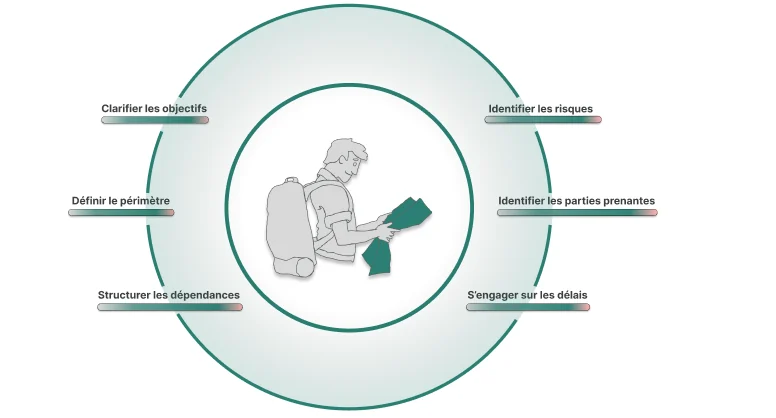 How to scope a project before you commit to a dateFraming is not paperwork. It is the last moment where a decision is cheap. Here is what a scoping stage has to produce before anyone opens a schedule.
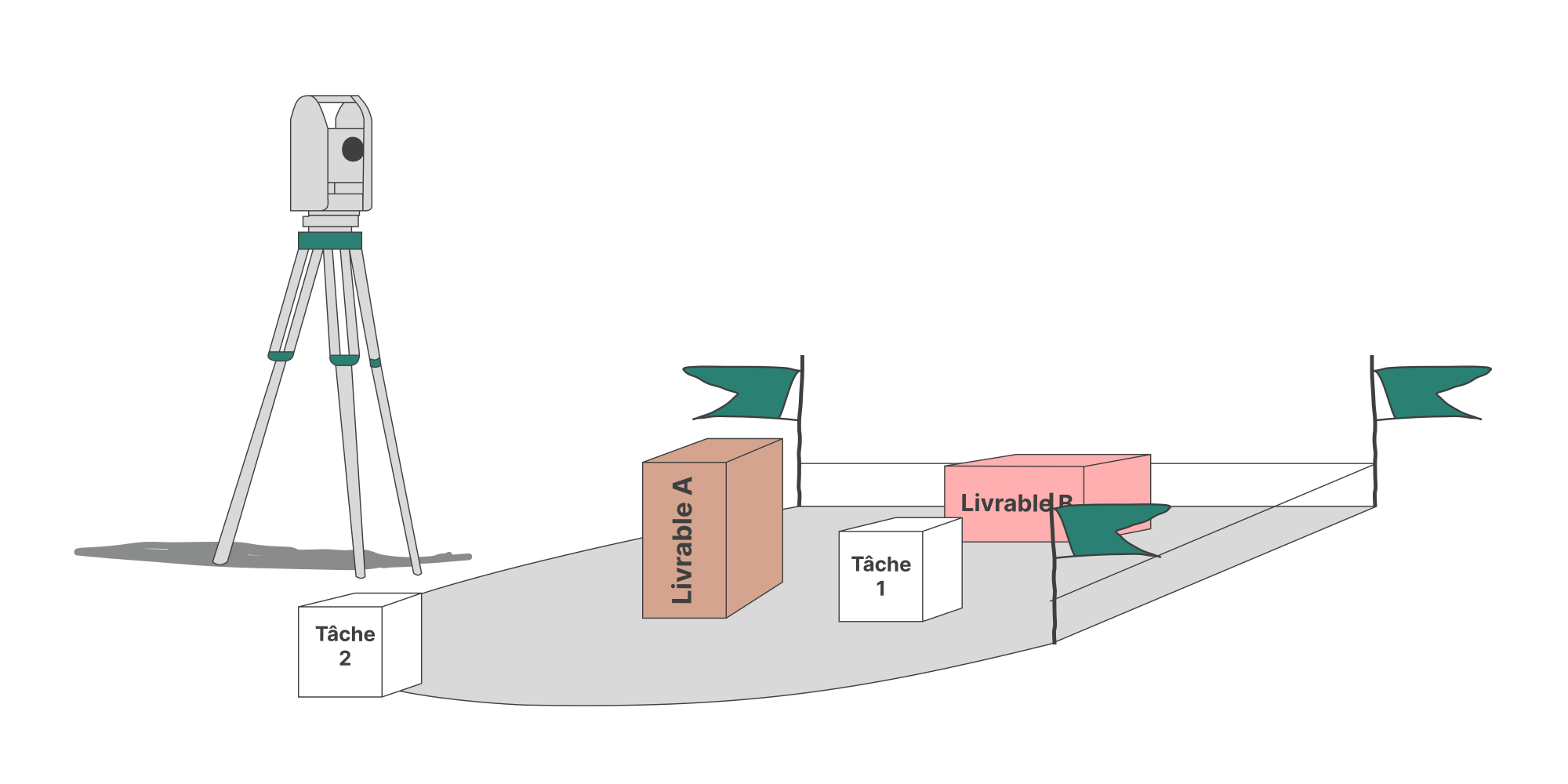 Scope creep: why projects grow without anyone decidingScope creep is rarely a single bad decision. It is the accumulation of small additions nobody logged, on a scope that was never fully written down.
Stop committing on vague foundations. Start by structuring upfront work.
Orchesia helps engineering firms clarify scope, identify constraints, and build reliable timelines before commitments are made.
30-day free trial • No commitment • No credit card