
Mind map, WBS, dependencies, then a generated schedule. Clarify the work before you lock dates.
Most projects are decided before the first Gantt: fuzzy scope, implicit dependencies, commitments based on assumptions. The schedule often arrives too early, while real work is not yet visible or shared. Visible delays downstream are often the consequence of insufficient framing upstream.
If you have gone through classic project management problems then methods to structure a project, this page is the next step: how Orchesia puts these practices to work without the weight of spreadsheets and diverging versions.
In practice: a mind map to set the objective and break down the project, a deliverable-based WBS, a dependency diagram (PERT, critical path), then a schedule generated from that structure. Each step feeds the next; nothing is locked while framing is still stabilizing.
In practice, this changes day-to-day work. Deadlines rest on identified work, links between activities are visible to all stakeholders, and a first frame can be set in minutes. Trade-offs focus on project content, not default dates.
This page is editorial: it presents the philosophy, the method flow, and content to go further. The cards below will illustrate the method in action (tutorials, comparisons, upcoming discoveries). They complement the text; they do not replace it. To try or see the tool on a typical case, use the links at the bottom of the page.
This section explains why Orchesia invites you to structure the pre-project rather than fill a schedule on day one. The approach is for teams who want reliable framing without unnecessarily weighing down project management.
You will see the reasoning behind the mind map, WBS, and dependencies as distinct steps, and what that changes for sponsors, project managers, and business teams.
Tutorials show how to apply the approach in the tool: build a WBS, model a dependency network, read a critical path, evolve the structure with teams.
The goal is to move from concept to concrete gesture, step by step, without assuming prior project management expertise.
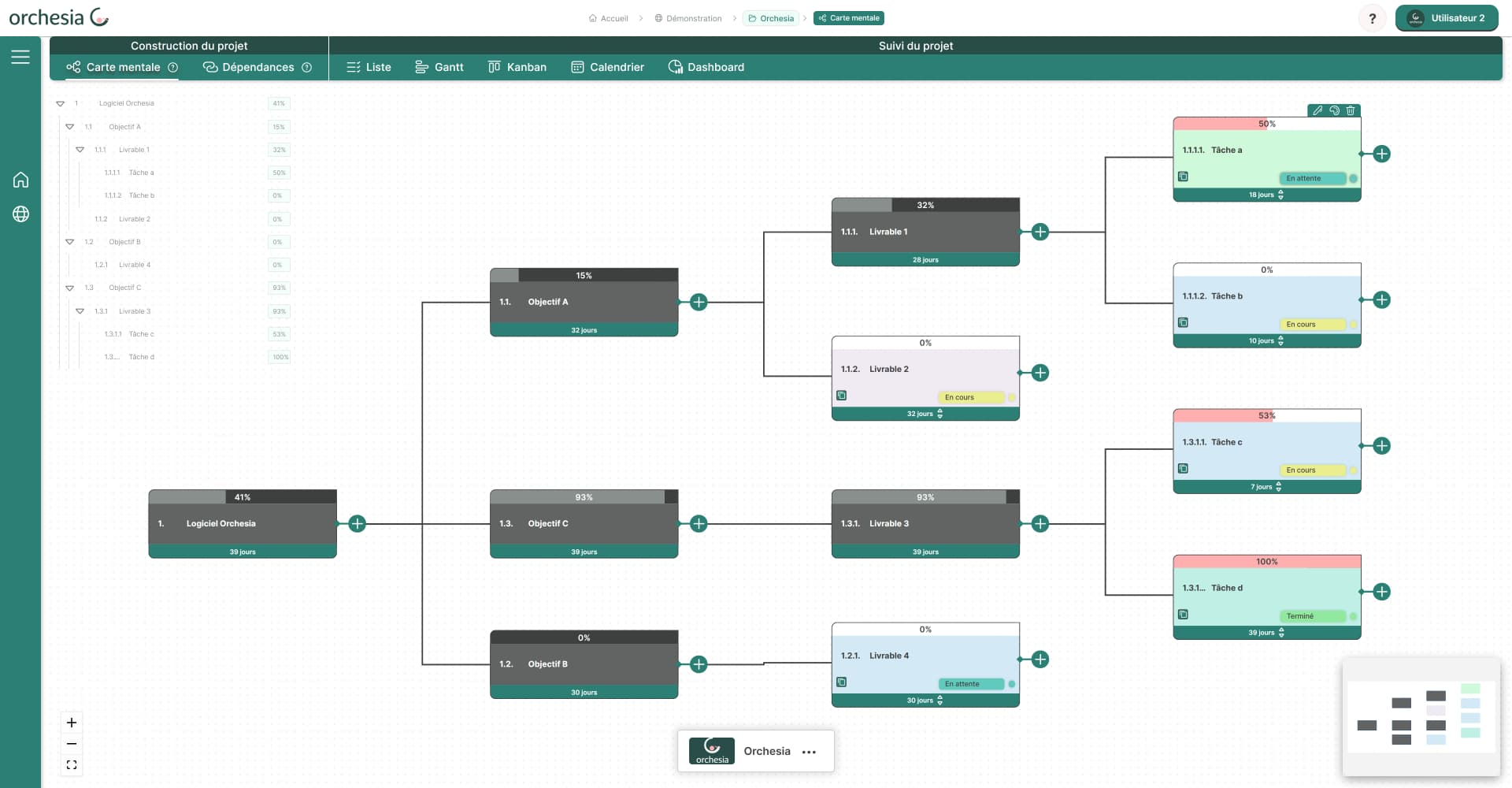
How Orchesia turns a scoping conversation into a structured WBS that feeds the dependency model and the schedule, instead of a diagram nobody reopens.
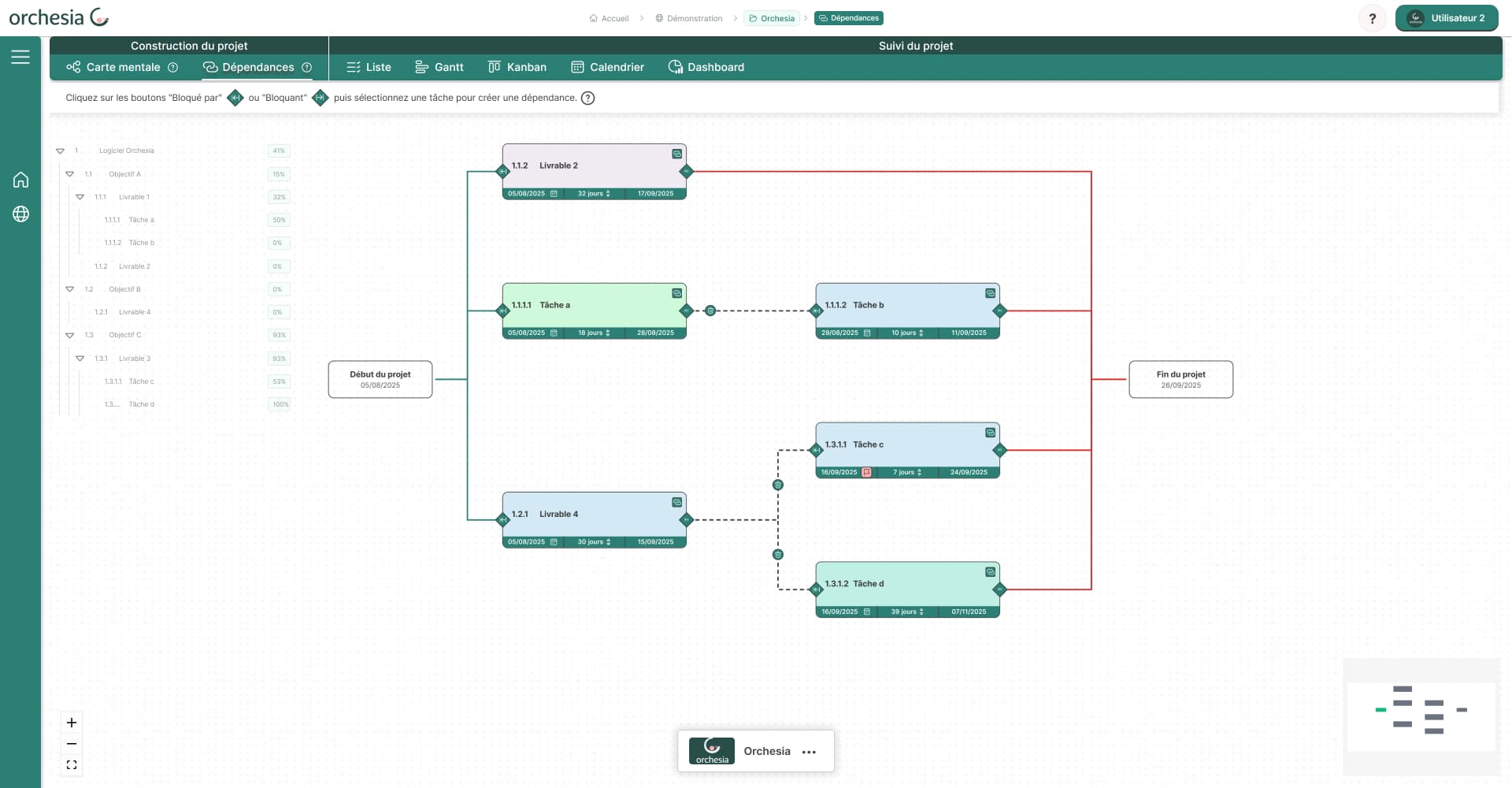
How Orchesia turns work packages into a dependency network, computes float and the critical path, and generates the schedule from it.
Compare Orchesia with tools you already know: spreadsheets, task trackers, scheduling solutions. The goal is to see where each approach fits, and where it shows limits on framing and dependencies.
Microsoft Project starts from an empty schedule. Orchesia starts from the work itself: scope, dependencies, then a generated Gantt.
Notion lets you build your own method. Orchesia brings one: scope, dependencies, then a generated Gantt.
Excel handles a project well until it changes hands, scope or scale. What a spreadsheet cannot model, and when that starts to cost you.
Monday accepts almost any way of working, provided someone designs it first. Orchesia starts from a project breakdown and derives the schedule from it.
Asana is very good at moving a team's daily work forward. Defending an end date takes something else: a scope broken down, a dependency network and calculated float.
A typical path in Orchesia follows a progressive logic. You start from an idea or a simply formulated objective, expand it into a mind map to explore scope, structure deliverables in a WBS, link activities, and identify the critical path. The schedule and Gantt are then built from that foundation, rather than the reverse.
This sequence avoids locking dates before clarifying the work. It supports framing workshops, trade-offs with business teams, and revisions while the project is still evolving.
To see how the tool materializes this method on a concrete case, visit structure a project before planning. Then start a trial or a demo to test the approach on your next project.
Orchesia does not start with a list of tasks to schedule. It invites you to structure project content (objectives, deliverables, dependencies) before locking dates. The schedule becomes a consequence of framing, not a substitute for framing.
Because the costliest trade-offs happen early: scope, priorities, assumptions about real work. Clarifying these elements before the Gantt reduces cascading delays and fragile commitments.
Monday and Asana excel at tracking execution once the project is launched; Excel stays flexible for documentation. Orchesia is upstream-oriented: mind map, WBS, and dependencies before a detailed schedule. Uses can complement each other depending on your organization.
Create a workspace, formulate the objective in one sentence or start on the mind map, break it into deliverables, link activities, then let the schedule build from that structure. A first frame can be set in under fifteen minutes.
No. The interface is visual and progressive. The approach guides the reasoning (what, in which order, with which constraints) without imposing planning jargon from the first workshop.
Try Orchesia for free or request a demo to see how to structure the pre-project with your team.