
Instructional design software: structure before you produce
A poorly designed course rarely falls apart during delivery — it falls apart during instructional design. Orchesia structures the client need, surfaces learning dependencies and prepares the handoff before production begins.
Three situations that derail training projects during instructional design

A need gathered too quickly, objectives that keep shifting
The need is signed off without being truly formalized or challenged. Learning objectives stay vague and generate constant back-and-forth throughout the design phase.

Learning dependencies invisible until mid-design
The links between needs, scripting, materials, and delivery are never made explicit upfront. Prerequisites surface mid-project, blocking progress or forcing costly rework.

Deadlines committed before knowing the real workload
The schedule is locked before the learning scope is stabilized. The handoff to delivery happens under pressure, at the expense of quality and course coherence.
What Orchesia gives you
Solutions built for the way your teams actually work

Client needs formalized before design begins
Structure needs analysis from the start. The need is clarified, formalized, and validated with the client before design begins. No more late re-scoping or shifting objectives mid-project.

Learning dependencies visible before kickoff
Visualize the links between instructional design stages. Blockers and rework are anticipated before design starts, not discovered once materials are already in production.

Handoff to delivery prepared during instructional design
Structure deliverables and handoff from the scoping stage. Facilitators receive a clear, transferable course — not a folder thrown together the night before training.
AI-assisted
AI does the legwork: project structure (WBS), task predictions, dependencies and critical path suggested automatically. You stay in control — AI just gets you there faster.
Good instructional design means an understood need, clear deliverables, and a handoff prepared before production.
Orchesia guides instructional teams from needs analysis through handoff, covering dependencies and the design schedule along the way.
Client need turned into a usable instructional structure
Formalize the training need upfront: client context, stakes, learning objectives, constraints, and expectations. The structure is shared and validated before design begins, preventing late re-scoping and mid-project changes of direction.
Learning dependencies and critical path calculated automatically
Orchesia makes the links between needs analysis, objectives, scripting, materials production, and delivery modalities visible. The critical path is calculated automatically. Blockers are anticipated before kickoff, not once materials are already in production.
AI working on your project
Describe your project in one sentence: AI generates the WBS, predicts the tasks and proposes the dependencies. You review and adjust in one click. You keep control — AI just speeds it up.
Structured deliverables and handoff prepared during instructional design
Orchesia helps structure learning deliverables clearly and transferably: scripts, materials, instructions, and key facilitation elements. Handoff is prepared during instructional design, not treated as an afterthought at the end of the project.
Content capacity, cycle by cycle
Material has to be ready by the session date, which does not move. Cycle planning shows accepted work against the team's real capacity — the crunch stops being discovered the week before.
Margin tracking in the same table as the projects
Add your own columns to the portfolio: contract value, days produced, client, funding body. Commercial and production tracking stop living in two separate files.
Production tracking in charts, by your own categories
Break progress and durations down by funding body, programme type or trainer — any column you have added. Four chart types, period filter, adjustable colours.
Without structured instructional design
The project starts on shaky ground.
- Client need partially understood or poorly formalized
- Vague learning objectives that evolve throughout design
- Dependencies between stages invisible until mid-production
- Deadlines committed without visibility on the real design workload
- Handoff to delivery rushed, learning quality under pressure
With Orchesia
The project starts on solid ground.
- Client need analyzed, formalized, and validated from the start
- Clear learning objectives that serve as a guiding thread
- Learning dependencies visible and anticipated before production
- Deadlines committed based on the real design workload
- Handoff prepared during instructional design, delivery smooth and controlled
One project in two misses its date
Not an impression: the same measurement two years apart, on samples of several thousand practitioners.
- 48%
of projects finish with a variance against the original schedule
PMI, Pulse of the Profession 2018, 4,455 practitioners - 63% vs 39%
organisations mature in project management meet their schedule, against immature ones
PMI, Pulse of the Profession 2020, 3,060 practitioners - 25%
of failed projects cite inadequate planning among the main causes
PMI, Pulse of the Profession 2018
The 24-point gap between mature and immature organisations does not come from better tracking. It comes from what was done before kickoff.
Simple pricing, no surprises
All the tools to structure and run your projects. 30-day free trial.
per user, billed monthly
View pricing30-day free trial · No commitment · Cancel anytime
What's included
- Access to all features
- Free updates
- Document storage
- Real-time collaboration
- PDF export
 AI credits
Frequently asked questions
No. Orchesia is not an LMS and does not replace a distribution or delivery platform. It works upstream to structure instructional design: needs analysis, course design, deliverables, dependencies, and handoff. Content is then distributed through your existing tools.
Before design and delivery — when the client need is being analyzed, learning objectives are being defined, and the course and deliverables need to be structured. That's precisely where training projects go off track if they aren't properly scoped.
Yes. Orchesia is used both by structured training organizations and by consultants or firms working on custom training projects. In both cases, it helps clarify the framework with the client and secure the design phase.
No. Orchesia is primarily a working tool for instructional teams. Certain elements can be shared with the client to validate needs, deliverables, and commitments before design begins — without them needing access to the tool.
A few hours is all it takes. The tool is built on concepts familiar to instructional teams: needs, objectives, deliverables, dependencies, handoff. AI further accelerates onboarding by generating a first structure from your description of the training project.
Further reading
The methods behind the tool, explained in detail.
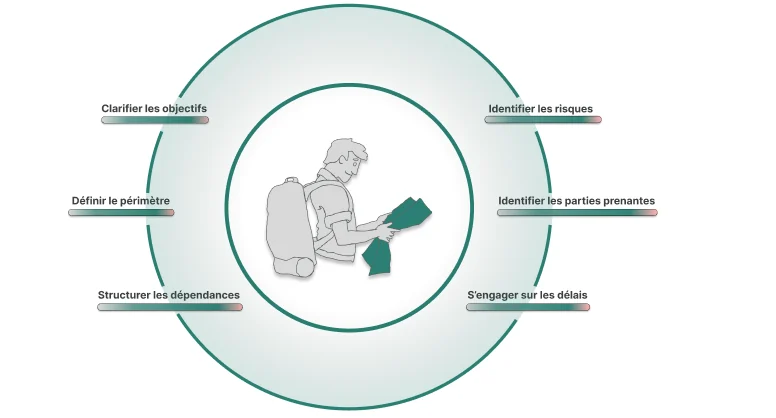 How to scope a project before you commit to a dateFraming is not paperwork. It is the last moment where a decision is cheap. Here is what a scoping stage has to produce before anyone opens a schedule.
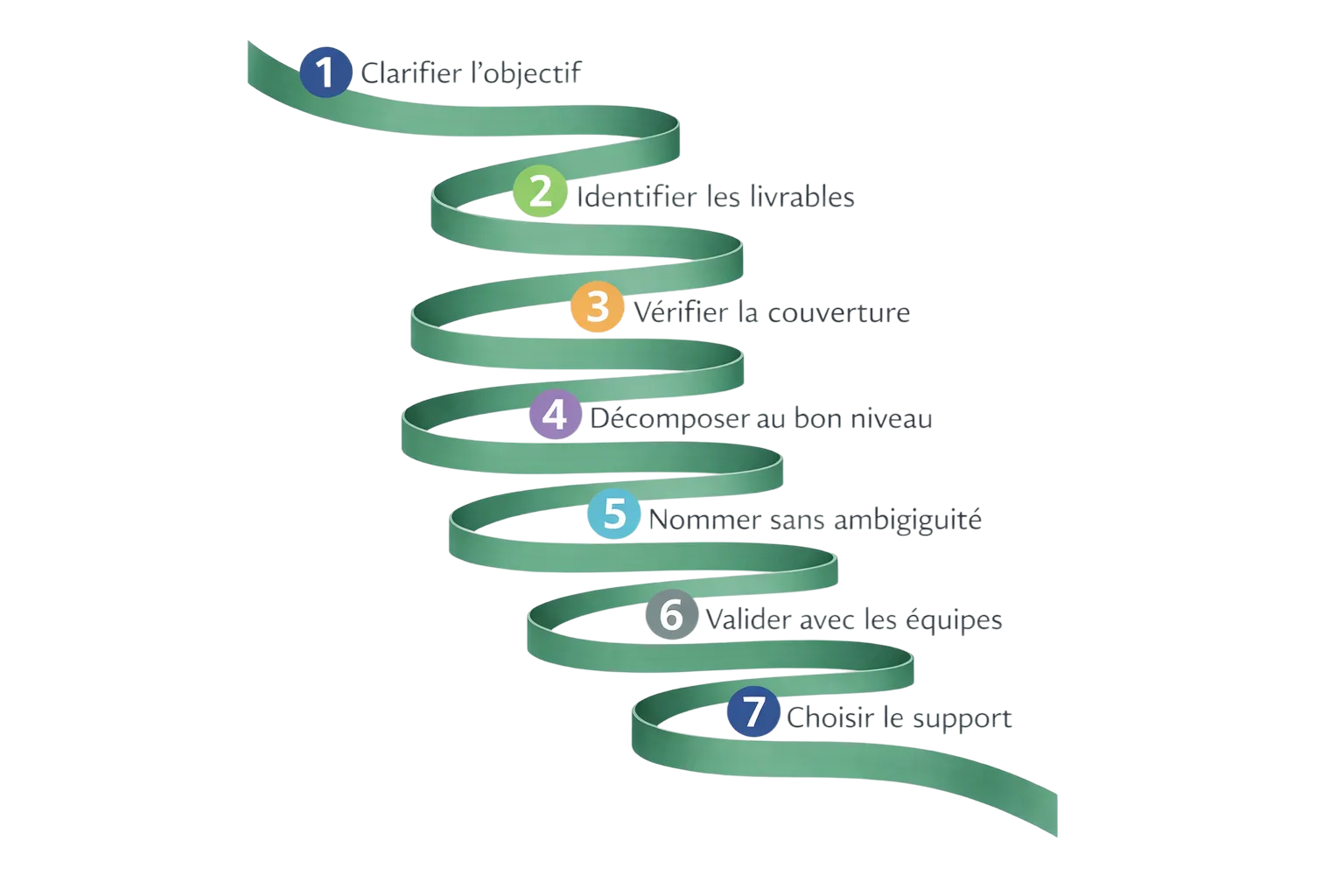 How to build a WBS, step by stepA practical method for decomposing a project into deliverables and work packages, with the checks that tell you the structure is sound.
Stop producing courses on vague foundations.
Orchesia helps training organizations clarify the need, structure deliverables, and prepare handoff before design begins.
30-day free trial • No commitment • No credit card