


Free
€0
After the trial · 1 project · no time limit
- One project tracked end to end
- Phases, milestones, MoSCoW prioritisation
- Cycle planning with a capacity gauge

You are usually the first to see that the sales promise and the real capacity never meet. Orchesia puts workload, dependencies and float on the table, before the date is sold.
Sales commits in the meeting. You find out at signature, with a team already full and dependencies nobody looked at.
You know it does not fit. You cannot prove it. The discussion is settled by seniority, and delivery absorbs the gap.
Nobody can say who is taken, on what, until when. The strain becomes visible when people break, not when it is decided.
What Orchesia changes when you are structuring operations under growth
Real capacity and dependencies become facts you can look up. Whether a date holds gets settled with numbers, not with instinct or seniority.
A grid per person and per day, with recorded leave and live recalculation. "We are full until October" stops being an impression.
The same breakdown, the same statuses, the same columns on every project. That is what makes a portfolio comparable, and what lets someone other than you pick a project up.
A baseline freezes the commitment made. The live schedule compares to the promised one, task by task. In the steering meeting, you show where the gap appeared.
What it takes to justify a date, then hold it.
A grid per member and per period, with recorded time off and immediate recalculation. The total load row shows the days above 100%. This is the document that turns "we have no room left" into something checkable.
Three capacity-specific measures: average load, peak load and number of days above 100%. Broken down by person or project, over the period you choose. Something to bring to the leadership meeting other than a feeling.
The critical path and the float are computed from the dependency network. You can name the task that sets the end date, and say how far another one can slip without consequence. A deadline becomes arguable instead of negotiable.
A baseline records the schedule as it was promised. The live schedule sits on top. When delivery slips, the conversation is about the task that moved and the decision that moved it.
Custom Amount columns in euros on the portfolio: contracted budget, committed cost, margin per job. The monthly review happens where the projects live, not in a separate workbook.
A multi-project backlog, cycles composed by drag and drop, and a gauge comparing planned load to the team's capacity. You see straight away whether a cycle's content fits, before announcing it.
Read-only Visitor seats, free up to fifty. A client or an internal sponsor follows progress without being able to move a date. Approvals become traceable.
Offres payantes · mode structuré
As soon as several teams wait on each other, Orchesia computes the critical path and the float from the project structure: deliverable breakdown (WBS), dependency network (PERT), then schedule generation. That is what lets you answer "no, and here is why" with a number.
Delivery absorbs whatever sales promised.
Arbitration happens before signature, with numbers.
Not an impression: the same measurement two years apart, on samples of several thousand practitioners.
of projects finish with a variance against the original schedule
PMI, Pulse of the Profession 2018, 4,455 practitionersorganisations mature in project management meet their schedule, against immature ones
PMI, Pulse of the Profession 2020, 3,060 practitionersof failed projects cite inadequate planning among the main causes
PMI, Pulse of the Profession 2018The 24-point gap between mature and immature organisations does not come from better tracking. It comes from what was done before kickoff.
30-day free trial · No commitment · No credit card
When the trial ends, carry on free on one simplified project, or pick a paid plan for multi-project work, consolidated workload and structured mode.
After the trial · 1 project · no time limit
For the portfolio, consolidated workload and structured mode
Not yet. An API and webhooks are planned, with no date announced: today there is no way to connect Orchesia to a CRM. Arbitration before a commitment therefore stays a human ritual, one that Orchesia equips with the numbers it was missing. An automatic block on the CRM side would get worked around soon enough; a capacity figure anyone can check in the meeting, much less so.
Rarely by talking about a tool. What works is making the arbitration fast and factual: capacity you can check in thirty seconds, and a critical path that names the task responsible for the date. A salesperson accepts a costed "no" more readily than an experienced one. The change is cultural before it is technical, and it takes longer than the setup.
Yes. The Workload view consolidates the structured projects in the workspace, by member and by period, with recorded time off. It can be filtered, and you can open the relevant task or project directly from it.
The mode is chosen project by project. A job with heavy dependencies goes structured, with critical path and baselines. A product roadmap on a fixed date goes simplified, with phases, prioritisation and cycles. Both live in the same workspace.
Yes, in two places. The workspace dashboard covers structured projects: seven project-level measures including average load, peak load and days over capacity, broken down by member, status or presence on the critical path. Cycle planning has its own charts, configurable on cycles and simplified projects. Only archived projects stay out of the analyses.
Around half a day to set up a first project and the team's workload. You start from a project template or build the breakdown with the team: that is exactly the work Orchesia is for, and it produces a structure an old file never had.
The methods behind the tool, explained in detail.
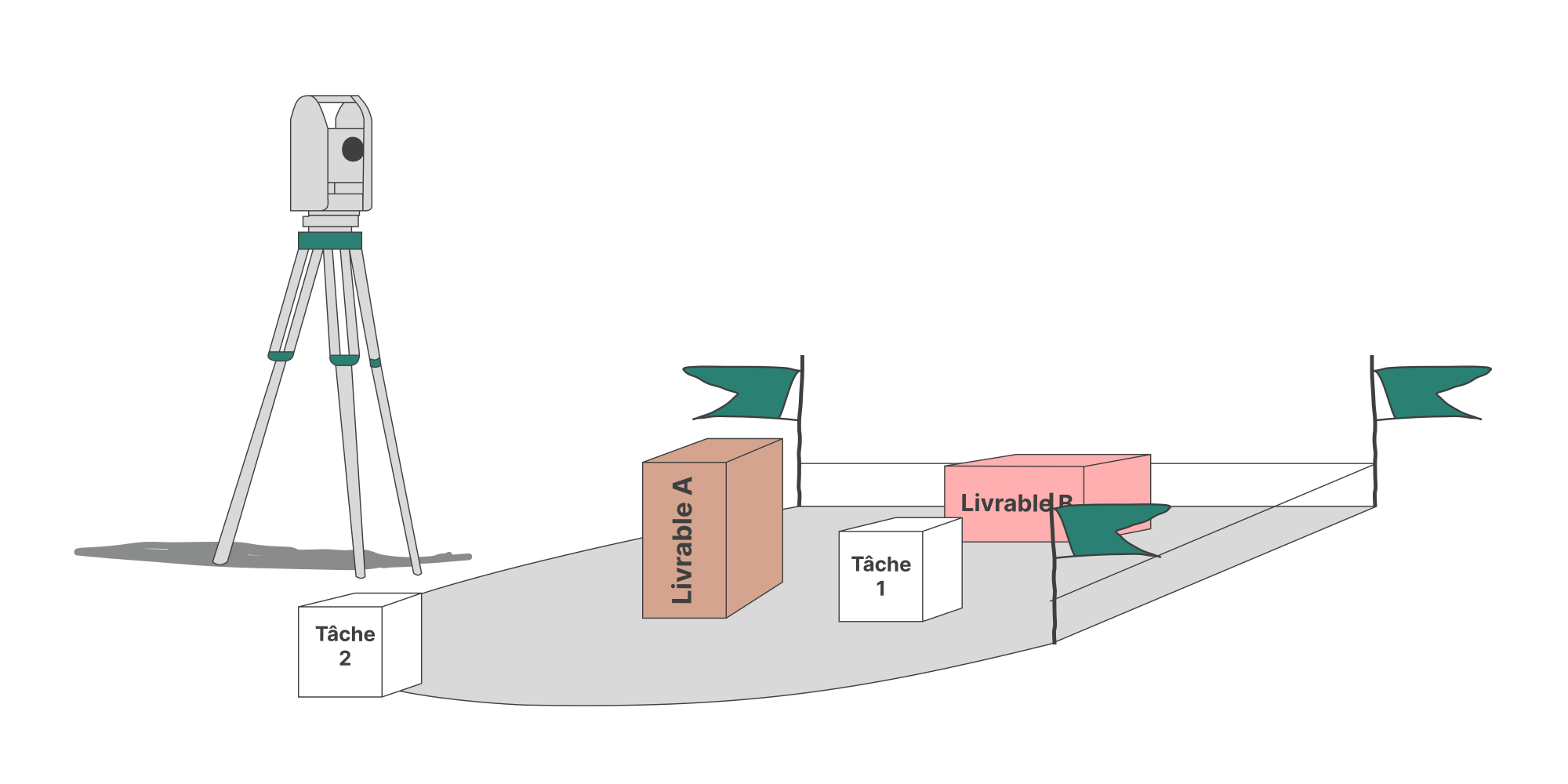 Scope creep: why projects grow without anyone decidingScope creep is rarely a single bad decision. It is the accumulation of small additions nobody logged, on a scope that was never fully written down.
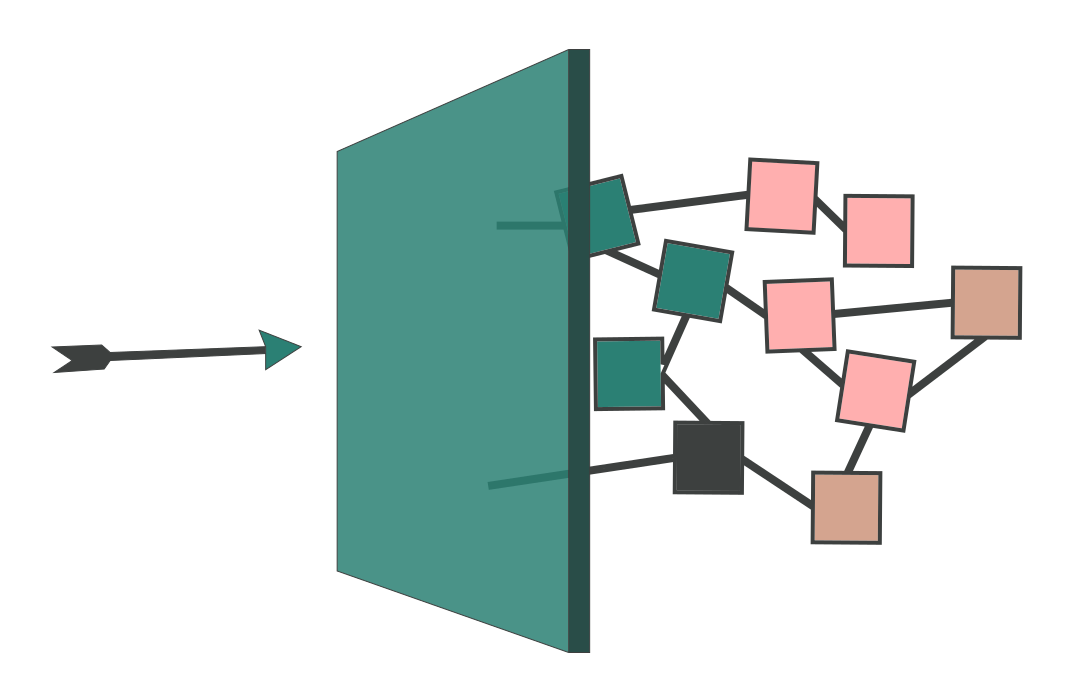 Hidden dependencies: why blockers appear too lateMost project delays do not come from tasks running long. They come from dependencies nobody modelled — discovered at the moment they block something.
30-day free trial, no credit card.
No commitment • 30 days free • No card required