


Free
€0
After trial · 1 project · no time limit
- Backward planning for 1 game
- Phases, milestones, items (features & bugs)
- MoSCoW Kanban per phase

As a producer, you hold the course: align the team, arbitrate features and bugs, keep ship date in sight. Orchesia gives you backward planning, priorities, and workload per sprint — without chasing information.
Everyone knows what they're doing, no one has the big picture. Efforts scatter and priorities contradict each other from role to role.
Features pile up along the way. Without clear arbitration, ship date approaches and the game is never "done."
Workload is never compared to real capacity. Delays only show when crunch is the only answer left.
What Orchesia changes for a producer
Backward planning from ship date becomes the shared reference. Everyone sees phases, milestones, and what must be ready — without a meeting to rediscover it.
Prioritize features and bugs with a Must / Should / Could / Won't Kanban. You decide what goes in the build and what drops — explicitly, not by default.
Visualize workload per cycle against team capacity. You spot overheated sprints before they are paid for in crunch.
Manage features and bugs on Kanban boards per phase (Must, Should, Could, Won't) and build the charts you need. Each phase's status is readable at a glance — for you and the team.
Three stages to stay on course.
Place your phases (prototype, vertical slice, production, alpha, beta) working back from ship or demo date. The whole team shares the same course.
In each phase, create items (features, bugs, tasks) and decide with MoSCoW Kanban. Your arbitration becomes visible to the whole team.
With cycles (your sprints), allocate people and hours, track workload against team capacity, and build the charts you need to follow progress.
The backlog feeds cycles whose gauge shows what the team can absorb. What overflows appears at assignment, not at the sprint review.
An asset the gameplay is waiting on, a feature waiting on a tool: these chains block production while they stay implicit. The dependency network exposes them before the cycle starts.
The schedule signed off at the start of production serves as the reference. At each milestone the variance is dated and tied to a specific task — enough to arbitrate scope rather than push the date.
Offres payantes · mode structuré
When scope is broad and the date is calculated from content rather than imposed, Orchesia structures the project (WBS), models dependencies (PERT), calculates the critical path, and generates the schedule — with AI-accelerated formatting.
The studio moves in scattered order.
The studio moves behind the same course.
of organisations do not produce scoping documents, or not consistently
Wellingtone, State of Project Management 2021do not consistently build a project schedule
Wellingtone, State of Project Management 2021do not consistently apply a defined methodology
Wellingtone, State of Project Management 202130-day free trial · No commitment · No credit card
At the end of the trial, continue free on a simplified project, or choose a paid plan for multiple projects and structured mode.
After trial · 1 project · no time limit
For multi-project producers and large scopes
No. You can run backward planning for one game for free (a simplified project), without a credit card. Advanced features (multiple projects, structured mode, AI) are on paid plans.
Yes. A cycle is a work period (your sprint) on which you plan workload, distribute items, and track progress.
No. Orchesia is for scoping, planning, and arbitrating: backward planning, phases, milestones, feature and bug prioritization. It centralizes planning and priorities without replacing fine-grained ticket tracking or your engine.
Yes. On a paid plan, you coordinate multiple projects in the same workspace, track workload per sprint, and build your dashboards.
No. It's primarily the producer's and production team's tool; items can be shared without everyone needing to log in.
A few hours. The tool builds on familiar concepts: phases, milestones, sprints, feature and bug prioritization.
The methods behind the tool, explained in detail.
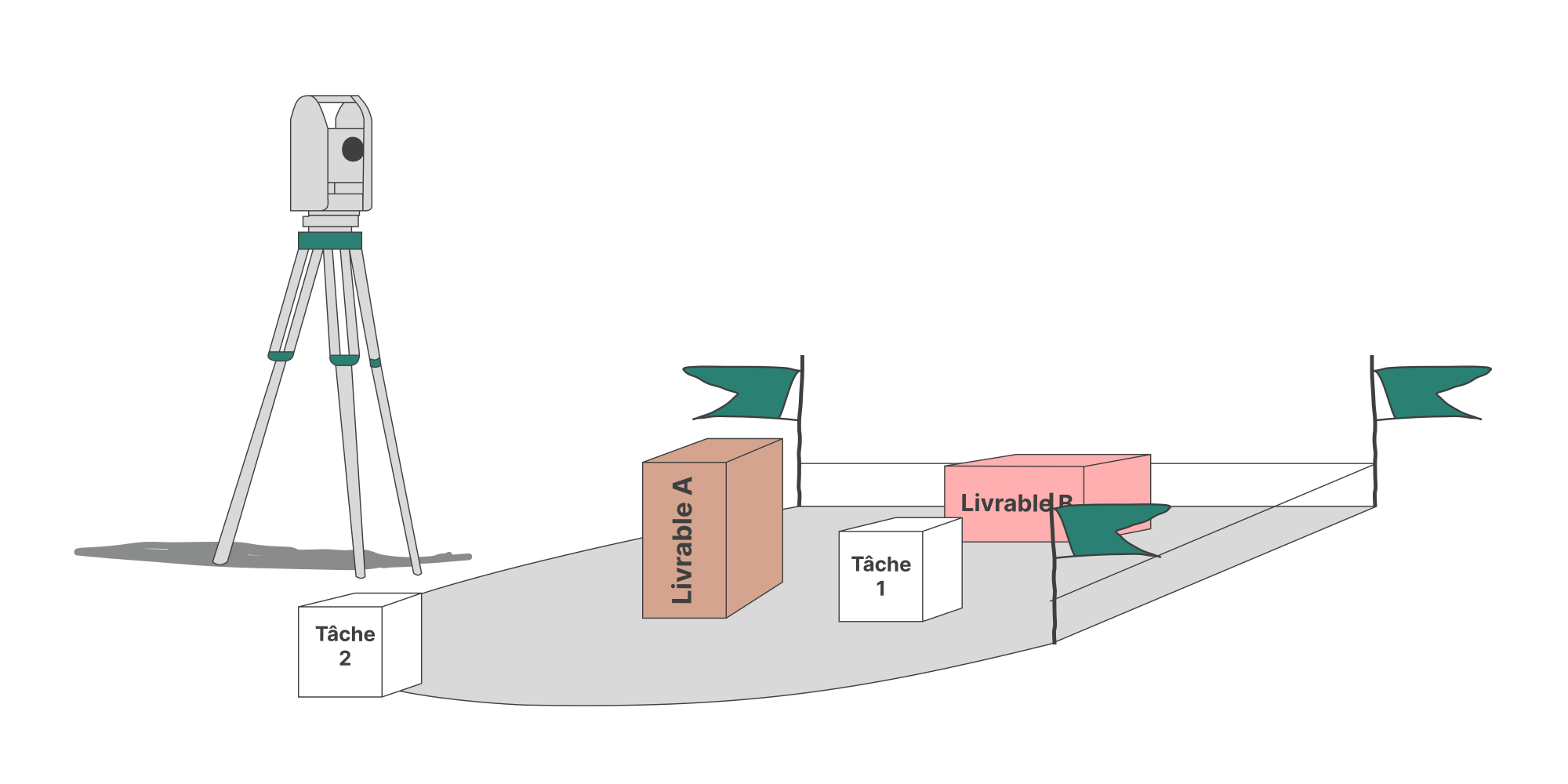 Scope creep: why projects grow without anyone decidingScope creep is rarely a single bad decision. It is the accumulation of small additions nobody logged, on a scope that was never fully written down.
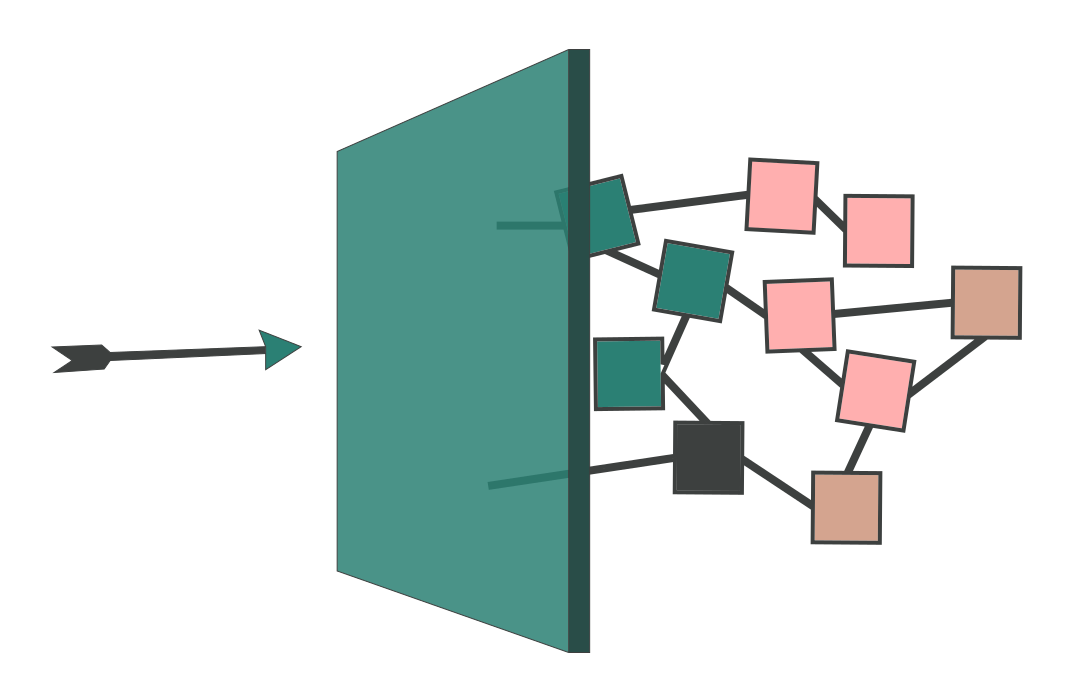 Hidden dependencies: why blockers appear too lateMost project delays do not come from tasks running long. They come from dependencies nobody modelled — discovered at the moment they block something.
Set backward planning, arbitrate scope, and hit ship date — free on one game. Upgrade to paid plans for multiple projects and structured mode.
30-day free trial • No commitment • No credit card