
Requirements gathering and structuring: scope before you decide
Projects rarely fail during execution — they fail during needs analysis. Orchesia structures requirements gathering: clarify business needs, formalize dependencies and secure decisions before the project is launched.
Three situations that derail projects during needs analysis

Needs gathered too quickly, without being challenged
Needs are summarized in a few exchanges, without being truly formalized. Gray areas remain and create misunderstandings from the first structural decisions.

Dependencies between requirements invisible until the last moment
Requirements are listed without a big-picture view. Links and impacts between them only appear during design, undermining decisions already made.

Trade-offs made without clear scope
Decisions are made while functional scope remains vague. Impacts are not measured, leading to rollbacks and costly rework.
Make your day-to-day simpler
Tools built around your role

Business needs clarified before design
Formalize needs from the start: context, stakes, objectives, constraints. The framework is shared and validated before being translated into requirements or solutions. No more late re-scoping.

Structured requirements and visible dependencies
Organize requirements coherently and make their links explicit. Impacts and contradictions are identified before irreversible decisions are made.

Controlled scope, defensible decisions
Clarify functional scope and the impact of each trade-off. Decisions are documented, understood, and owned. Rework becomes the exception, not the rule.
AI-assisted
AI does the legwork: project structure (WBS), task predictions, dependencies and critical path suggested automatically. You stay in control — AI just gets you there faster.
Solid requirements scoping means understood needs, visible dependencies, and decisions that hold.
Orchesia guides the business analyst from needs formalization to structural decisions, through dependencies and functional scope.
Business needs formalized into an actionable structure
Describe context, stakes, and objectives. Orchesia structures needs into a clear tree, shareable with all stakeholders before any design decision.
Dependencies between requirements calculated automatically
Orchesia identifies links between requirements and makes cascade impacts visible. Contradictions and side effects are detected before irreversible decisions are made.
AI working on your project
Describe your project in one sentence: AI generates the WBS, predicts the tasks and proposes the dependencies. You review and adjust in one click. You keep control — AI just speeds it up.
Clear scope, documented trade-offs
With structured requirements and visible dependencies, decisions are made on a solid basis. Scope is controlled, choices are tracked and owned before launch.
Every requirement carries its own attributes
Add your columns to deliverables: criticality, business owner, approval status, reference to the specification. The table filters and sorts on them, and becomes the basis for arbitration rather than a side document.
Business owners approve without moving the scope
Business referents join as Visitors: they read the requirements that concern them and comment, with no editing rights. Approval is traced in the project, not in an inbox.
The elicitation workshop structures itself live
During the session the breakdown is built by several people at once: everyone sees what the others add. What comes out of the workshop is already the reference, with no write-up step.
Without requirements scoping
Decisions rest on fragile foundations.
- Business needs partially understood or summarized too quickly
- Requirements listed without structure or big-picture view
- Dependencies and impacts invisible until mid-design
- Functional scope vague or constantly shifting
- Trade-offs made without measuring all consequences
- Rollbacks and rework inevitable
With Orchesia
Decisions rest on a solid foundation.
- Business needs clarified, formalized, and shared from the start
- Requirements structured and understandable by all
- Dependencies and impacts visible before any decision
- Clear, controlled functional scope
- Trade-offs argued, documented, and owned
- Less rework, decisions that hold over time
Projects fail before execution
Among failed projects, the most cited causes all sit upstream. Multiple-choice answers: the percentages do not add up.
- 35%
inadequate requirements gathering
PMI, Pulse of the Profession 2018, 4,455 practitioners - 29%
inadequate vision or goal
PMI, Pulse of the Profession 2018 - 28%
inadequate cost estimation
PMI, Pulse of the Profession 2018 - 26%
poorly identified resource dependencies
PMI, Pulse of the Profession 2018
Simple pricing, no surprises
All the tools to structure and run your projects. 30-day free trial.
per user, billed monthly
View pricing30-day free trial · No commitment · Cancel anytime
What's included
- Access to all features
- Free updates
- Document storage
- Real-time collaboration
- PDF export
 AI credits
Frequently asked questions
No. Orchesia works upstream, before specs are written. It structures business needs, makes dependencies between requirements visible, and secures decisions before design. It prepares the ground for specs — it does not replace them.
Before any structural decision: when needs must be clarified, requirements formalized, and functional scope stabilized. That is precisely when the BA role is most critical and mistakes cost the most.
No. Orchesia structures without locking things in. Assumptions stay visible, decisions are traceable, and impacts can be reassessed at any time. Analysis gains clarity without losing flexibility.
No. Orchesia is primarily the BA's working tool. Certain views can be shared to align stakeholders on needs and decisions, without everyone needing access to the tool.
A few hours is enough. The tool builds on concepts familiar to a BA: needs, requirements, dependencies, impacts, decisions. AI further accelerates onboarding by generating an initial structure from your needs description.
Further reading
The methods behind the tool, explained in detail.
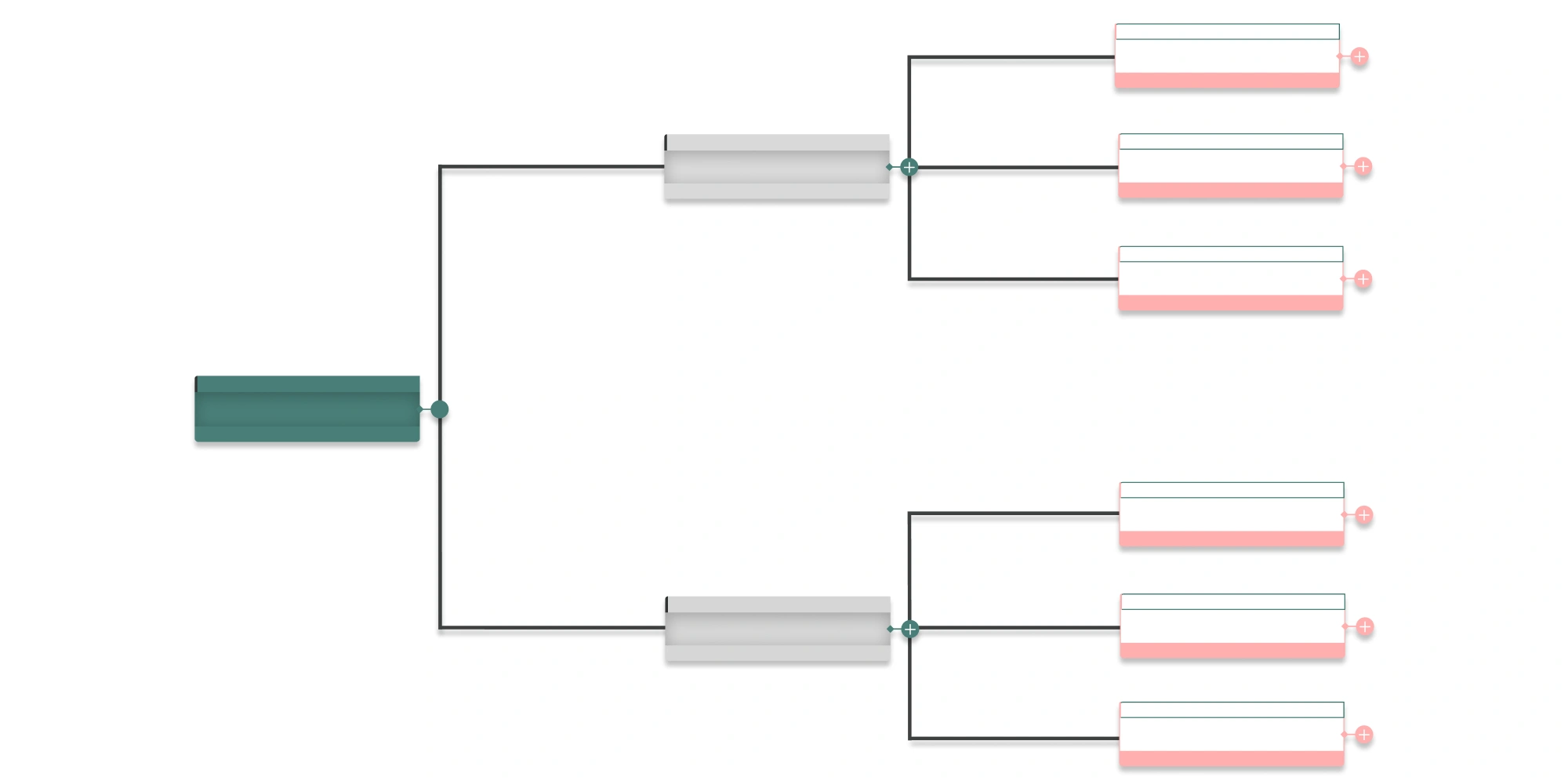 What is a Work Breakdown Structure (WBS)?A WBS breaks a project into deliverables and work packages. Definition, the 100% rule, decomposition levels and how it differs from a task list.
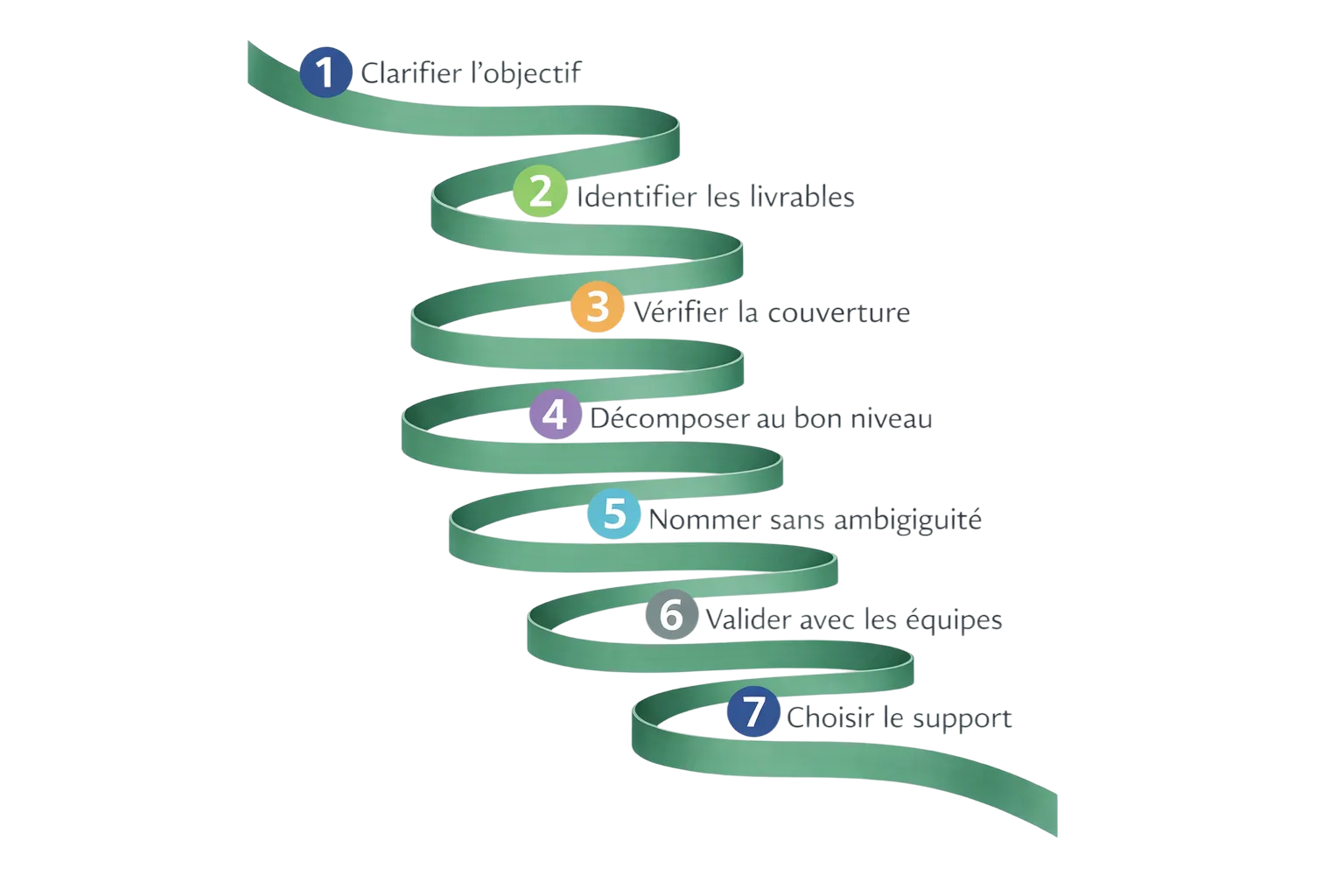 How to build a WBS, step by stepA practical method for decomposing a project into deliverables and work packages, with the checks that tell you the structure is sound.
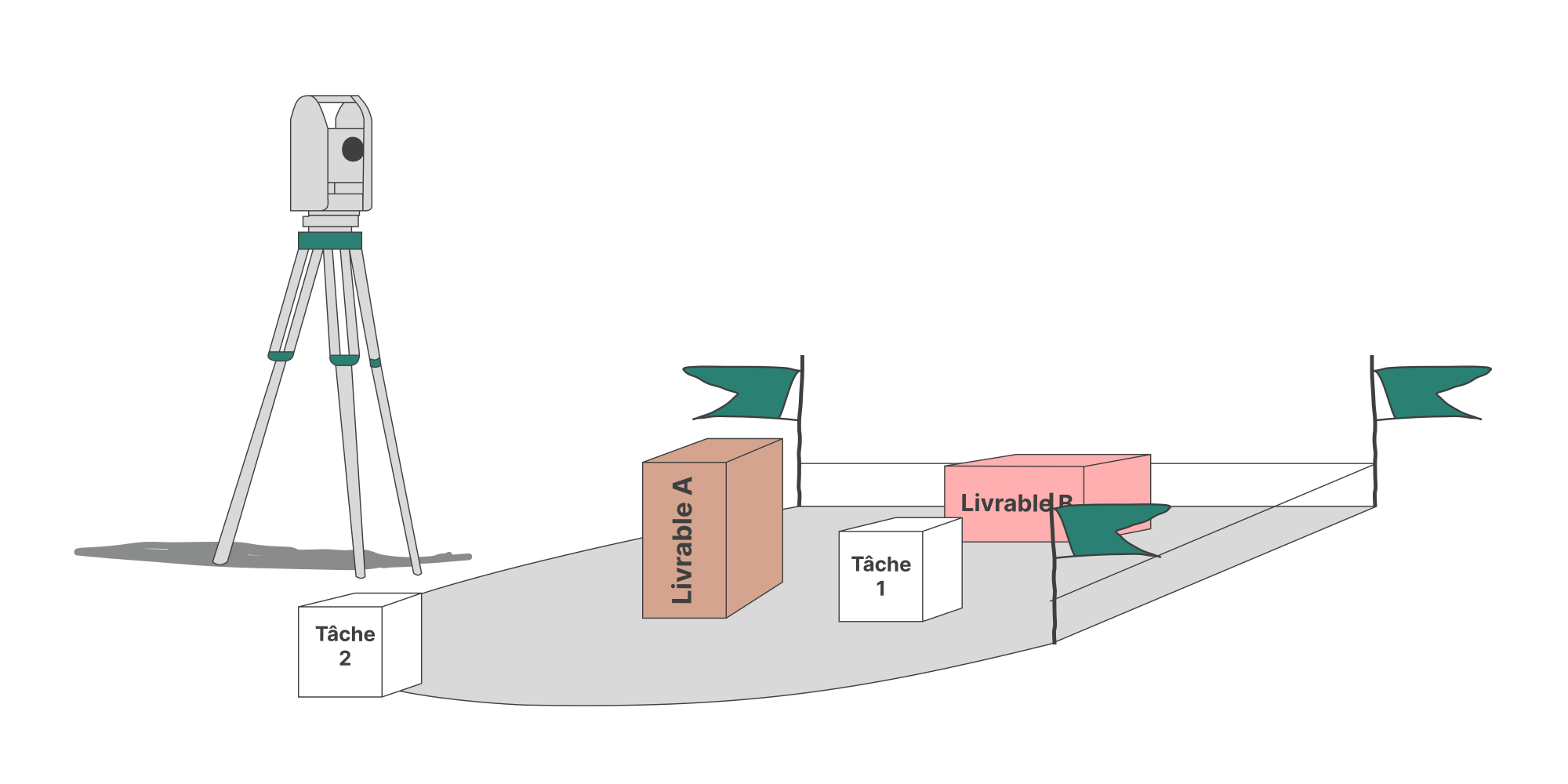 Scope creep: why projects grow without anyone decidingScope creep is rarely a single bad decision. It is the accumulation of small additions nobody logged, on a scope that was never fully written down.
Stop deciding on vague foundations. Start by scoping requirements.
Orchesia helps you clarify business needs, structure requirements, and make dependencies visible before decisions are made.
30-day free trial • No commitment • No credit card