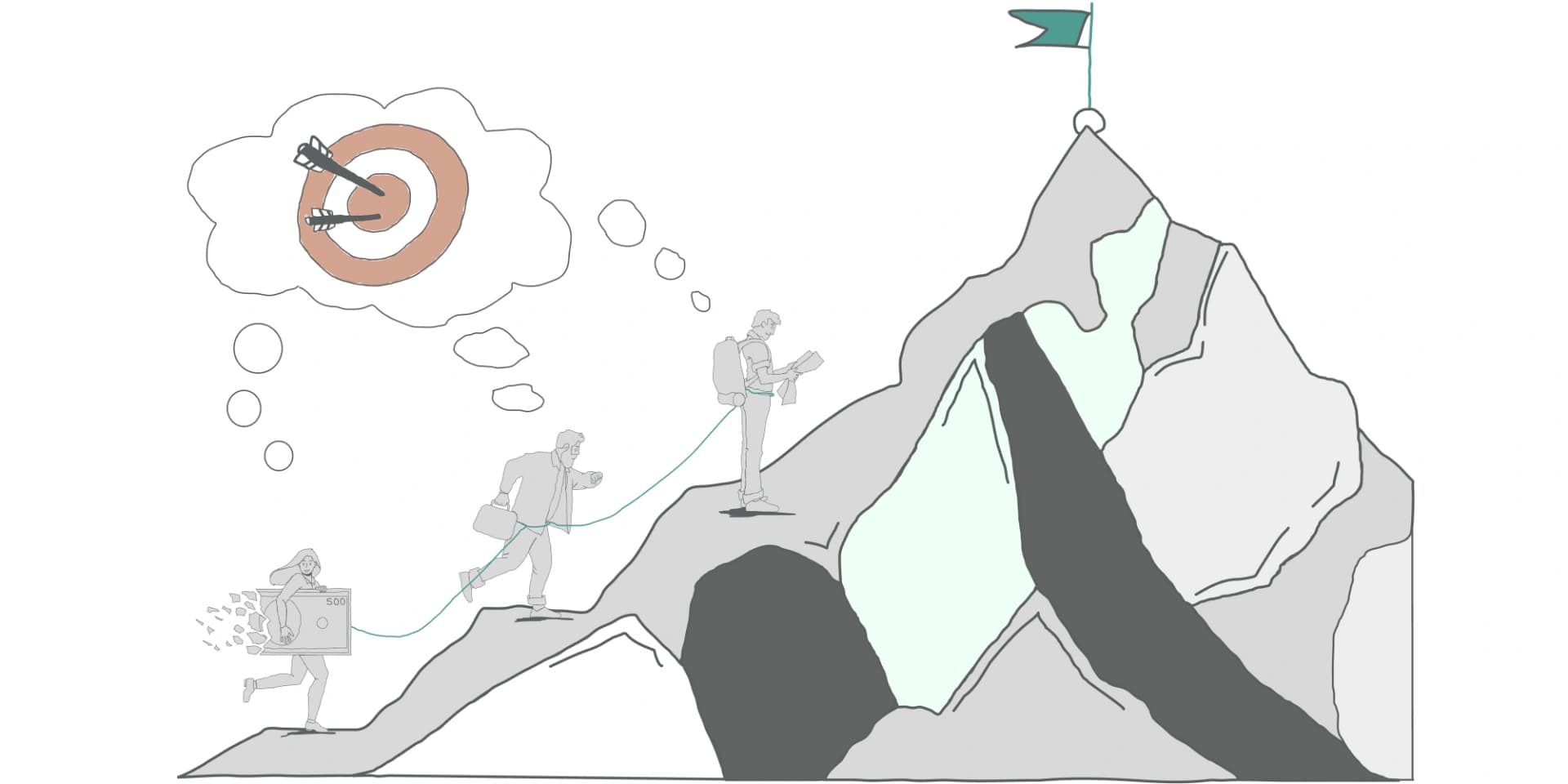
Reference points, methods, and tools to get started confidently, then see where classic approaches show their limits.
Project management is the art of turning an intention into a concrete result, within a given timeframe and with limited means. Before choosing software or filling a schedule, you need to understand the foundations: what a project is, which phases it goes through, and which tools help structure it without getting lost in complexity.
This page is for project managers, project owners, consultants, and leaders who want solid reference points. You will find the essential concepts (project, life cycle, pre-project, project planning, backward planning) then the classic tools (WBS, PERT, critical path, Gantt) and how they fit together. The goal is not to master everything in one reading, but to know where to look and why each building block exists.
Recognized methods remain essential to frame a project. They quickly show their limits, though, when the context becomes complex, cross-functional, or uncertain: poorly visible dependencies, decisions made too early, deadlines announced on fragile bases. Orchesia starts from this observation: structure before you plan, to make commitments reliable before launching a detailed schedule.
Before opening any diagram, it helps to agree on what a project actually is: where it starts, where it stops, and what separates it from the work that simply goes on. That definition is what gives you a shared vocabulary with sponsors and delivery teams.
Structuring answers the "what" before anyone argues about the "when". The WBS breaks the project into deliverables you can handle separately, and the PERT chart makes the dependencies between them visible.
The critical path then falls out of the network on its own: the chain of tasks that sets the end date, and the only one where a day lost is a day lost on the project.
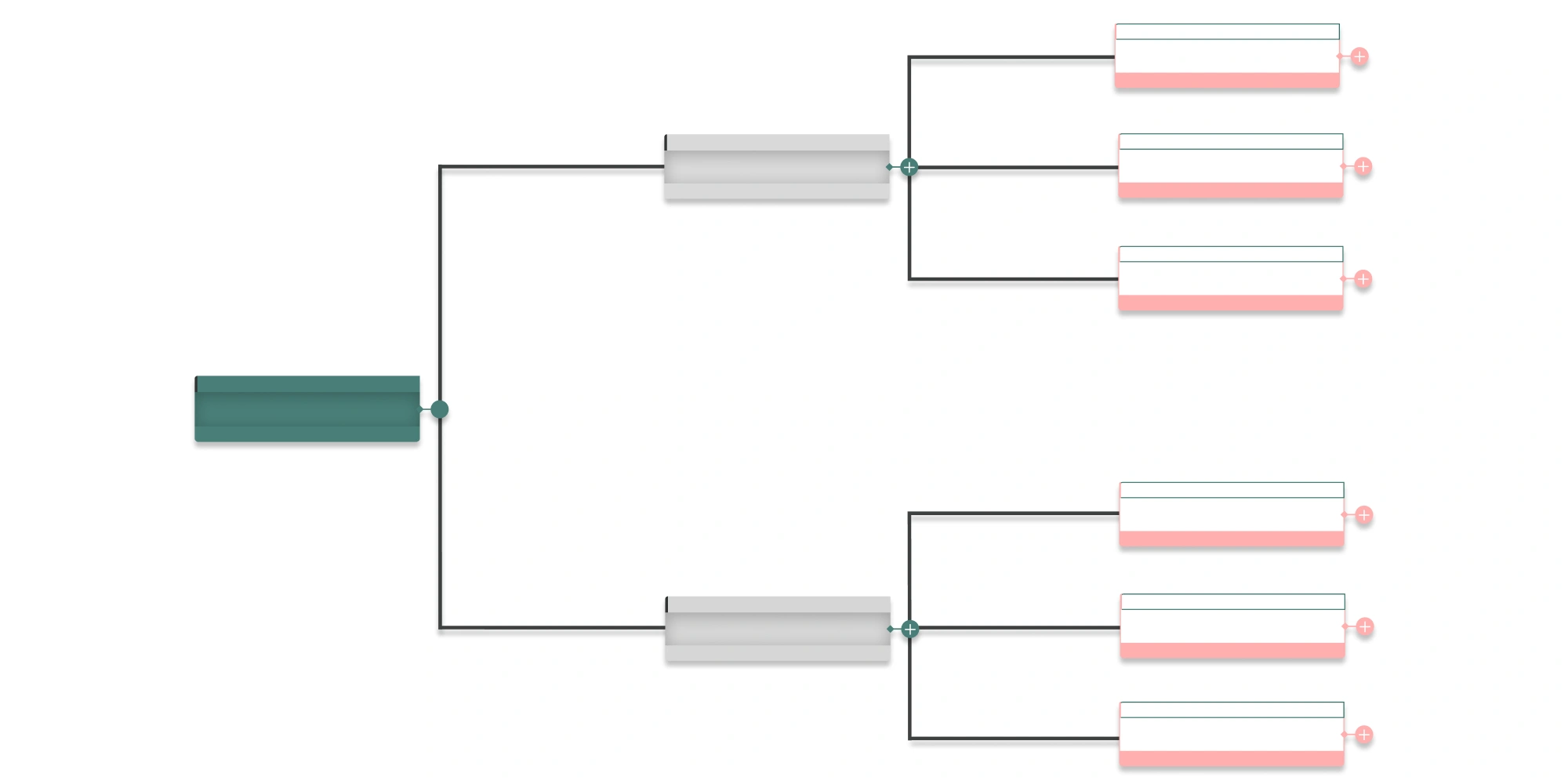
A WBS breaks a project into deliverables and work packages. Definition, the 100% rule, decomposition levels and how it differs from a task list.
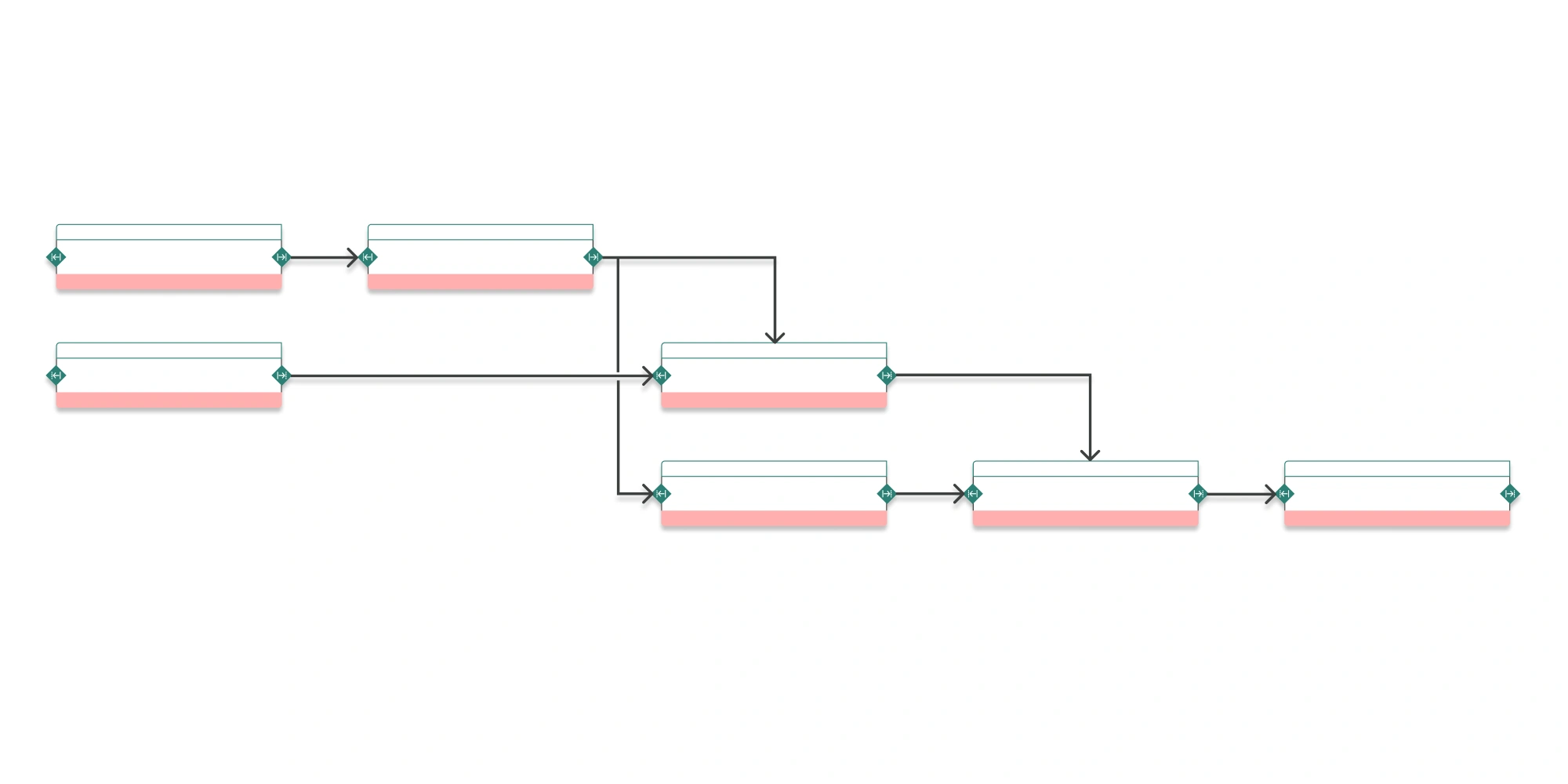
A PERT chart models the dependencies between tasks and reveals the sequence that actually drives the end date. Definition, notation and how it differs from a Gantt chart.
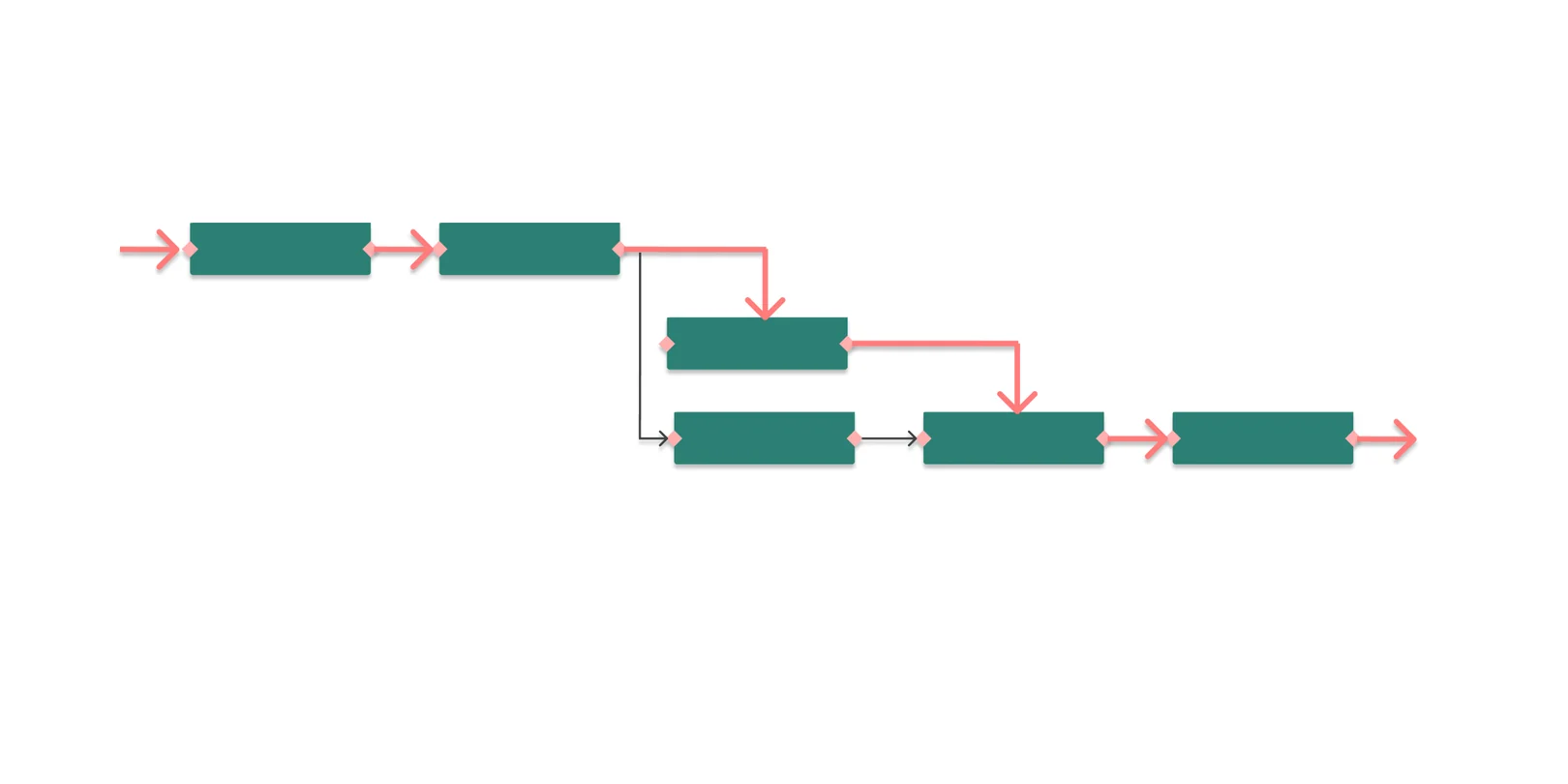
The critical path is the longest chain of dependent tasks in a project. It sets the minimum duration — and any delay on it moves the end date.
Once the content holds still, it goes on a calendar. The Gantt chart displays those dates once they exist, which is also why it is the wrong place to decide them.
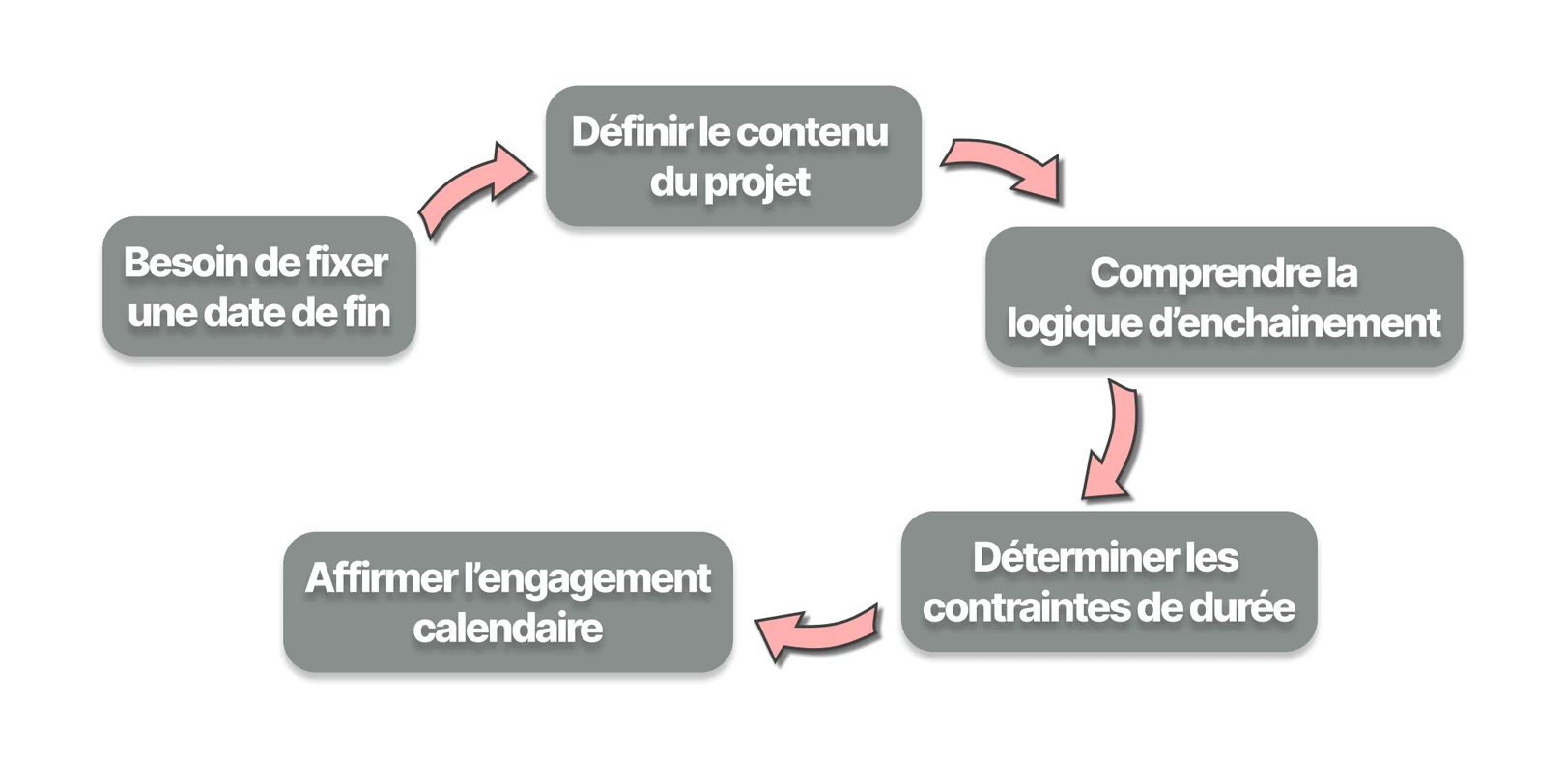
Break down, order, estimate, then date: planning runs through four operations, and the schedule is only the last one.
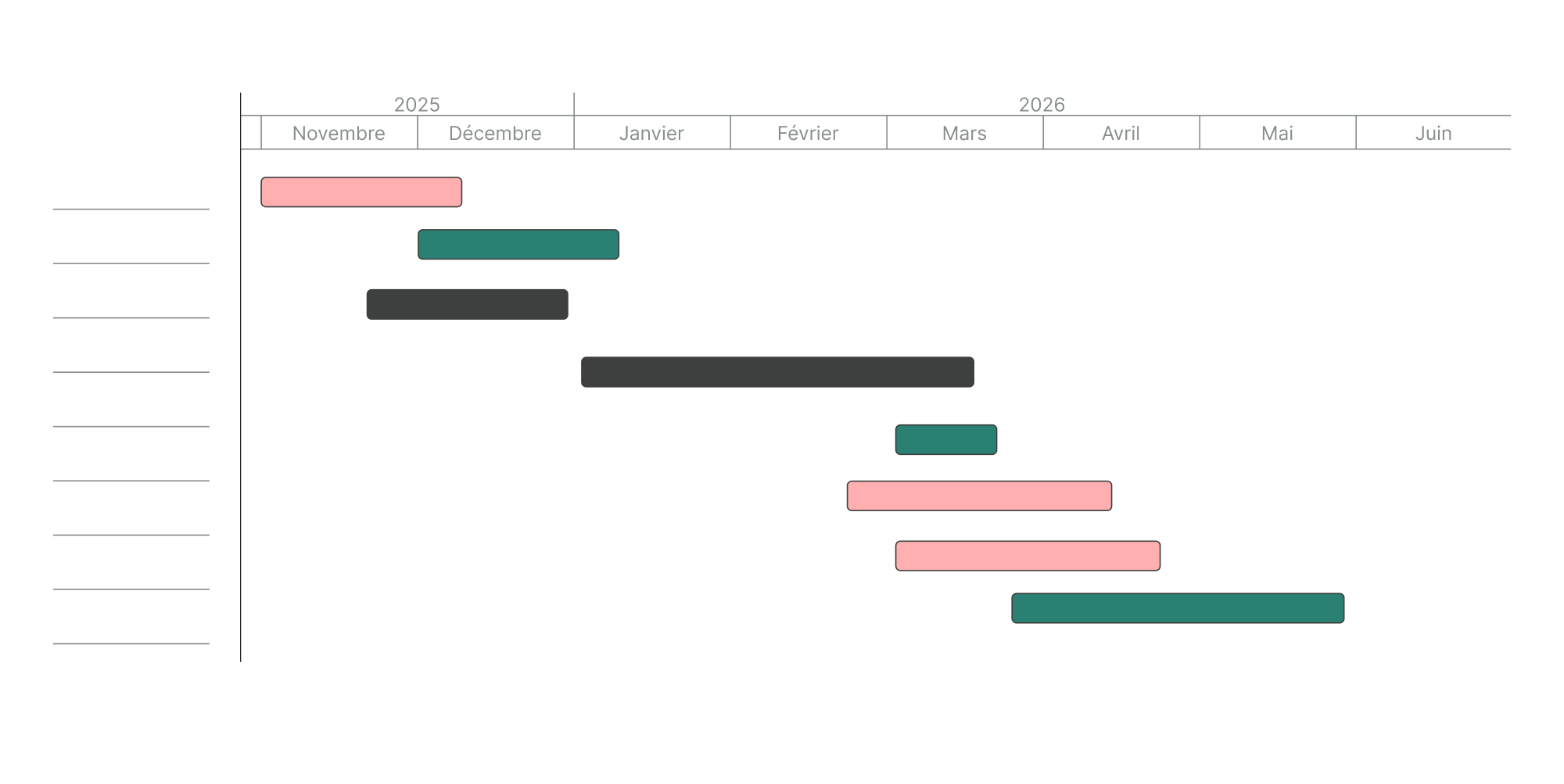
A Gantt chart puts the work on a calendar. The hard part is knowing what you put on it, and in what order.
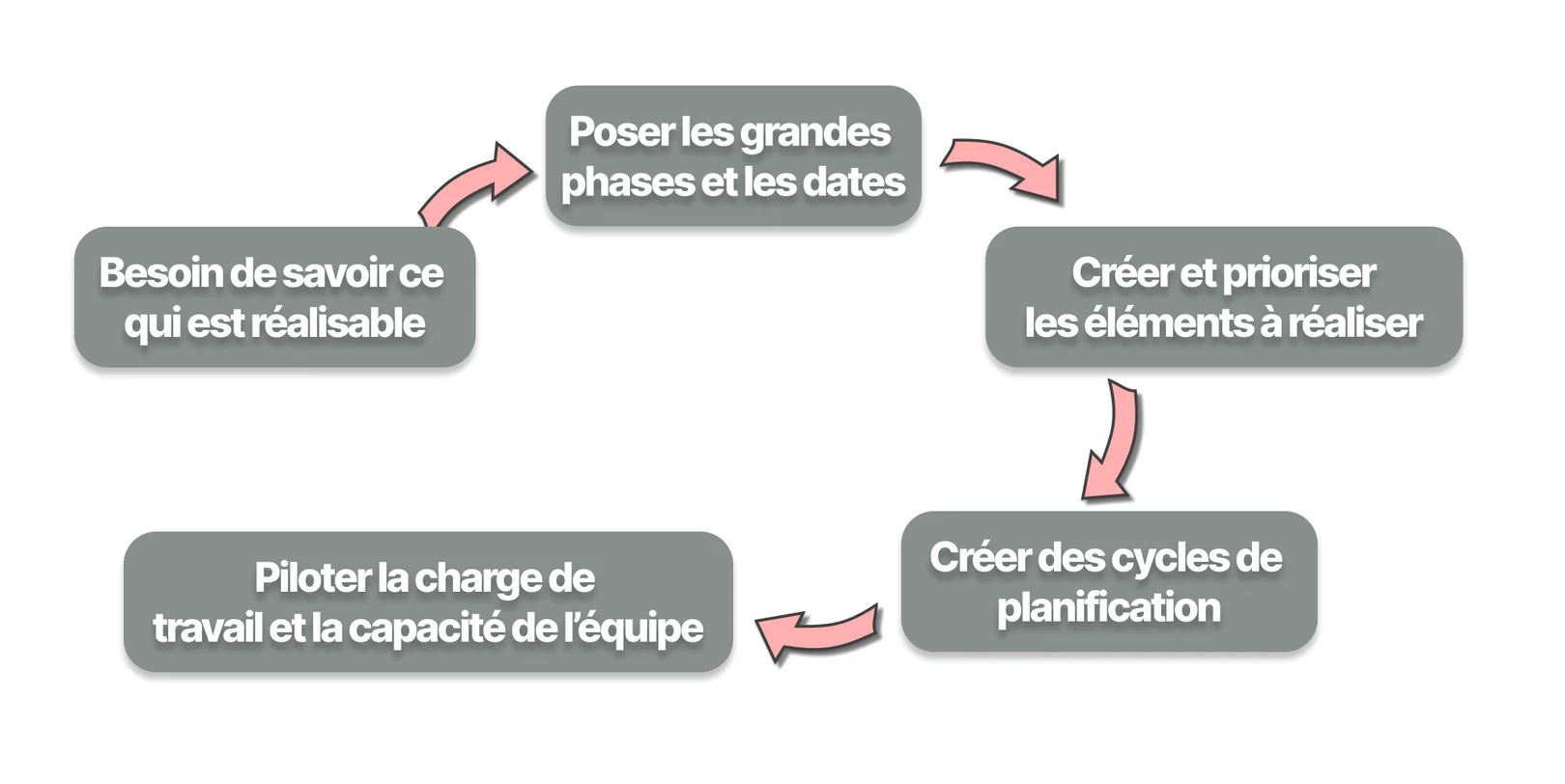
When the date is imposed: trim the scope instead of compressing the durations.
Understanding project management basics is necessary, but not enough when stakes go beyond a simple linear schedule. On complex projects, dependencies often stay implicit, decisions are locked too early, and deadlines become fragile at the first unexpected event.
This is not a rejection of classic methods: it is a question of timing and depth. WBS, PERT, or Gantt become far more useful once the scope has been explored collectively and commitments rest on a shared structure, not silent assumptions.
To go further, explore why projects slip then solutions and methods to structure the pre-project. You will see how to connect framing, dependencies, and steering without losing clarity at kickoff.
Project management organizes a temporary effort aimed at a unique objective, with a start, an end, constraints, and stakeholders. It is not only about tracking tasks: it aims to deliver a useful result while controlling scope, risks, and commitments.
In general: pre-project (framing, feasibility, trade-offs), kickoff, execution, monitoring, and closure. Boundaries vary by organization, but the idea stays the same: structure decisions before accelerating into the schedule.
The WBS answers “what to produce” by breaking down the work. The PERT answers “in which logical order” by linking tasks and identifying the critical path. The Gantt answers “when” by placing activities on a timeline. The three are complementary if you respect that sequence.
The pre-project clarifies the objective, scope, assumptions, and major risks before execution starts. That is where trade-offs that condition deadlines and budget are made. Skipping this phase often means paying later in delays or drift.
Because they often assume a already-stable scope and visible dependencies. On cross-functional or uncertain projects, real work emerges late, links between activities stay implicit, and the schedule becomes hard to hold. Hence the value of stronger framing and structuring upstream.
Orchesia helps you set the frame, dependencies, and deliverables before opening a Gantt. Try the approach on a concrete case.