


Free
€0
After trial · 1 project · no time limit
- Backward planning for 1 game
- Phases, milestones, items (features & bugs)
- MoSCoW Kanban per phase

Your ship date won't move; your scope will. Demo, launch or publisher milestone: the date is set. Orchesia helps studios plan backward from it and arbitrate features and bugs by priority.
Features get added as ideas come in, with no arbitration. The date approaches, the game is never "done", and scope has never been decided.
Milestones (vertical slice, alpha, beta) and priorities are not set upfront. As the demo or ship date approaches, too much is left to do.
Without backward planning or clear priorities, hitting the date means overtime. The team burns out and quality suffers.
Solutions built for the way your teams actually work
Break development into phases: prototype, vertical slice, production, alpha, beta, ship. Working back from the date (launch, demo, publisher milestone), these phases form the backbone of the backward plan, shared across the whole team.
In each phase, create your items: features to develop, bugs to fix, assets to produce. Estimate the workload for each and distribute it across the team. Nothing gets lost in a forgotten to-do.
Organize your items in cycles — your sprints — and visualize workload week by week. You spot overloaded sprints before they force crunch.
Manage features and bugs on a Kanban board (Must, Should, Could, Won't) and track progress with customizable charts. Each phase's status is readable at a glance.
Three steps to build your backward plan, from scoping to tracking.
The date is known (launch, demo, publisher milestone): place your phases on the calendar (prototype, vertical slice, production, alpha, beta) working back from the date. This is the core of the visual backward plan, in a tool built for the project.
In each phase, create your items (features, bugs, tasks) then prioritize them with a decision-support board (Must, Should, Could, Won't). The team knows what must absolutely be in the build and what can be cut.
Once you're coordinating multiple projects in the same workspace, cycles (your sprints) let you plan cross-project work: assign people and their hours per week, move items by drag and drop, and see at a glance whether workload holds against team capacity. Build as many custom charts as you need to track velocity and progress.
The multi-project backlog feeds cycles whose gauge shows available capacity. A feature that does not fit shows up when you assign it, not at the sprint review.
Cross-discipline dependencies are the first cause of blockage in production. The workload view shows people committed to other tracks, absences included, before the asset is due.
Alpha, beta, gold: record the schedule as committed to the publisher or funder. At each checkpoint, the variance is dated and attributable to a specific task.
Development moves forward without a clear course.
Development advances backward from the date.
And for the same reason: what was estimated before kickoff, not what was tracked after.
of projects finish with a variance against the original budget
PMI, Pulse of the Profession 2018, 4,455 practitionersof failed projects cite inadequate cost estimation
PMI, Pulse of the Profession 2018mature organisations meet the original budget, against immature ones
PMI, Pulse of the Profession 202030-day free trial · No commitment · No credit card
At the end of the trial, continue free on a simplified project, or choose a paid plan for multiple projects and structured mode.
After trial · 1 project · no time limit
For multi-project studios and large scopes
No. You can build backward planning for one game for free (a simplified project), without a credit card. Advanced features (multiple projects, structured mode, AI) are on paid plans.
Yes. A cycle is a work period (your sprint) on which you plan workload, distribute items, and track progress.
No. Orchesia is for scoping and planning production: backward planning, phases, milestones, feature and bug prioritization. It centralizes planning and priorities without replacing fine-grained ticket tracking or your engine.
Yes: start from the ship date (or demo date) and organize backward into phases and milestones. Learn more about backward planning.
Yes. Simplified mode (backward planning) covers the majority of projects with a fixed date; structured mode serves large scopes where the date is calculated from content.
A few hours. The tool is built on concepts familiar to studios: phases, milestones, sprints, feature and bug prioritization.
The methods behind the tool, explained in detail.
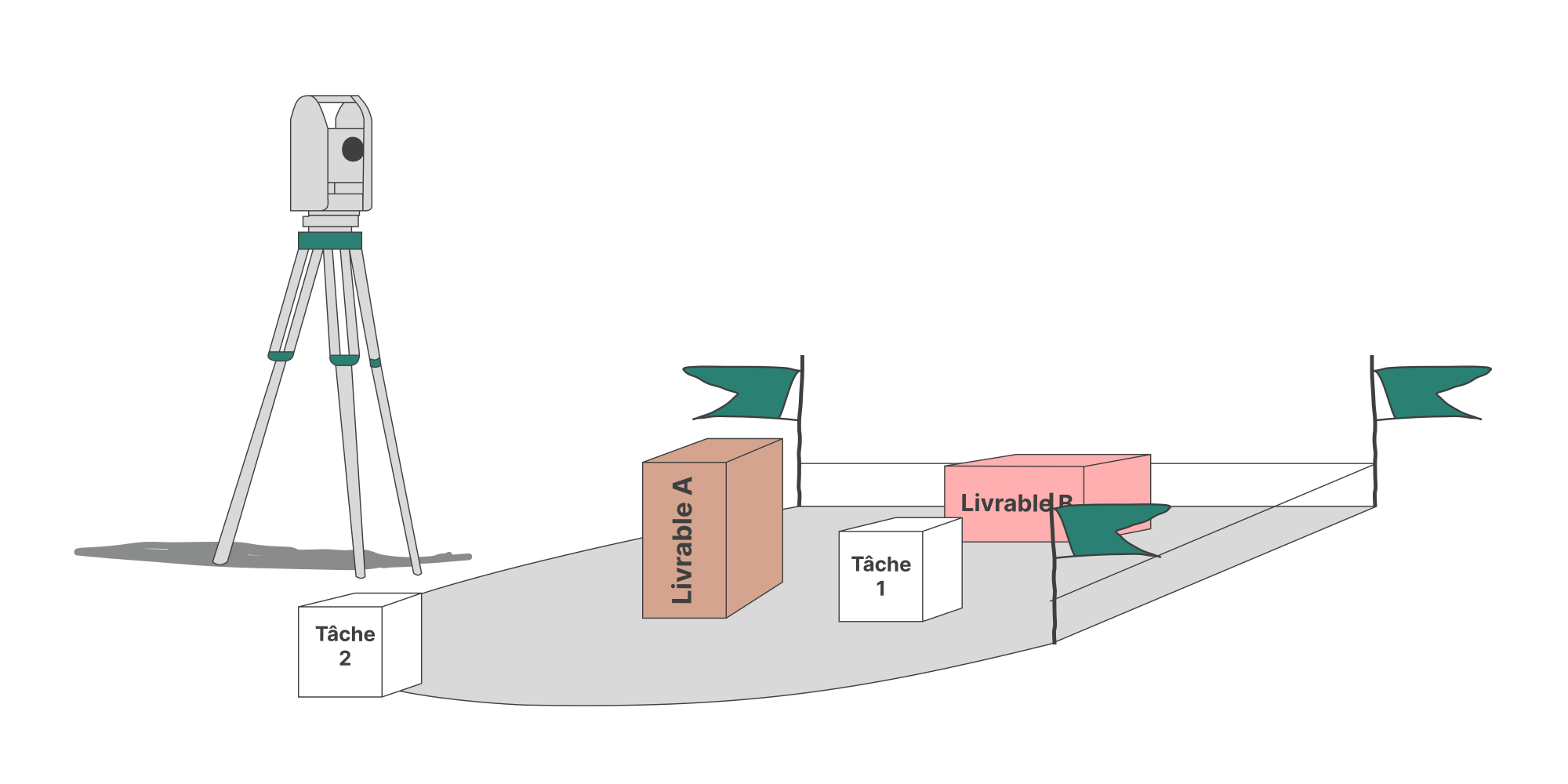 Scope creep: why projects grow without anyone decidingScope creep is rarely a single bad decision. It is the accumulation of small additions nobody logged, on a scope that was never fully written down.
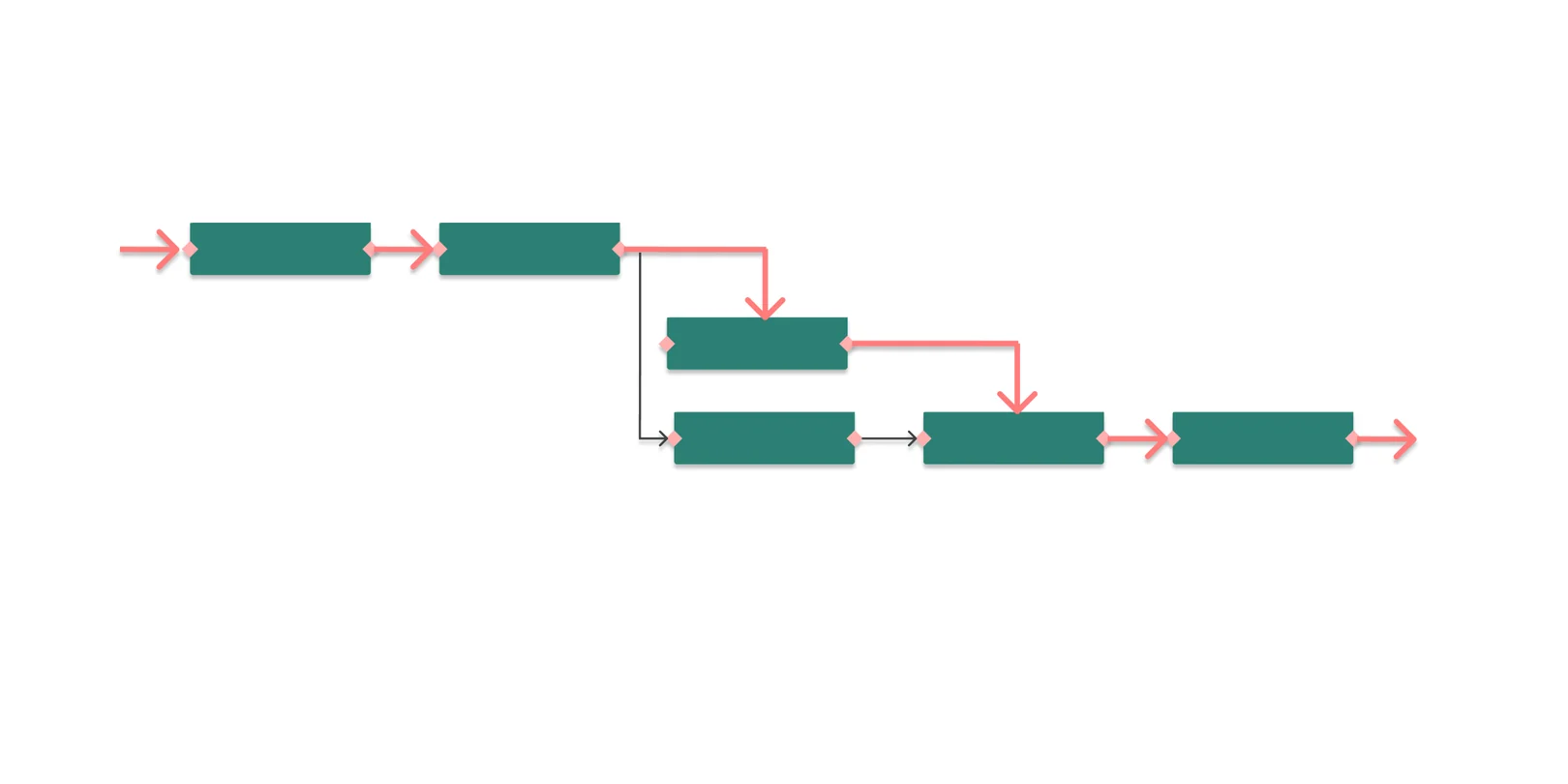 What is the critical path in project management?The critical path is the longest chain of dependent tasks in a project. It sets the minimum duration — and any delay on it moves the end date.
Set phases, milestones, and priorities for one game, for free. Upgrade to paid plans for multiple projects and structured mode.
30-day free trial • No commitment • No credit card