
Software for project managers: scope before you announce a date
Projects rarely derail during execution — they derail during scoping. Orchesia structures upfront work to clarify scope, make dependencies visible and build timelines you can defend.
Three situations that derail projects during scoping

Poorly defined requirements that shift mid-project
Requirements are gathered quickly, without being challenged. Objectives stay vague and change during the project, driving constant adjustments and rework.

Dependencies discovered too late
Links between tasks, stakeholders, and decisions are not made explicit from the start. Prerequisites surface mid-project and block progress or force rollbacks.

Deadlines committed before real workload is known
The schedule is set before scope is truly clarified. Handoffs between teams happen under pressure, with information loss and mounting stress from day one.
Make your day-to-day simpler
Tools built around your role

Requirements formalized before launch
Structure requirements analysis from the start. Scope is clarified and validated before execution. No more late re-scoping or mid-project course corrections.

Dependencies visible during scoping
Identify and visualize links between tasks, decisions, and stakeholders before you launch. Blockers and late discoveries are anticipated, not suffered.

Deadlines you can defend
Commit to realistic dates based on actual workload and project complexity. Cross-team coordination is structured during scoping, not rebuilt under pressure.
AI-assisted
AI does the legwork: project structure (WBS), task predictions, dependencies and critical path suggested automatically. You stay in control — AI just gets you there faster.
Solid scoping means clear requirements, visible dependencies, and deadlines you can meet.
Orchesia guides project managers step by step: from scope to schedule, through dependencies and the critical path.
Your WBS built in minutes, not days
Describe your project and AI generates a complete WBS with phases, work packages, and tasks. You adjust, you validate. Scope is clear before you even open a schedule.
Dependencies and critical path calculated automatically
Orchesia identifies links between tasks and calculates the critical path from your project structure. You immediately see where the real constraints are, before committing to deadlines.
AI working on your project
Describe your project in one sentence: AI generates the WBS, predicts the tasks and proposes the dependencies. You review and adjust in one click. You keep control — AI just speeds it up.
A schedule generated from structure, not typed by hand
The Gantt chart is built from the WBS and real dependencies. No arbitrary dates, no schedule that needs reworking the following week.
The committed schedule, and today's
Record the schedule at kickoff. In a steering meeting you show the variance task by task instead of justifying a global delay. Changes become dated decisions rather than drift.
Each person's load, across every project at once
Your teams do not work for you alone. The workload view combines their assignments across the whole workspace with their time off, making the conflict visible before it becomes a delay.
The chart the steering committee expects, without a spreadsheet
Progress, durations, deadlines: build the chart in four clicks, pick its type, colours and period. It updates with the project — no more export to redo the night before the meeting.
Without structured scoping
The project starts on uncertain foundations.
- Requirements partially understood or poorly formalized
- Vague objectives that shift during the project
- Dependencies discovered too late
- Schedule built on assumptions
- Deadlines committed without visibility into real workload
- Urgencies pile up and pressure mounts
With Orchesia
The project starts on solid foundations.
- Requirements analyzed, formalized, and validated from the start
- Clear objectives that guide the project
- Dependencies visible and accounted for during scoping
- Schedule generated from the real project structure
- Deadlines committed based on reality, not assumptions
- Smooth execution, less stress, less rework
The people running projects were never trained to run them
In December 2025 we analysed 328 project manager job ads posted in France on Welcome to the Jungle.
- 40%
of the ads ask for an engineering degree
Orchesia study, 328 ads, December 2025 - 7%
ask for a business school degree
Orchesia study, December 2025 - 0
requires a project management certification
Orchesia study, December 2025
Engineers and salespeople run the projects. A tool that assumes the method is already mastered addresses a population that does not exist.
Simple pricing, no surprises
All the tools to structure and run your projects. 30-day free trial.
per user, billed monthly
View pricing30-day free trial · No commitment · Cancel anytime
What's included
- Access to all features
- Free updates
- Document storage
- Real-time collaboration
- PDF export
 AI credits
Frequently asked questions
Orchesia does something different. Monday and Asana assume the project is already scoped. Orchesia structures upfront work: scope, dependencies, critical path. Both can coexist — Orchesia comes first.
Before launching execution. That is when scope must be clarified, dependencies identified, and deadlines committed on solid ground. That is precisely when projects take a good or bad trajectory.
Scoping takes time upfront, but saves far more later. Time invested in scoping is largely recovered during execution: fewer rollbacks, fewer late adjustments, fewer emergencies.
Project managers are typically self-sufficient within a few hours. The tool builds on familiar concepts: scope, dependencies, critical path, scheduling. AI further accelerates onboarding by generating an initial structure from your description.
Yes. Whenever multiple stakeholders are involved, decisions gate progress, and deadlines must be defended, Orchesia adds value. IT, digital, organizational, events — scoping challenges are the same.
Further reading
The methods behind the tool, explained in detail.
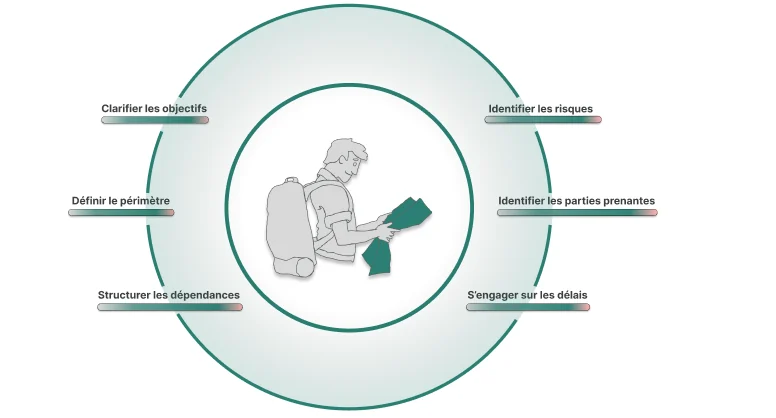 How to scope a project before you commit to a dateFraming is not paperwork. It is the last moment where a decision is cheap. Here is what a scoping stage has to produce before anyone opens a schedule.
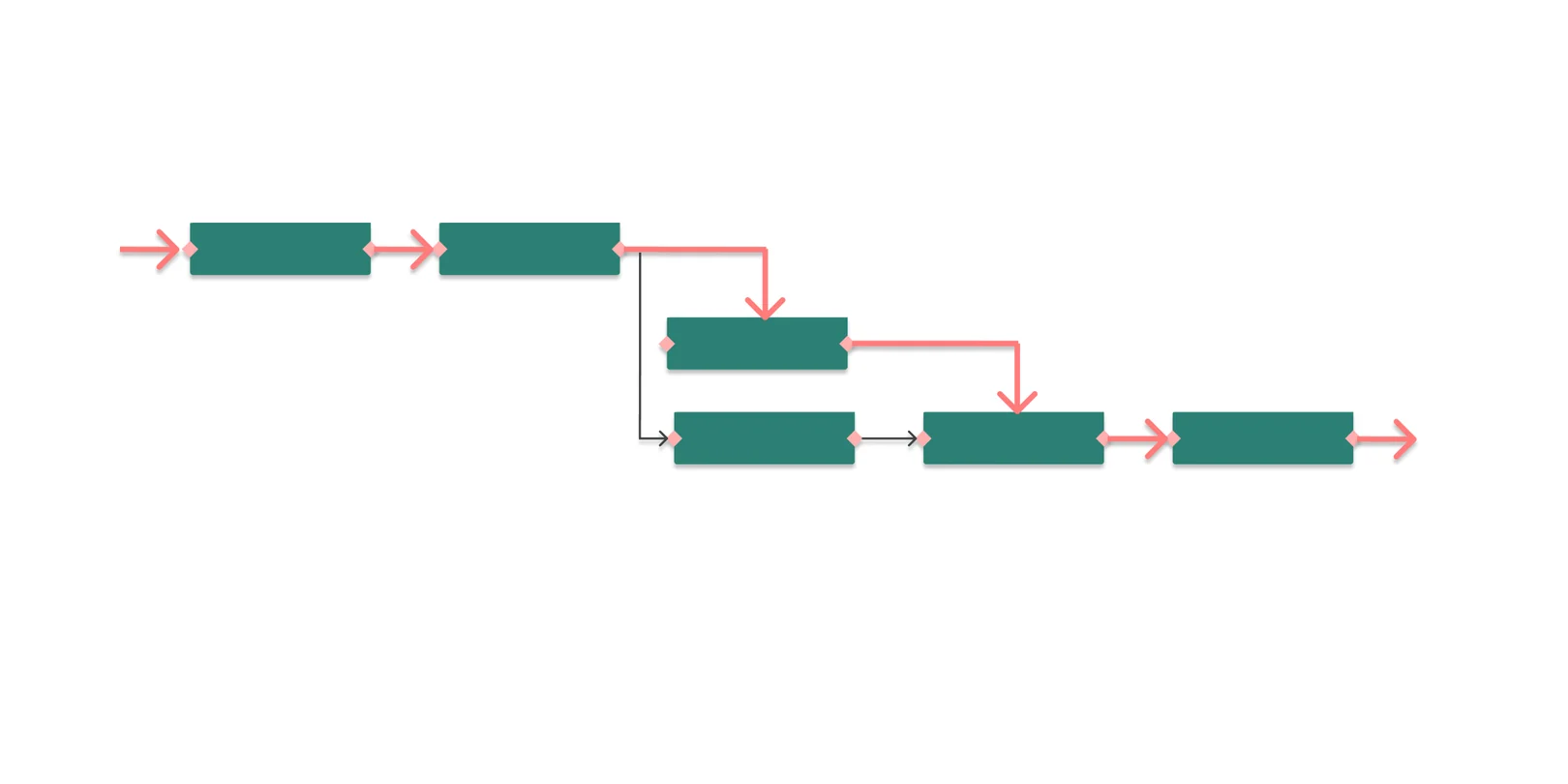 What is the critical path in project management?The critical path is the longest chain of dependent tasks in a project. It sets the minimum duration — and any delay on it moves the end date.
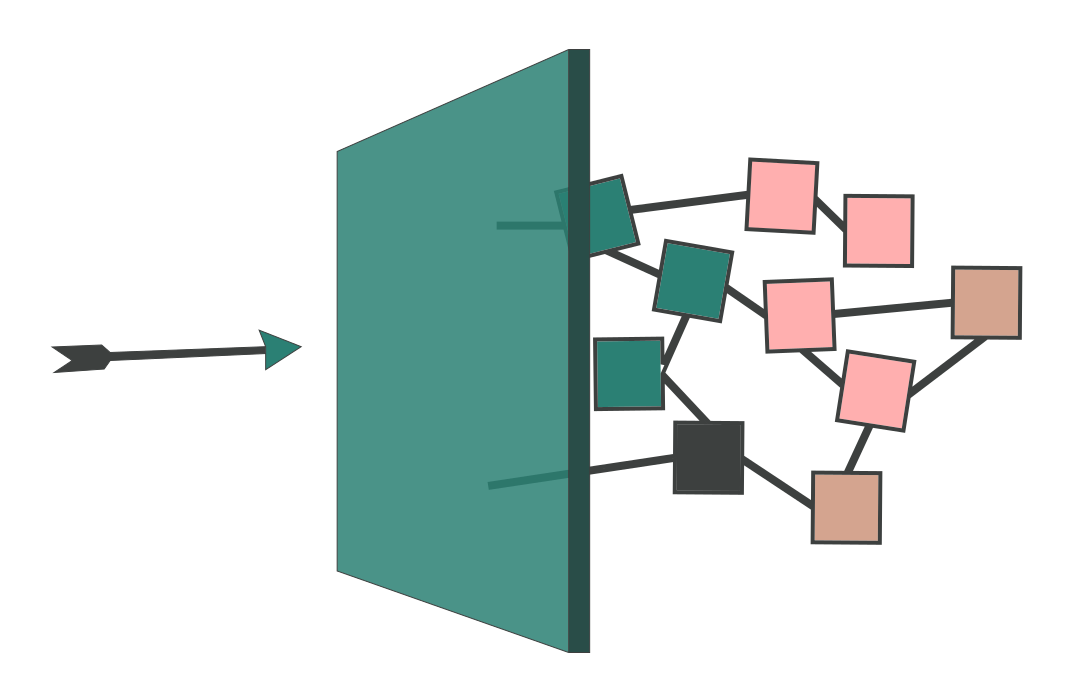 Hidden dependencies: why blockers appear too lateMost project delays do not come from tasks running long. They come from dependencies nobody modelled — discovered at the moment they block something.
Stop suffering delays. Start by structuring the project.
Orchesia helps you clarify scope, identify dependencies, and build reliable timelines before you commit.
30-day free trial • No commitment • No credit card