
PMO software: one scoping framework across every project
Project governance is not won through reporting — it is won during scoping. Orchesia helps PMOs install a common framework: comparable projects, visible dependencies and reliable commitments before execution.
Three situations that weaken project governance

Projects scoped each in their own way
Each project arrives with its own scoping level, formats, and implicit assumptions. Impossible to compare, arbitrate, or build reliable commitments at portfolio scale.

Cross-project dependencies invisible until the last moment
Links between projects, decisions, and prerequisites are not visible upfront. Impacts surface along the way, once commitments are already made and resources allocated.

Commitments validated on fragile foundations
Deadlines and priorities are arbitrated without a clear view of real project scoping. The PMO inherits decisions that are hard to honor and spends time managing gaps rather than governing.
Make your day-to-day simpler
Tools built around your role

A common scoping framework for all projects
Orchesia structures a shared framework for project scoping. Projects arrive with enough consistency to be compared, arbitrated, and tracked without rework.

Dependencies and structural decisions visible upfront
Links between projects, prerequisites, and key decisions are identified during scoping. Governance becomes preventive rather than reactive to impacts discovered too late.

Reliable commitments before execution
Deadlines, priorities, and trade-offs rest on structured, comparable scoping. The PMO can secure governance decisions before launch, not after the first delays.
AI-assisted
AI does the legwork: project structure (WBS), task predictions, dependencies and critical path suggested automatically. You stay in control — AI just gets you there faster.
Effective governance rests on projects scoped in a consistent, controlled way.
Orchesia gives PMOs an operational framework to standardize scoping, make dependencies visible, and build reliable commitments at portfolio scale.
A standardized scoping framework, applicable to all your projects
Orchesia lets you define and apply a common framework: objectives, scope, key decisions, constraints, and dependencies. Projects are structured along the same dimensions, whatever team owns them.
Cross-project dependencies calculated and visualized
Orchesia makes visible links between decisions, prerequisites, and structural elements at portfolio scale. Dependencies are identified during scoping, before projects are arbitrated.
AI working on your project
Describe your project in one sentence: AI generates the WBS, predicts the tasks and proposes the dependencies. You review and adjust in one click. You keep control — AI just speeds it up.
Schedules generated from structure, not gut feel
With consistently scoped projects, deadlines and priorities rest on project reality. Governance trade-offs rely on structured data, not implicit estimates.
A portfolio where every project reads the same way
The project table covers the whole workspace, with your own columns — sponsor, phase, budget, criticality — filterable and sortable. Archived projects stay readable without cluttering the current view.
Real load per person, recorded absences included
The workload view combines assigned tasks across every project with recorded time off. Allocation conflicts between projects become visible before the arbitration, not after.
Cycles sized against available capacity
Cycle planning feeds a multi-project backlog and shows a capacity gauge per cycle. What does not fit is visible at the moment you assign it.
Your portfolio indicators, built by you
Create your own charts across all structured projects: count, duration, progress, days to deadline, average load, peak load, days over 100%. Break down by member, status, deadline, or by your own columns. Projects run in simplified mode have their own charts, over in cycle planning. Only archived projects stay out of the analyses.
Without consistent scoping
Governance suffers the consequences of heterogeneous scoping.
- Projects scoped inconsistently and not comparable
- Implicit assumptions, different formats from team to team
- Dependencies and impacts discovered too late
- Commitments made on implicit foundations
- PMO in firefighting mode rather than governance mode
With Orchesia
Governance rests on structured, shared scoping.
- Projects scoped according to a common, comparable framework
- Key information structured consistently
- Dependencies and structural decisions visible upfront
- Commitments made on clear, owned foundations
- PMO in a position to govern, not constantly re-scope
What methodological rigour changes, measured
PMI compares organisations mature in project management with those that are not, on the same indicators.
- 63% vs 39%
meet the original schedule
PMI, Pulse of the Profession 2020, 3,060 practitioners - 67% vs 46%
meet the original budget
PMI, Pulse of the Profession 2020 - 70% vs 53%
meet the original scope
PMI, Pulse of the Profession 2020
Simple pricing, no surprises
All the tools to structure and run your projects. 30-day free trial.
per user, billed monthly
View pricing30-day free trial · No commitment · Cancel anytime
What's included
- Access to all features
- Free updates
- Document storage
- Real-time collaboration
- PDF export
 AI credits
Frequently asked questions
No. Orchesia works upstream of management. It structures and standardizes project scoping so governance rests on solid foundations before execution. It does not replace a reporting or portfolio management tool.
Before projects launch, when scoping must be structured, key decisions made explicit, and commitments made reliable. That is precisely when governance can prevent drift rather than suffer it.
No. Orchesia structures without locking things in. Assumptions and decisions stay visible and evolvable, while keeping a common basis for comparison and arbitration. The framework guides — it does not constrain.
Orchesia is designed for progressive deployment. PMOs can start by scoping a few pilot projects, then extend the framework to the portfolio without heavy transformation or long training.
No. Orchesia does not replace a methodological reference. It enables a governance framework in practice, by structuring project scoping consistently and operationally, whatever method is used.
Further reading
The methods behind the tool, explained in detail.
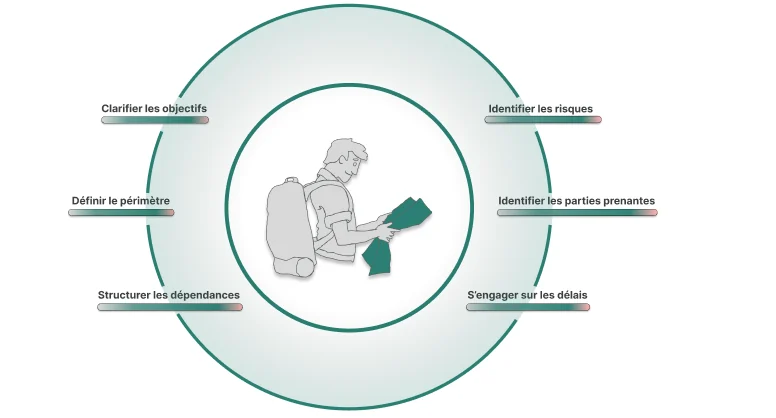 How to scope a project before you commit to a dateFraming is not paperwork. It is the last moment where a decision is cheap. Here is what a scoping stage has to produce before anyone opens a schedule.
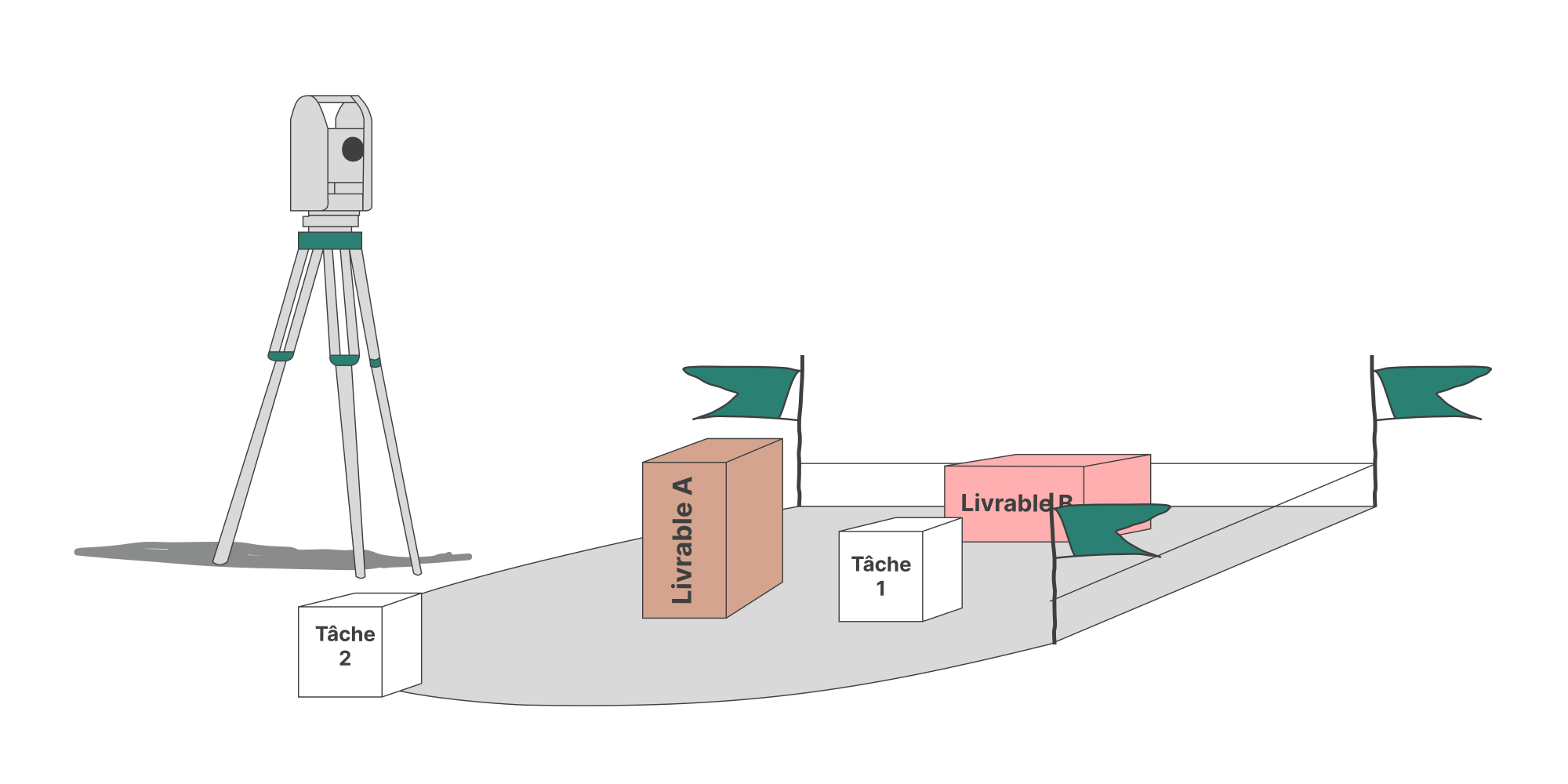 Scope creep: why projects grow without anyone decidingScope creep is rarely a single bad decision. It is the accumulation of small additions nobody logged, on a scope that was never fully written down.
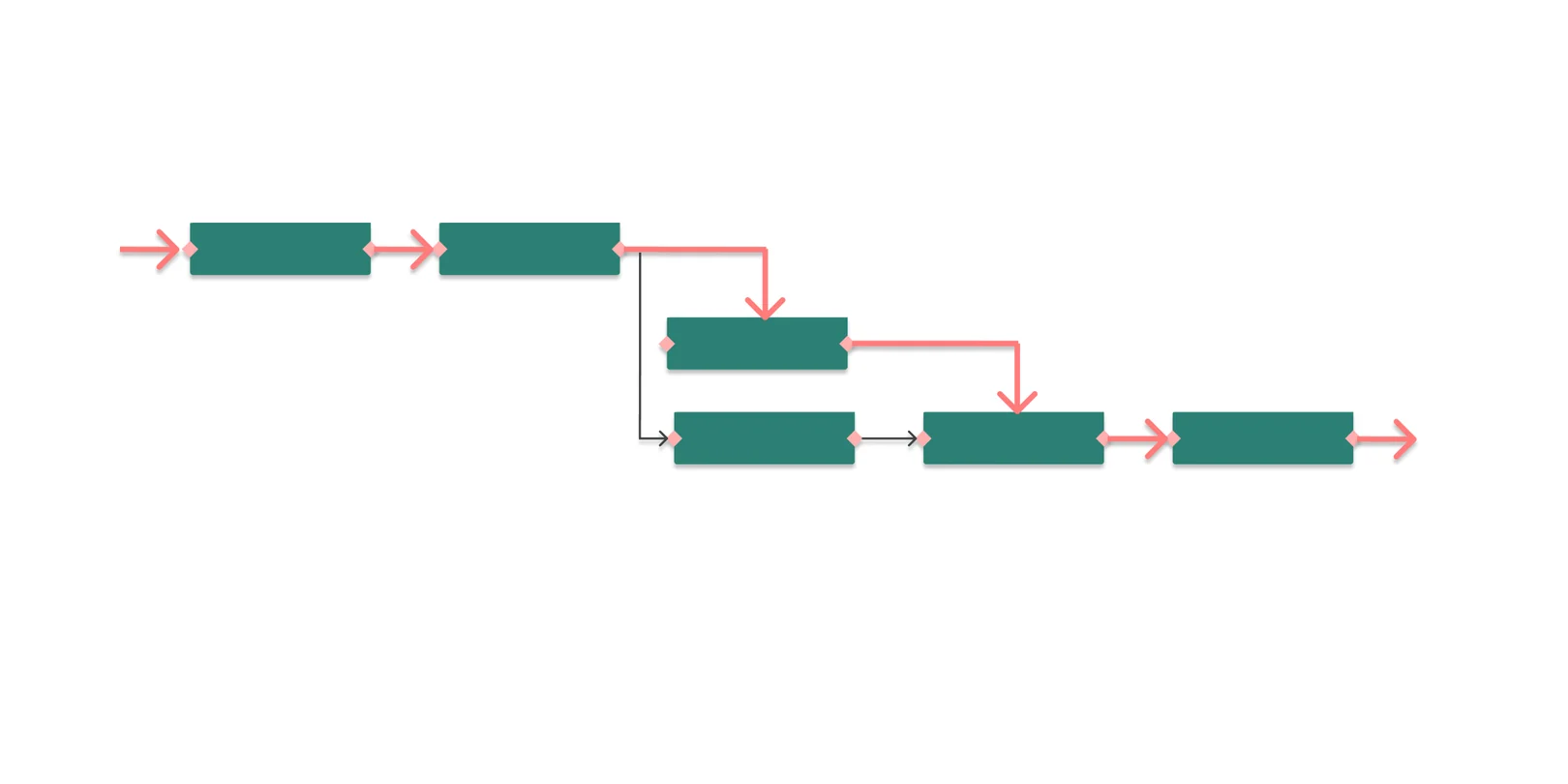 What is the critical path in project management?The critical path is the longest chain of dependent tasks in a project. It sets the minimum duration — and any delay on it moves the end date.
Stop governing poorly scoped projects. Start with scoping.
Orchesia helps you structure a common framework, make dependencies visible, and build reliable commitments before projects are launched.
30-day free trial • No commitment • No credit card