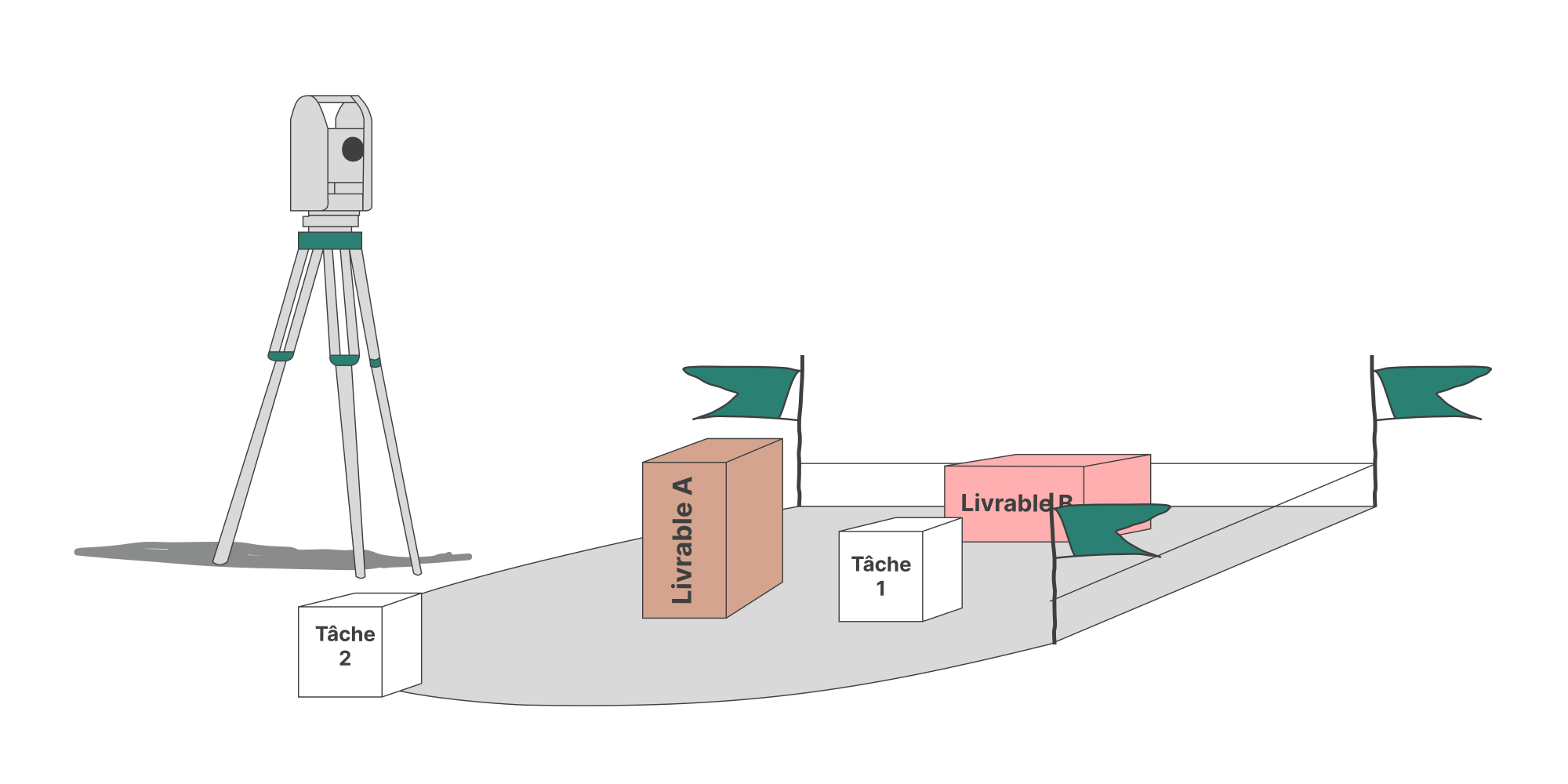
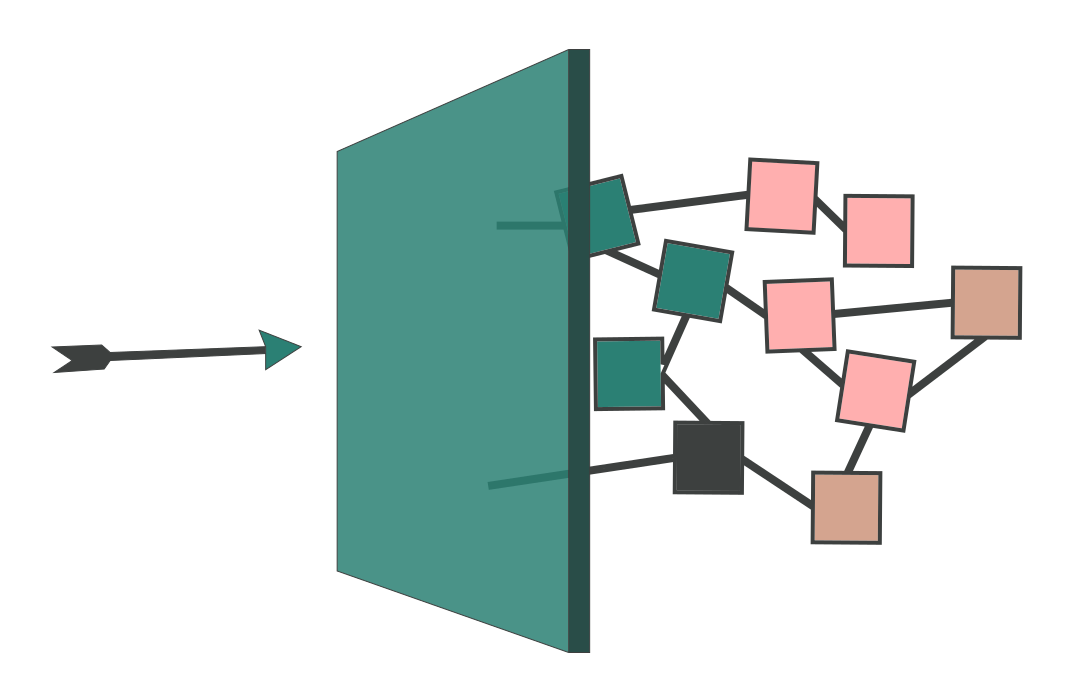
The deep causes of drift, grouped by theme, so you can act at the right time.
Most projects end up exceeding an announced deadline, budget, or scope. This is so common that it is sometimes treated as inevitable: overloaded teams, unexpected events, a shifting context. Yet behind the symptoms visible during execution, the same families of causes often reappear.
On this page, you will see how initial framing problems (fuzzy scope, poorly set objectives), structure difficulties (implicit dependencies, incomplete breakdown), and deadline drift (delays that propagate, fragile commitments) combine. The goal is not to blame a tool or a person, but to understand why these situations keep coming back.
The thesis we defend at Orchesia is this: projects do not mainly slip because of bad luck or poor execution. They slip because structuring decisions are made too early, too high up, or too implicitly, before real work and links between activities are made visible. What you suffer in execution is often decided upstream, at framing time.
Reading this page already starts a shift in perspective: spotting where the project was fragile before the first schedule, and why fixing late always costs more than clarifying early.
Many failures play out before effective kickoff: fuzzy scope, objectives set too high, trade-offs postponed under the pretext of moving fast. Scope creep is not only a discipline issue along the way; it often reveals an incomplete initial frame.
Without a shared view of “what” to produce and “why”, teams compensate with additions, replanning, and tension that could have been anticipated in the pre-project phase.
Even with a clear objective, a project can stall if links between activities stay implicit. A superficial breakdown, dependencies discovered late, and a poorly identified critical path create blockers no one announced at the start.
This is not a daily tracking defect: it is often the absence of logical work structuring before placing it in time, as blockers found too late in the schedule also show.
Announced deadlines rarely hold when they are not based on an estimate of real work and an honest reading of constraints. A delay on a sensitive task can shift the entire end date, especially on the critical path.
Commitments become fragile when they rest on unshared assumptions: underestimated load, symbolic milestones, production surprises that could have been explored earlier with the right stakeholders.
Scope creep, forgotten dependencies, cascading delays: symptoms differ, but the root is often the same. The project was launched or planned before it was sufficiently structured. Teams wanted to move fast on “when” without stabilizing “what”, “in which order”, and “with which real constraints”.
Understanding why projects slip is not about finding a culprit. It helps you know where to intervene: upstream, while trade-offs are still possible, before the schedule locks fragile assumptions.
To move from this diagnosis to concrete practices, explore solutions and methods that help structure the pre-project, then the Orchesia approach to connect framing, dependencies, and steering in one workspace.
Because deadlines are often set before real work is understood and shared. Without structuring scope and dependencies, the schedule rests on optimistic assumptions that crack at the first unexpected event.
Scope creep is uncontrolled additions that widen the project over time. It most often comes from fuzzy initial framing: overly general objectives, unspoken exclusions, trade-offs postponed until operational pressure forces choices.
Because framing sometimes stays strategic and drifts away from the teams who execute. Forgotten tasks, unseen interfaces between disciplines, underestimated load: all of that only appears when execution starts, when room to maneuver has already shrunk.
On the critical path, some tasks directly condition the end date. A delay on one of them mechanically shifts the rest, unless you revisit scope or resources. Without that reading, every slip is treated as an isolated incident.
Many structuring decisions are made before or at kickoff: scope choices, priorities, assumptions about deadlines. Problems only become visible later, but the cost to fix them is then much higher.
Orchesia helps clarify scope, dependencies, and deliverables before committing to deadlines. Try the approach on a real project.