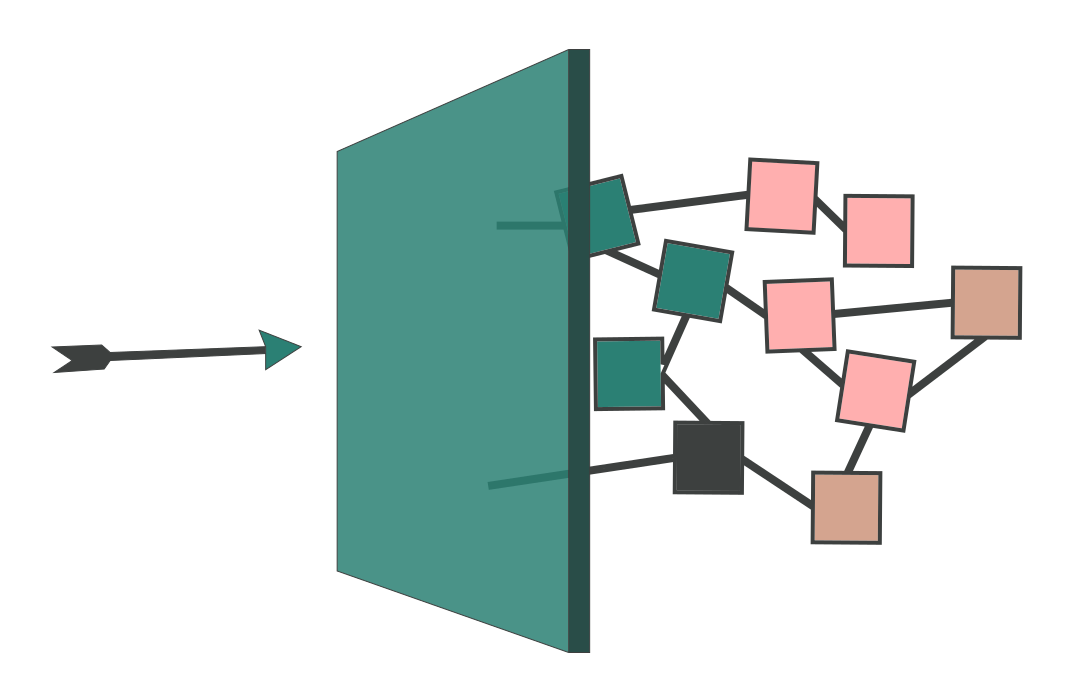
Scope creep is the uncontrolled growth of what a project is expected to deliver. It rarely comes from one bad decision. It comes from a series of small additions — each reasonable, each accepted informally, none of them logged — on a scope that was never fully written down in the first place.
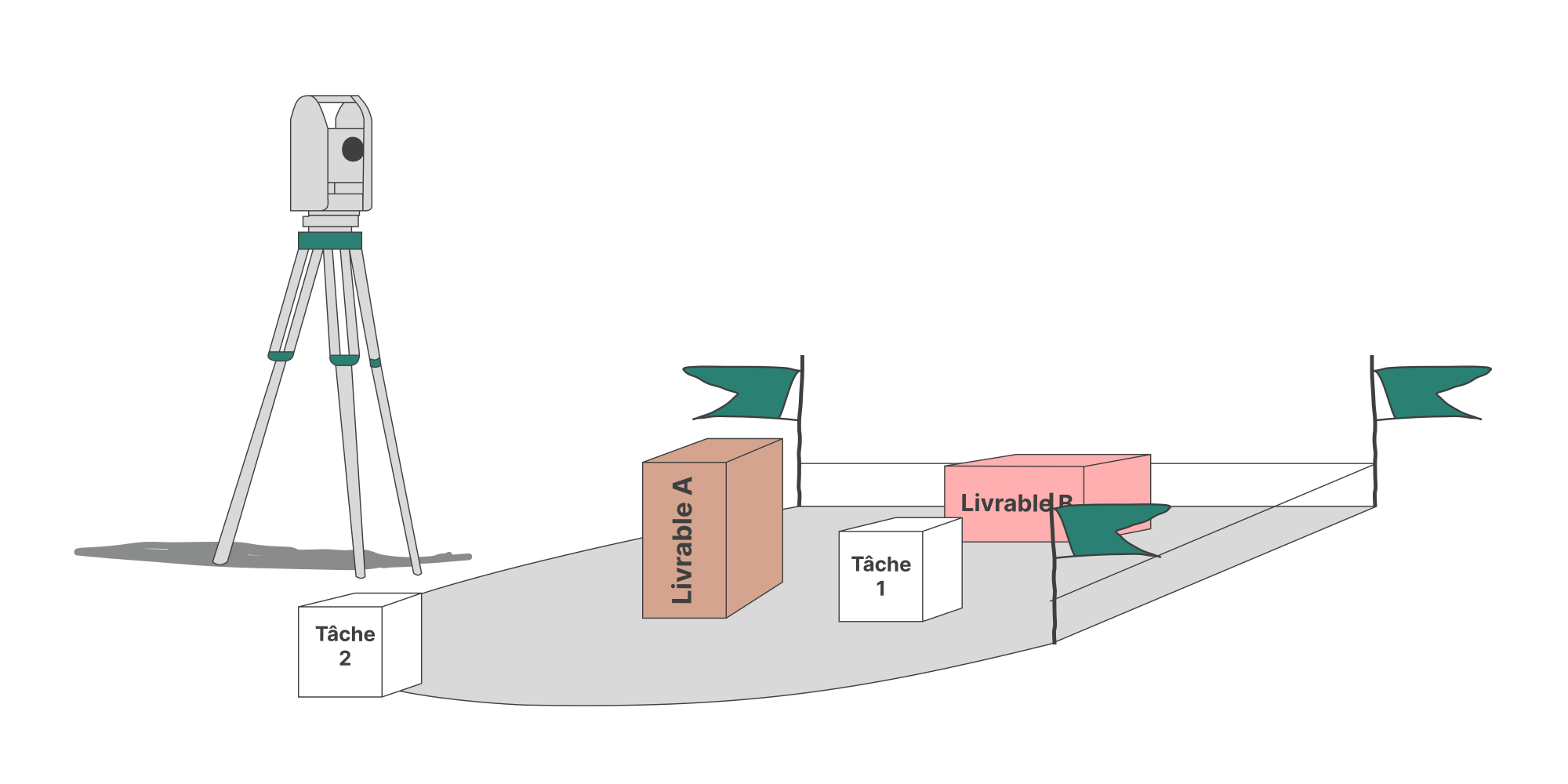
The mechanism
Scope creep needs two conditions, and both are usually present.
First, an incomplete scope definition. If what the project delivers exists only as a slide deck and a shared understanding, there is nothing to compare a new request against. Every addition looks like a clarification rather than a change.
Second, no visible cost per addition. A request that arrives without a price attached will be accepted. Not because anyone is careless, but because refusing something that appears free is hard to justify.
Put together, these two conditions guarantee growth. The project does not drift because people are undisciplined; it drifts because nothing in the system makes the drift visible.
Where the additions actually come from
This is measured, not felt: among projects that fail, inadequate requirements gathering is the most cited cause, at 35%, ahead of inadequate vision at 29%. Source: PMI, Pulse of the Profession 2018, 4,455 practitioners — see the PMI standards.
In practice, four sources dominate.
Requirements that were never really agreed
Stakeholders sign off on a document they read differently. The disagreement surfaces during delivery, when it looks like a new requirement rather than an unresolved one.
Work discovered during execution
Integration, migration, data cleaning, environment setup: the work nobody scoped because nobody owned it. It is not new scope — it was always there, just invisible.
Gold plating
The team adds value nobody asked for. Usually well-intentioned, and usually the hardest to challenge because the result is genuinely better.
Undocumented verbal agreements
A conversation in a corridor becomes a commitment. Six weeks later, two people remember it differently and both are sincere.
The warning signs
Scope creep is visible before it becomes expensive, if you know what to watch:
- the deliverable list has changed but the end date has not
- the team is working on things that do not map to any agreed deliverable
- estimates are revised upwards without a corresponding change request
- people say "while we're at it" in planning meetings
- nobody can produce, in one page, the definitive list of what is being delivered
The last one is the most reliable. If that page does not exist, the project has no scope — it has an intention.
Why "just say no" does not work
The standard advice is to push back harder. It fails for a structural reason: the person receiving the request usually has neither the information nor the authority to refuse it.
A project manager asked to absorb a small addition cannot say, in the moment, what it costs. Without that number, refusing looks obstructive and accepting looks cooperative. The incentive is obvious.
What changes the outcome is not more resolve. It is making the cost visible at the moment of the request.
What actually prevents it
A written scope baseline. A work breakdown structure with a dictionary that states, per deliverable, what is included and what is excluded. Exclusions are what turn a scope document into a defence.
A dependency model. Most additions look small in isolation and are not. A dependency network shows whether the new item lands on the critical path — the difference between an addition that costs a day and one that costs a month.
A trade-off conversation rather than an approval. Once cost is visible, the question stops being "can we add this?" and becomes "what comes out, or what moves?". That is a decision a sponsor can make. The first question was never really answerable.
None of this requires heavy governance. It requires that the scope exists somewhere other than in people's heads before the first request arrives — which is what framing a project properly is for. A scope baseline that stays current is what makes the trade-off possible at the moment of the request, rather than three weeks later.