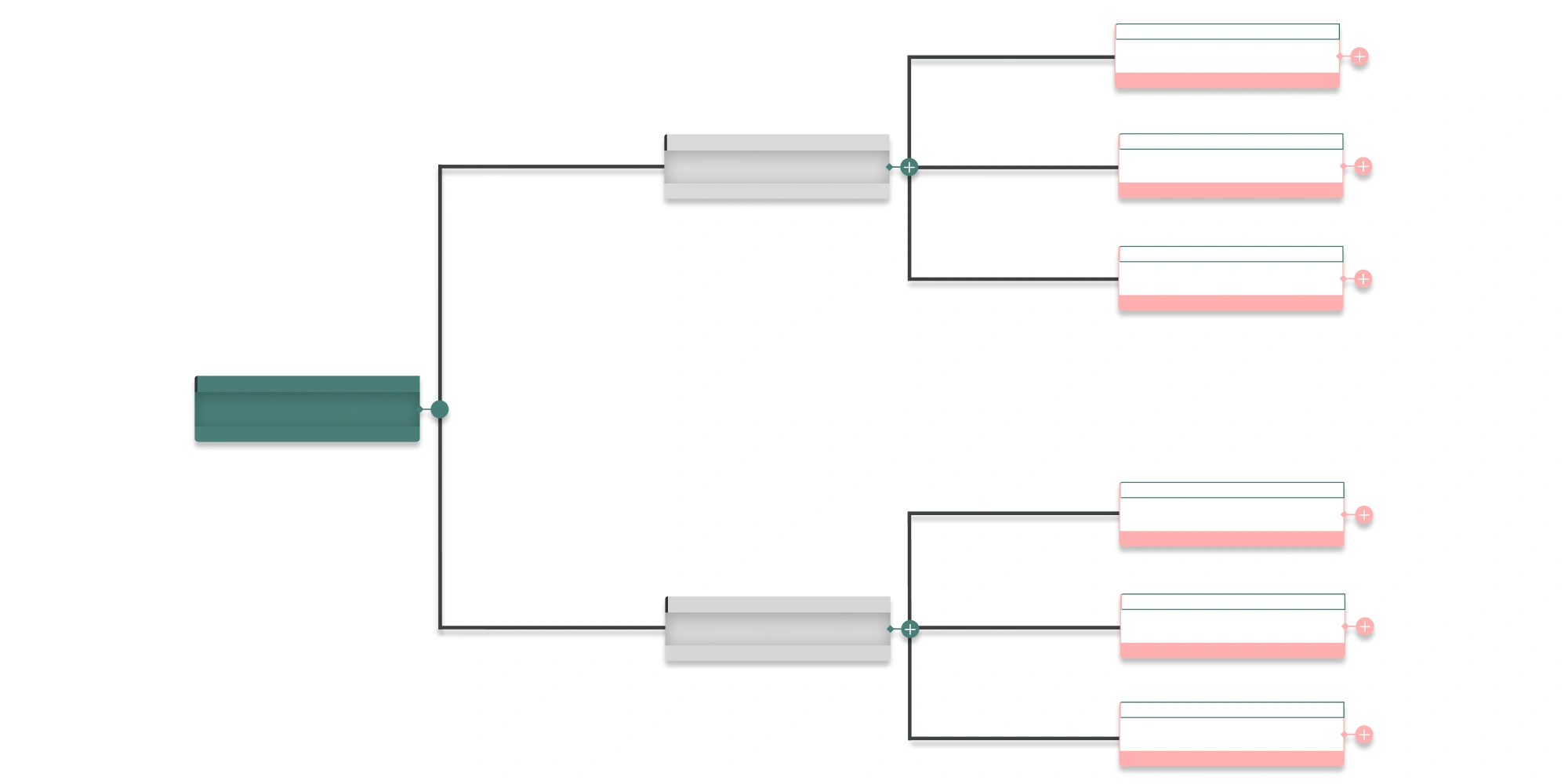
A Work Breakdown Structure (WBS) is a hierarchical decomposition of the total scope of a project into smaller, manageable components. It starts from the overall objective and breaks it down into concrete deliverables, then into work packages that can be estimated and assigned.
Unlike a schedule, a WBS does not answer "when do we do it". It answers a more fundamental question: "what has to be produced". By clarifying the real scope up front, it becomes the basis for estimating duration, cost and responsibility.
WBS versus task list: the distinction that matters
This is where most teams go wrong. A task list enumerates activities: "write the spec", "review the spec", "hold the kick-off". A WBS enumerates outcomes: "approved specification", "signed-off design", "deployed environment".
The difference is not cosmetic. A task list can be complete and still miss half the work, because nothing forces you to check coverage. A WBS makes gaps visible: if a deliverable has no parent, it does not belong; if a parent has missing children, the scope is incomplete.
The 100% rule
The rule is not a convention of convenience. It appears in the PMI standards as the defining property of a valid breakdown: a parent node contains exactly the sum of its children.
The 100% rule is the defining constraint of a WBS: the children of any node must represent exactly 100% of the work of that node — no more, no less.
Two consequences follow.
- Nothing outside the WBS is in the project. If it is not in the structure, it is not funded, not scheduled and not someone's responsibility.
- Nothing is counted twice. Overlapping branches produce double estimates and disputed ownership.
The 100% rule is what turns a diagram into a scope agreement. It is also the reason a WBS surfaces disagreement early: two people who thought they agreed often discover, at the second level of decomposition, that they did not. Surfacing that disagreement is easier in a shared WBS tool than in a document, where the first version tends to become the only one.
Decomposition levels and work packages
A WBS is usually decomposed over three to five levels:
- Level 1 — the project itself
- Level 2 — major deliverables or phases
- Level 3 — sub-deliverables
- Lowest level — work packages: the smallest unit you estimate, assign and track
A work package should be small enough to estimate with confidence and to assign to a single owner, but large enough that tracking it is not administrative overhead. Teams often use a rule of thumb — a work package should represent a meaningful, verifiable outcome, not a half-day of activity.
Deliverable-based versus phase-based WBS
Two structures dominate in practice.
A deliverable-based WBS organises level 2 around what the project produces. It makes scope coverage easy to verify and is the form recommended by most standards.
A phase-based WBS organises level 2 around stages of the life cycle. It reads naturally for teams used to sequential delivery, but it hides scope gaps: a missing deliverable does not stand out when everything is filed under "design" or "build".
When in doubt, decompose by deliverable. You can always map phases onto it afterwards.
The WBS dictionary
A WBS on its own is a set of labels. The WBS dictionary is the companion document that says, for each work package, what it includes, what it excludes, what "done" means, who owns it and what it depends on.
The exclusions matter as much as the inclusions. Most scope disputes are not about what a deliverable contains — they are about what someone assumed it contained.
What the WBS does not do
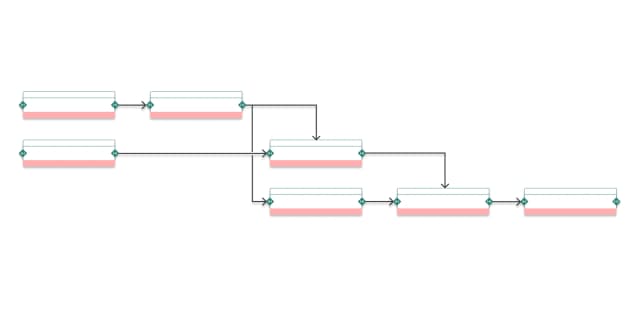
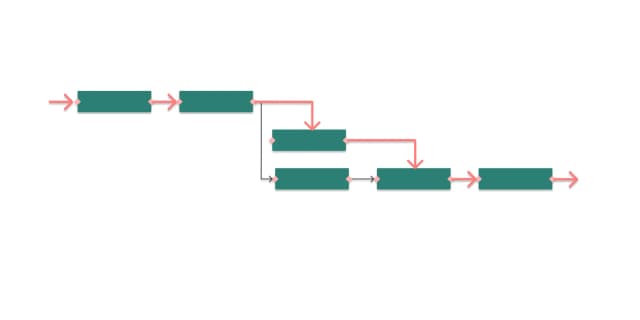
A WBS does not sequence work. It tells you what must exist, not in what order. Ordering comes from the dependencies between work packages, which is the job of a PERT chart or dependency network. Only once both are in place can a schedule be generated rather than guessed.
This is the sequence most projects skip: they open a Gantt chart and start placing bars, without ever agreeing on the scope those bars represent. The schedule looks precise and is built on nothing.
Once the structure exists, building it properly becomes a repeatable exercise rather than a workshop that produces a picture nobody uses again.