A project is not a list of tasks. It is a temporary effort aimed at a unique result, carried out in a constrained and uncertain context. Whatever the industry, projects follow a structured life cycle. Understanding that logic tells you where the real decisions are made — and why so many of them are made too early.
What is a project?
The Project Management Institute defines a project as "a temporary endeavour undertaken to create a unique product, service or result". Three characteristics follow from that.
- A project pursues a unique objective. It targets a specific, identifiable outcome that did not exist before.
- A project is temporary. It has a defined beginning and end, even if those boundaries move.
- A project is non-repetitive. It is distinct from recurring operational activity.
A project is a unique objective to reach, within a defined timeframe and context subject to uncertainty and risk, by people working with defined means.
In practice, most projects miss their deadline, their budget or their original scope. Rarely for lack of tools — usually because the boundaries of the work were vague from the start.
Project versus process: a costly confusion
A process structures repeatable actions to produce a stable, predictable result. It is built for the long run and optimised over time.
A project is the opposite: temporary, singular, carrying novelty and risk. It requires trade-offs and structural decisions that will not be reproduced identically.
A project can rely on processes, but it cannot be reduced to one. A process applied to a project creates the illusion of progress while preventing decisions from being made. Without a proper framing stage, a project naturally drifts — a pattern we cover in scope creep in projects.
The core characteristics of a project
Whatever the domain, projects share a common base:
- a clearly identified objective
- a limited duration
- constrained human and material resources
- cost, time and quality requirements
- a share of uncertainty and risk
These elements form the frame the project moves in. They explain why a project cannot be steered like routine activity.
The four phases of a project life cycle
The phase model is not a convention invented by consultants. It is codified in the PMI standards, which describe the life cycle as a sequence of phases with their own deliverables and decision points.
Each project is unique, but most follow a similar life cycle.
1. Definition
Specifications are established, objectives defined, the team assembled and responsibilities assigned. This is where the overall vision takes shape.
2. Structuring
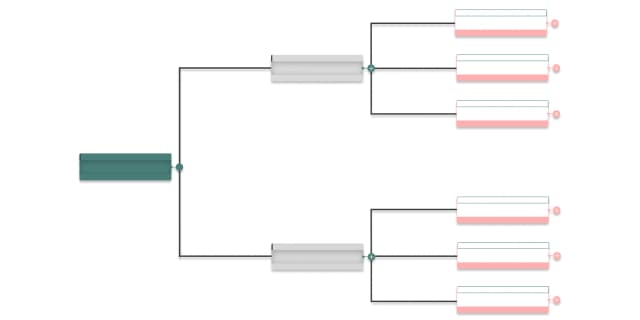
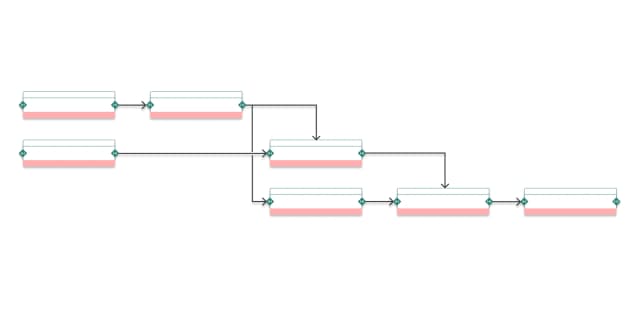
Objectives become detailed plans: what the project contains, how long it takes, what quality is expected, what budget is allocated. This is where the foundations are built — typically through a work breakdown structure and a dependency network.
3. Execution
Teams deliver: they build the product, run the tests, adjust as reality pushes back. This is where most of the effort is spent — and where most organisations start paying attention.
4. Closure
The result is handed over, documentation transferred, resources reassigned, and a post-mortem run to capture what should be done differently.
Each phase runs alongside continuous monitoring and control, which keeps the project within its time, budget and quality boundaries.
Why the life cycle changes how you steer a project
The life cycle is not documentation. It tells you when a decision can still be made cheaply.
In the definition and structuring phases, changing the scope costs a conversation. In execution, the same change costs rework, renegotiation and schedule slip. The cost of a decision rises steeply with time — which is why the early phases deserve the attention usually given to the late ones. It is also why a tool that structures the project belongs before the schedule rather than instead of it.
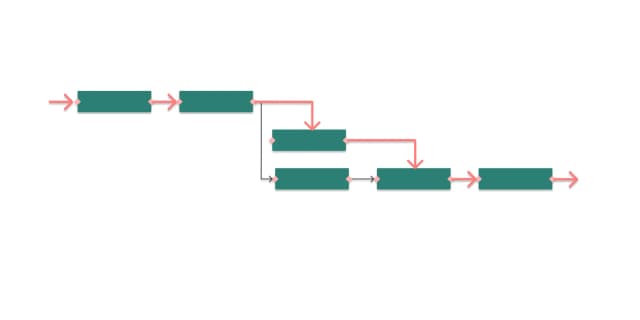
Most teams do the opposite. They move quickly through framing to "get started", then spend the rest of the project absorbing the consequences. Understanding which tasks actually drive the end date is the first step out of that pattern.