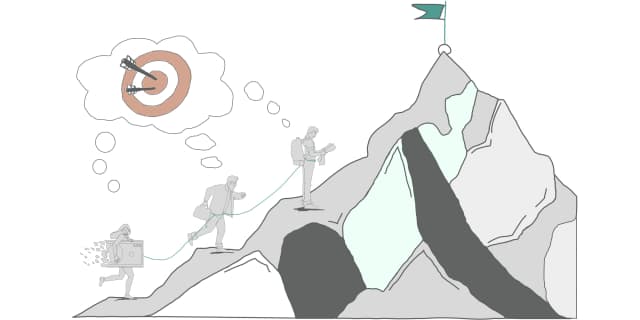
Project planning is the work that establishes the date you can reasonably commit to, given what the project actually contains. It is not a matter of placing bars on a calendar: it connects the content of the project, the dependencies between tasks and the duration assumptions, so that a defensible finish date emerges before anything is promised.
What is project planning?
In project management, project planning is all the work that comes before committing to a delivery date.
It answers one central question: how long will this project really take, given what has to be produced and the way the activities follow one another?
That work is not limited to estimating durations. It makes the scope, the expected deliverables, the dependencies between tasks and the constraints on the end of the project explicit. As long as those remain implicit, any date you announce rests on fragile assumptions.
Planning a project is not filling in a calendar
In many organisations, "planning" means typing tasks with dates into a calendar.
You add milestones, you adjust the bars, you share the document. On the face of it, the project is planned.
In reality you have often only formatted a list of activities. The scope has not been settled, the dependencies are still implicit, and the date announced was not calculated from what the project actually contains.
Project planning therefore starts with the content: what has to be produced, in what logical order, under what constraints. The calendar comes afterwards.
Planning and the schedule are two different things
The schedule is the project laid out over time, and the Gantt chart is its most common form. Project planning is the upstream work that sets its dates.
One is a picture; the other is the reasoning that makes the picture trustworthy. Produce the picture without the reasoning and you have a schedule that looks precise and is built on nothing.
What project planning covers
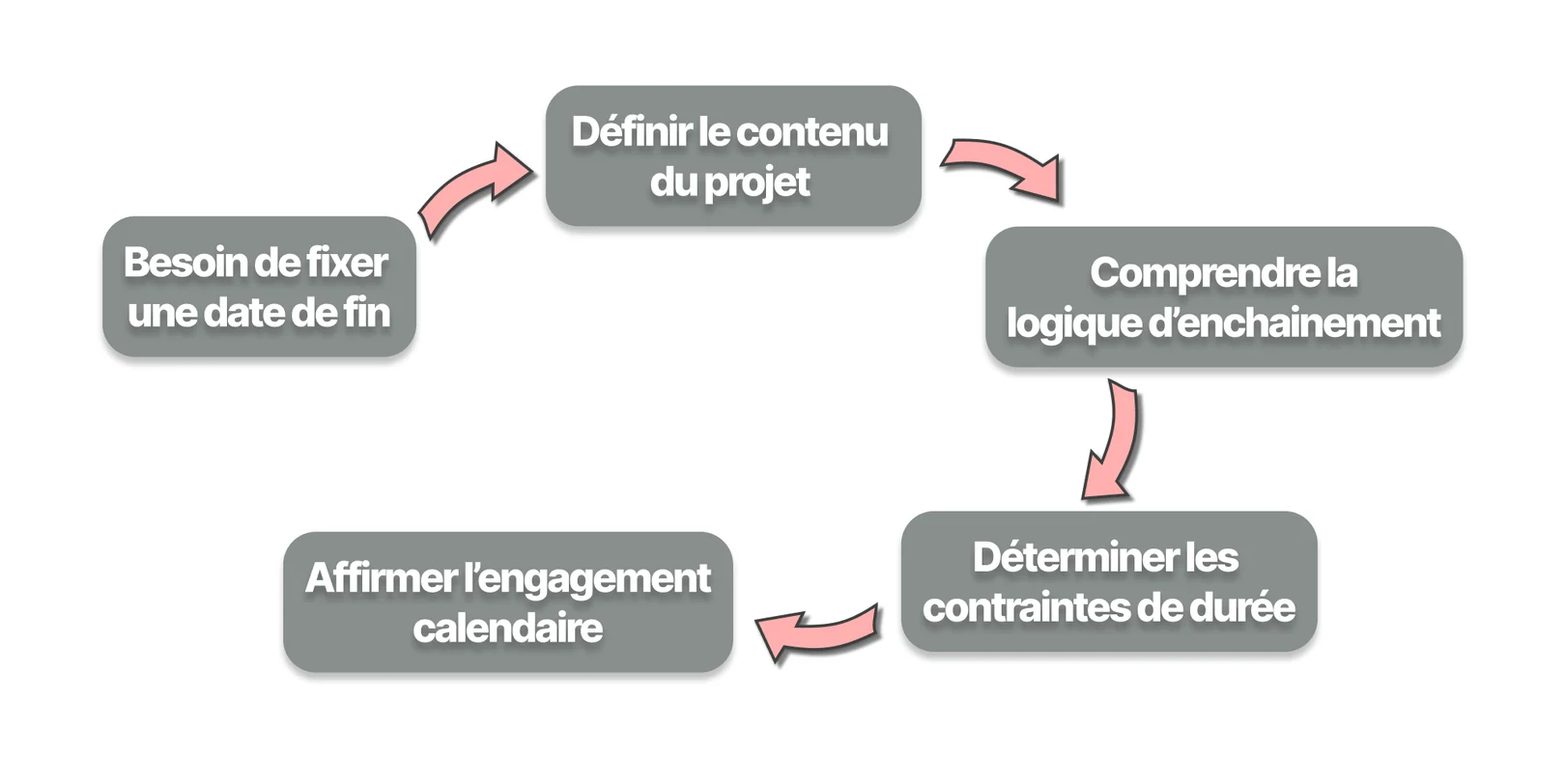
Project planning runs through several distinct operations:
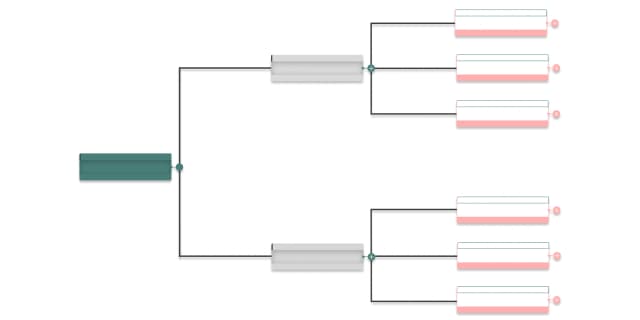
- The content of the project — what has to be produced, delivered or put in place. The WBS answers that by breaking the project into deliverables and tasks.
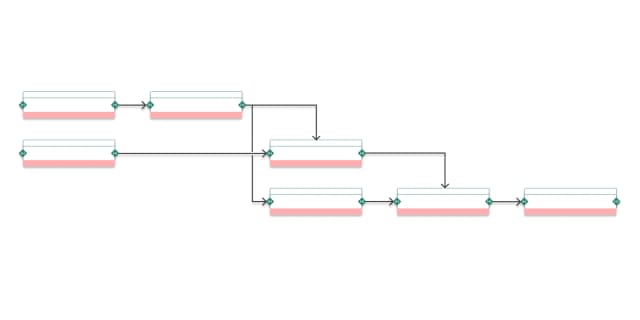
- The order of things — what has to be finished before something else can start. A PERT chart makes those dependencies visible.
- The duration constraints — the chain that sets the shortest possible duration of the project, that is, the critical path.
- The commitment to dates — all of that work translated into time, usually as a Gantt chart.
These are not interchangeable. Each answers a different question. Confusing them, or skipping one, weakens the whole schedule.
Where planning sits in the life cycle
Separating the structuring of the content from the setting of the calendar is a documented practice, described among others in the PMI standards.
Project planning usually happens once the intent is clear but before operational launch. It is the moment an idea becomes a possible commitment: you know what the project contains, in what logical order the activities run, and on what basis you can announce a date.
It comes before execution and control. Once the project is under way, the schedule mostly serves to track progress and adjust. Planning lays the foundations that tracking can then rest on.
Why announcing a date before planning distorts the project
When a finish date is announced before the content of the project is clear, you are no longer planning: you are organising the project backwards to hold a deadline that is already set.
Working backwards from a date is not a problem in itself. But when it happens too early, before the scope, the dependencies and the resource needs are understood, the schedule becomes hard to build, hard to steer and hard to defend.
A date imposed without preparing the people and the budget usually pushes teams to compress the work, to cut scope without saying so, or to commit resources that are not available yet. The schedule then gives an illusion of control, while the real constraints have never been faced.
That is exactly what project planning is for: letting a date emerge from the content of the project, rather than bending the content to fit a date announced too soon.
Planning and backward planning: two different logics
Project planning calculates a date from the content: you estimate what has to be produced, in what order, and how long it takes.
Backward planning starts from a date that is already fixed — a launch, a delivery, an event — and organises the path to hold it, working back from the deadline.
The two are complementary, but they answer different situations:
- project planning: the date has to be estimated;
- backward planning: the date is imposed, and the work has to be organised to meet it.
What project planning is not
A few frequent confusions are worth clearing up. Project planning:
- is not typing a calendar of tasks;
- is not an intuitive estimate based on experience alone;
- is not tracking progress during execution;
- is not a frozen exercise: it has to be able to change if the scope or the constraints change.
Credible planning rests on a decomposed scope, an explicit network of dependencies, durations someone stands behind, and an honest reading of the project's constraints. If one of those is missing, the date on display will not reflect the work to be done.
Summary
Project planning is the work that turns an intention into a date you can defend.
It connects the content of the project, the dependencies and the duration assumptions before a schedule is frozen.
It is not a calendar exercise: it is a coherent reading of the project, which comes before the Gantt chart and decides whether that chart can be trusted. A project planning tool does not replace that reasoning — it makes it repeatable, by generating the schedule from the content rather than the other way round.