How does the Waterfall method work? A traditional linear approach to project management
Estimated reading time : 4 minThe Waterfall method is the perfect example of the traditional approach to project management. It is a strictly linear method where each phase fully depends on the previous one.
To move to the next stage, each phase must be clearly defined and validated. Projects follow a structured sequence of phases, each with specific objectives.
The stages of a Waterfall project
1. Requirements definition
This phase consists of workshops and meetings with the client to analyze needs. It is crucial to understand expectations and project objectives in detail.
2. Analysis
Based on the previous step, the provider writes detailed documentation specifying the scope and defining the deliverables. This documentation serves as the foundation for the rest of the project.
3. Design
During this phase, the provider begins producing the deliverables in strict accordance with the specifications validated in step 2. This technical stage builds the core of the project.
4. Implementation or delivery
At this point, the provider delivers to the client all the elements produced during the design phase. This is a key milestone where the project takes a concrete shape.
5. Validation
The client is involved again to test the deliverables and provide feedback. While minor adjustments can be made, major changes are not considered in order to respect the initial scope.
6. Deployment
Once the project is validated by the client, it is put into production or service. This final step enables the client to fully use the end result.
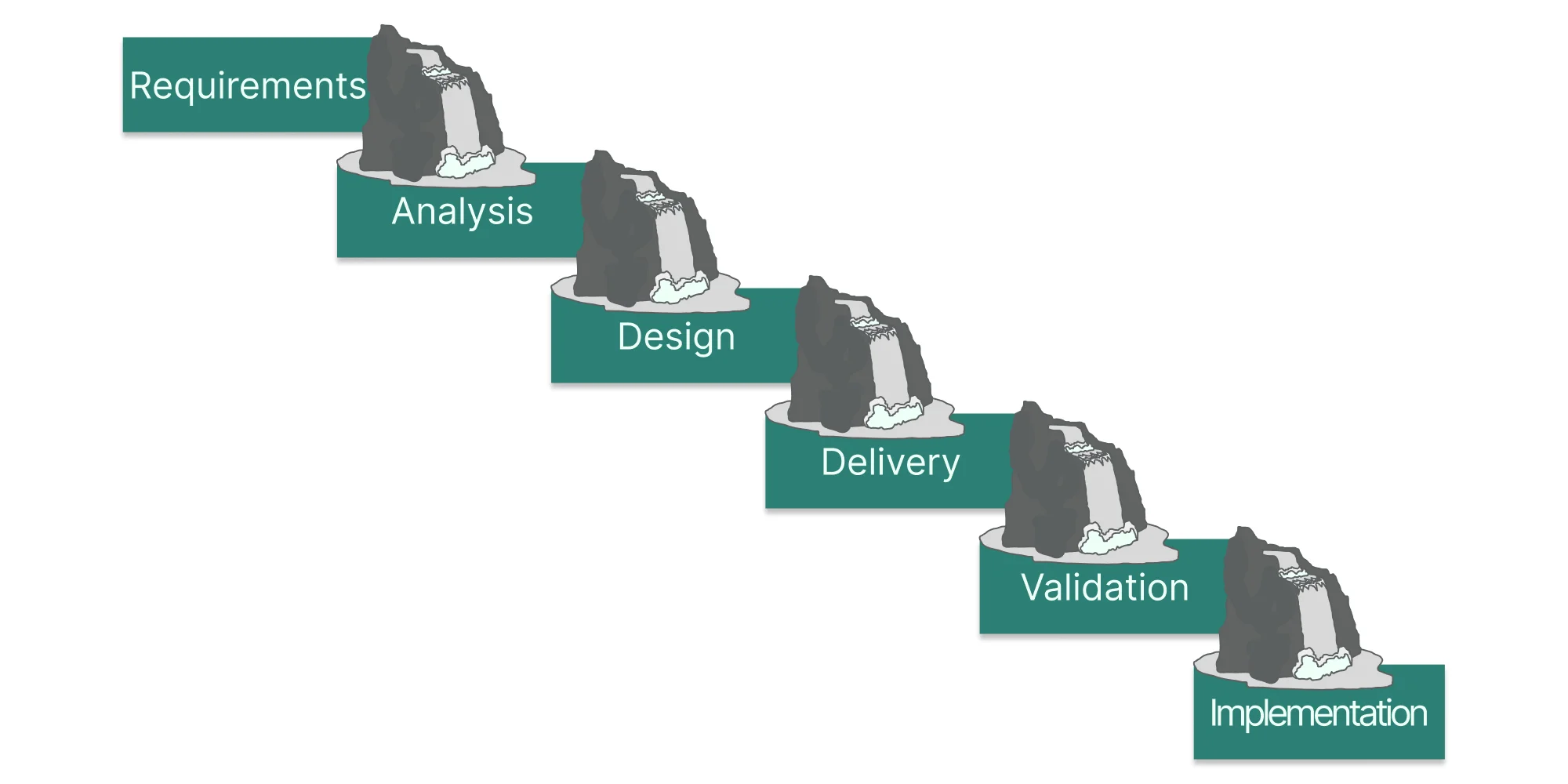
Any change or rollback is either impossible or extremely costly. As a result, the entire project hinges on the upfront work. The smallest change to the workflow can lead to scope creep or derail the objectives. This method offers high stability for well-defined projects but requires meticulous preparation and flawless execution to avoid surprises.
Because it lacks flexibility and makes it hard to go back, the method is often perceived as rigid — sometimes referred to as the “tunnel effect.”
It is ideal for small projects where the client is certain about the desired final product.
Discover other project management methods
Orchesia: optimize your Waterfall project management
At Orchesia, we’re building project management software to support your planning and execution. With our visual mind-map tool, you gain a clear, structured view and an optimized workflow.
Orchesia helps you reduce surprises and maximize your chances of success, ensuring stable, well-controlled management.
Fully define your project: requirements, deliverables, dependencies, and tracking. Give your client optimal visibility to facilitate implementation, validation, and deployment. With Orchesia, structure your project effectively and gain peace of mind.
Try our project management software Orchesia free for two weeks, no commitment!